A Bill to Reduce Pet Overpopulation on Puerto Rico is under Consideration….please sign this letter urging support of the legislation

A  bill to improve the lives of animals is currently under consideration in Puerto Rico’s legislature. P de la C 2950 / P del S 1631 is designed to reduce pet overpopulation on the island, which could save millions of dollars and improve the welfare of animals.

This legislation would enact an effective spay/neuter policy and facilitate the participation of mainland veterinarians to perform high volume spay/neuter clinics in Puerto Rico. In addition, this legislation would encourage adoption, place a temporary moratorium on the sale of cats and dogs for five years, and create a coalition to help citizens stop overpopulation in their communities.

Pet overpopulation in Puerto Rico is severe. P de la C 2950 / P del S 1631 will protect animals from cruelty and neglect while simultaneously saving Puerto Rico’s government millions of dollars and empowering its citizens.

TAKE ACTION
Please write to your senator and representative today and urge them to vote yes on P de la C 2950 / P del S 1631:

https://secure.humanesociety.org/site/Advocacy?cmd=display&page=UserAction&id=7213&autologin=true&s_src=sh_tw

Armchair Animal Activism (it works)- Part I

From the comfort of your living room, you can have an impact on humane treatment of animals.  This is part I in a series that provides ideas on how to do so.  Today’s topic is the hundreds of thousands of homeless, unspayed/unneutered dogs and cats in the South.

Several thousand rescue dogs are transported yearly from the South to the Northeast for adoption.  Why?  The cultural norm in many places of the South is not to spay and neuter, and in many places, not to inoculate pets against disease. There are millions of homeless dogs wandering around—and starving—in the South.  There are several thousands in high-kill shelters, because adoption is not a common practice either.

You can do something about it. Cultural norms are shifted over time through the steady application of change. For example, remember how we used to call humane organizations “pounds” and homeless pets “strays”? That gradual shift away from “pound” has had an impact on how people perceive humane organizations, and the introduction of the word “rescue” to adopted animals positions the rescuers to have the added benefit of feeling good about themselves.

But back to the Southern dogs. I was told by owner of Main Line Animal Rescue that the way to make an impact on treatment of dogs from the south is to write letters to the editors of the papers there. Below is a sample letter you can use or adjust as you see fit. Search this link ( http://www.50states.com/news/ ) to identify newspapers. Copy/tailor and email the letter to the editor—be sure to include your contact info, or the editors will not publish the letters.   Thank you!

your name
address
phone
email

date

Dear Editor,

I have a friend who had good fortune to adopt a sweet dog from Alabama via a Pennsylvania animal rescue. “Finn” is a hound mix and is doing well despite a rough beginning: unneutered, homeless, and unvaccinated, Finn contracted distemper, from which he has recovered, despite lingering gait issues.

I’ve learned that in areas, spaying/neutering, and vaccinating pets are not always common practice.  Yet pet overpopulation is rampant, and in many states hundreds of thousands of dogs and cats are homeless and die slowly from starvation, disease, and injury. You can help prevent pet overpopulation and suffering.

Please consider the benefits of spaying and neutering—this prevents unwanted animals from being born, improves the animals’ disposition, and is not perceived as loss by the animals.  Here is a link: http://www.aspca.org/pet-care/general-pet-care/low-cost-spayneuter-programs where you can find low-cost clinics in your area.  Alternatively, please consider asking your local vets to provide this community service, for the good of the animals and the community (and good PR for the vet).

Respectfully,

[your name]


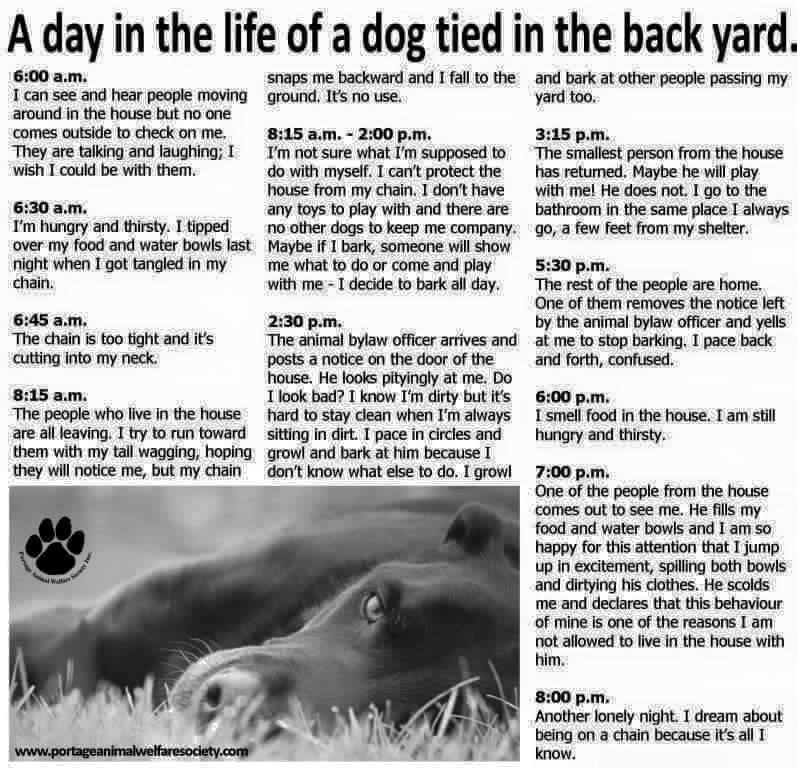
A Day in the Life of a Dog Tied in the Backyard

yard dog 13118850_10154265457483729_1631893973372953599_n Source: http://www.spca.bc.ca/assets/documents/welfare/Tethered-Dogs/left-alone-to-watch.pdf

10 Reasons to Adopt a Cat

Cats make up approximately 70% of shelter population. It’s sort of obvious what you should do…ADOPT! Don’t Shop! There are many advantages when it comes to adopting cats from shelters. Many are already spayed or neutered. They are also current on their shots. Shelter volunteers are there for one reason: the good of the animal. They aren’t interested in a profit and any donation you make goes right back into helping more animals in need. I love cats, how about you?

by Julie E.H., Animal Rescue Site blog
theanimalrescuesite.greatergood.com

What Are Animals Thinking and Feeling?

a short but powerful TED talk…

Easy Way to Help Adoption of Meat Trade Dogs into Loving Homes Worldwide

A gift idea for the holidays?

One of the lucky adoptees

One of the lucky adoptees

Countless dogs ‐ pets as well as street dogs ‐ are stolen and cruelly killed for the dog meat trade in Southeast Asia. Soi Dog Foundation has rescued thousands of dogs from this fate, and now these animals desperately need new homes. $20 covers all costs associated with getting one dog adopted. Your donation helps provides medical care and food, behavioral assessment, promotion of the animals online for adoption, and transportation  to Bangkok to fly to forever homes around the world. For this small amount you can play a huge part in giving these animals a second shot at life.


The mission of Soi Dog Foundation is to improve the welfare of dogs and cats in Thailand, resulting in better lives for both the animal and human communities, to end animal cruelty, and to ultimately create a society without homeless animals.


Click here – $20 provides ALL adoption expenses for 1 dog

Part V – I Came from the Deep South

continued from part IV  –

Mr. Bean, the cat, and I arrived at an armed truce, but I had the upper edge.  I know that in skirmishes between dogs and cats, the cats often lose.  I didn’t wish Mr. Bean harm, but I have thousands of years of instinct in me, and as much as I want to please my person, instinct is powerful.

The woman began supervising the cat and me at all times.  This seemed unnecessary to me.  Why, there were many times when Mr. Bean and I slept near each other, when he wound between my legs, when we walked by each other without comment.  To be fair, there were some times when I’d stalk him, when I hunkered low and keened on him, my eyes glittering black.  I knew I wouldn’t do anything actually, but the woman didn’t know this and she did not approve of my behavior.  She was irritated with me far too often.  I did not deserve this.

The trainer suggested that we adopt a second dog; she said that would likely get my focus off of Mr. Bean.  The woman said no–one dog was enough.  So that was that.

We went to the family reunion of adopted pets and their people at Main Line Animal Rescue.  I recognized the scent of the place before we turned down the lane and I sat up tall in the back seat to look.  When I jumped out of the car, I saw Jenny, a pit bull who was still there.   I overheard someone say that people have the wrong idea about pits and that they are actually one of the most devoted dogs.

Jenny and I greeted each other and I see other dogs I’d peripherally known who were now romping happily with their families.  There were new dogs there, many brought up from the South like me, and others rescued from inner city Philadelphia.

The shelter director saw me, walked over, and stooped down to pet me.  She asked us to walk through the kennels together; she wanted to show the woman something.

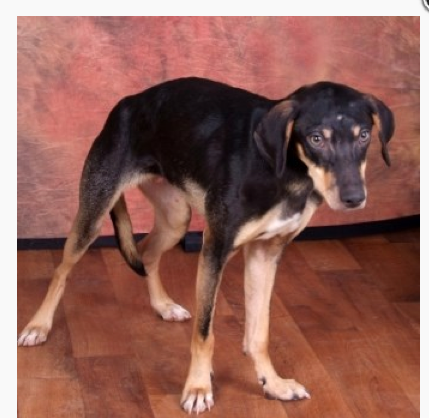
We passed the dogs, some with pleading eyes, some turned in on themselves and sad, some barking.  I was so happy not to still be there.  The shelter director stopped before the kennel I had been in, and there was Kentucky, who came up from Alabama with me.  He was the only one who had not been adopted, and he’d been at the rescue for a year.   Pointing to him, the director said, “Kentucky is a sweet fellow and has some remaining neurological defects from having contracted distemper in Alabama and survived it.”  Apparently the rural south is not big on vaccinating, spaying and neutering, and there are millions of homeless dogs, and a lot with preventable diseases.  Main Line Animal Rescue had had Kentucky checked out by University of Pennsylvania Veterinary School, and his neurological defects would not affect his ability to learn but his gait would remain odd, and he had a rounded back.  On occasion he fell over.Screen Shot 2015-06-26 at 4.50.25 PM

Kentucky and I sniffed at each other through the chain link door and he did a little jig, hopping on three legs and spinning in a circle.   The director said, “If you would consider adopting him.  He’s a good dog and he needs a home.  He’s very shy and the shelter is not a good place for him.  The likelihood of him getting adopting is slim.  People don’t typically want a special needs dog.

My person looked at him and grew very still. I watched her and knew what she was thinking.

to be continued

Part I

Borneo: Orangutans Are Dying as Indonesia Burns.

Serbian Animals Voice (SAV)'s avatarSerbian Animals Voice (SAV)

orangutans-fire-MAINOrangutans in the haze shrouding the Borneo Orangutan Survival Foundation camp on Oct. 5. (Photo: Antara Foto/Reuters)

John R. Platt covers the environment, technology, philanthropy, and more for Scientific American, Conservation, Lion, and other publications.

http://www.takepart.com/article/2015/10/22/orangutans-are-dying-indonesia-burns?cmpid=tpanimals-eml-2015-10-24-orangutans

Orangutans Are Dying as Indonesia Burns

Thousands of forest fires set by palm oil companies across Sumatra and Borneo threaten not just endangered apes but the global climate.

Indonesia is on fire.

Right now, tens of thousands of small forest fires are burning across the islands of Sumatra and Borneo, the only habitats for orangutans and other rare species.

Many of the fires appear to have been intentionally set by palm oil companies, which employ slash-and-burn agriculture to clear land of native trees to plant their cash crop, which is used as an ingredient in everything from food to cosmetics.

Richard Zimmerman, executive director of Orangutan Outreach, calls…

View original post 741 more words

The Sway-Back Horse

8726074306_0f40ca7d39_sAlmost every window in the house across the pasture was lit up at night, like cheerful eyes peering out into the darkness.  Sleek cars purred up the winding drive, and people came and went.

Each day the other horses and I had fresh water and grain.  In summer we grazed in the pasture and slept with fireflies blinking around us.  In winter, we passed our nights in the barn, away from the biting winds and snows.  I was the oldest of the four of us.  I’d carried many a foal.  In my day, I streaked across the meadows, my head held high, my tail flying in the wind.

Gradually a change came: fewer cars, fewer people, and less food.  One day some strangers arrived, looked carefully at each of us, then led the other three horses into a trailer and drove off, dust kicking up behind the wheels.

I was let out into the pasture.  I grazed on the grasses and drank from a small pond near the fence.  There was a blackbird that kept me company sometimes, perching on my back and clutching my mane, chattering away.

The only human I saw was a man who walked the far hills from time to time, disappearing into valleys and emerging again.  One day he came to the fence, offered me a fistful of grass, and stroked my face.  I closed my eyes at his touch.

With the first winter storm the pasture grasses were buried in snow.  I pawed at the ground and ate what I could uncover.

As winter set in the snow grew deeper, and the grasses were more difficult to reach.  The pond froze from the edges inward, and I couldn’t quench my thirst from eating snow.*  Mostly I stood with my eyes closed, snow crystallizing on me.  My hunger and thirst grew, and my ribs became more pronounced.

The walking man came one day, spoke to me gently, and climbed over the split-rail fence.  He looped a bridle over my head, and I stood still for him.  He led me away through the snow, each footfall sinking deeply.  We walked a long way, coming at last to a barn.  Two horses in their stalls looked up expectantly, their ears forward.

The man led me into a stall with soft hay, and grain and water, and I drank and ate my fill.  The man leaned against the wall and watched.  Then he said a few words to me that I didn’t understand, but their meaning was clear: you are safe here.

The winter has turned to spring.  The other horses and I run in the pasture, blue sky overhead, sweet grasses beneath our hooves.

* Did you know that horses cannot get enough water from eating snow only?  A bucketful of snow melts down to an inch or two of water.

Why Do I Inconvenience Myself to Help an Animal in Need?

56149118_3d9b94d590Why do I inconvenience myself to help an animal in need?  I’ve been known to be late for meetings, wading into the field alongside the road to call a skinny, scared dog to me and deliver him to the SPCA so that he can be helped, reunited with his owners or placed in a caring home.  I’ve been known to humanely trap a feral cat, have her spade, release her, and provide ongoing food, water, and shelter to her.  I’ve been known to adopt a rescue cat, a rescue dog.  I’ve been known to telephone for help and wait by the side of an struggling, car-struck deer until animal control arrives to put it out of its misery.  I’ve been known to contribute to neutering costs for people in financial hardship.  Why, I’ve been asked, why?

The reason:  because I feel deeply, can empathize with the feelings of others, and I care about the suffering and experience of individual animals.  Of course animals can feel pain and fear.  Of course they can suffer.  I have a commitment to myself to do what I can to help, and it turns that with minimal effort, I can do a lot more than I originally thought I could.  Doing so allows me to live in peaceful alignment with my values.  Yes, it can be a nuisance at times, but it’s worth it.  In the bigger picture, it doesn’t require that much of me, really, to help a creature to experience less pain, less hunger, less thirst, less bitter cold.

What if each of us committed to helping an animal in need?  It’s so much easier to turn away, but that small sense of satisfaction that comes from bringing relief to another sentient being is a reward in and of itself.  I am immensely grateful for the ability not to turn away.