When Helping Animals Never Feels Like Enough—Here’s What You Can Actually Do

A personal reflection on compassion, responsibility, and 20 practical ways anyone can reduce animal suffering
I confess that I’m almost never satisfied with what I do to help ease animal suffering. So much more can be done, and I often find myself wondering: at what point can I say, there—that’s good enough for now? For every animal I rescue, care for, or arrange help for, there are millions of others who need it. I can understand the urge to throw up one’s hands in defeat, because cruelty by humans is everywhere—institutionalized abuse, neglect, harmful ignorance, and intentional harm. Its pervasiveness can inure us to it, allowing us to more or less ignore it.

I admit to feeling something akin to envy (but not necessarily respect) for people who seem oblivious to animal suffering. It is understandable that one might turn away from it because of the perspective, what can only one person do? The answer, I think, is probably a lot more than you realize, without wholly upending your life. For 20 ways to make a difference, see the “Compassion in Action” section below.

I struggle with finding some degree of peace with what I actually do. The issue, as I see it, is that because the need is vast, the sense that it’s never enough is pretty much true. I can get stuck in that loop. The question for me becomes how to find balance: I want to extend a bit what I actually do, and I want to take some quiet satisfaction in knowing that what I do helps, rather than being crushed by the sheer enormity of the need.

I find this anonymous quote powerful: “Saving one animal doesn’t change the world, but the world changes for that one animal.”

Those of you who honor and love animals: I would love to hear your thoughts in the “Leave a comment” section, below, on how you navigate this issue.

Please subscribe!

Compassion in Action

20 Easy Things Anyone Can Do to Reduce Animal Suffering

You don’t need to “save all of them” to make a real difference. Small, consistent actions from ordinary people can quietly reshape how animals live in this world. Here are 20 simple things anyone can do, now.

1. Adopt from a shelter or rescue first.
Every time someone chooses adoption over a breeder or pet store, they pull a life out of the shelter system and reduce demand for mass breeding operations.

2. Spay or neuter your pets.
Routine surgery prevents unplanned litters, eases pressure on shelters, and often improves pets’ health and behavior.

3. Care for community animals humanely.
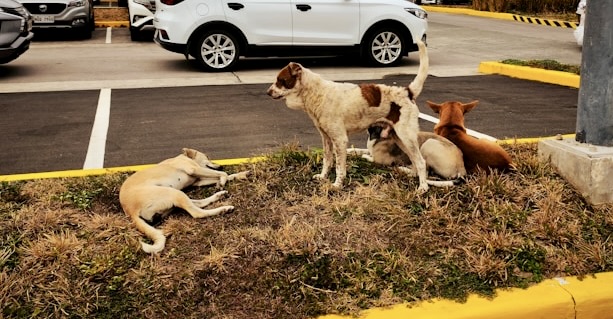
If you see stray cats or dogs, provide clean water and appropriate food, and connect them with local TNR or rescue groups instead of ignoring them or shooing them away.

4. Speak up when you see neglect or abuse.
If you witness serious cruelty or clearly unsafe conditions, report it to local animal‑control or humane investigators; early intervention can stop escalation.

5. Buy cruelty‑free and humane‑certified products.
Choose household and cosmetic brands that avoid animal testing and, where possible, look for certifications that signal higher welfare standards.

6. Have a bird feeder or birdbath.
A simple source of water or supplemental food can sustain birds and small wildlife through harsh seasons, especially in urban or suburban areas. Place birdbaths on the ground so that non-flying animals can reach the water as well.

7. Plant native, wildlife‑friendly plants.
Even a small yard or planter full of native flowers and shrubs supports pollinators, birds, and small mammals with almost no extra effort.

8. Cut back on animal‑product consumption.
Shifting even a few meals a week toward plant‑based options lowers demand for factory‑farming systems that cause massive suffering.

9. Support ethical brands and sanctuaries.
When you buy pet products, choose companies that donate to animal‑welfare groups or help fund sanctuaries and rescue work.

10. Donate supplies or money monthly to a shelter.
Shelters always need food, towels, blankets, and litter; even a small recurring donation can free up staff time and resources for direct care.

11. Foster an animal when you can.
Short‑term fostering gives traumatized or overcrowded animals a calmer home, improves their chances of adoption, and opens up kennel space for others.

12. Volunteer a few hours a month.
Cleaning, walking dogs, socializing shy cats, or helping with admin can dramatically stretch a small shelter’s capacity.

13. Organize a small donation drive.
Consider turning birthdays, holidays, or social events into opportunities to collect pet‑food, toys, or supplies for a local shelter.

14. Share adoptable‑animal posts online.
One shared shelter post can connect an animal with the right home far faster than waiting passively.

15. Talk kindly and clearly about responsible pet‑ownership.
Gently share basics (vet care, spaying/neutering, enrichment, not “gifting” live animals) with friends and family; this can prevent future relinquishment and surrender.

16. Support humane‑education programs.
Donate to, volunteer with, or promote school and community programs that teach children empathy toward animals and the impact of our choices.

17. Engage with local animal‑protection laws.
Sign petitions, attend town meetings, or contact officials to support stronger anti‑cruelty laws, community‑cat programs, and animal‑shelter funding.

18. Avoid products and experiences that exploit animals.
Skip exotic‑leather fashion, wildlife‑derived medicines, and entertainment that relies on stressed or captive animals (circuses, exploitative “photo” ops, etc.).

19. Reduce litter and keep wildlife areas clean.
Picking up trash in parks or along trails keeps plastic and debris out of animals’ mouths and paws and helps ecosystems stay safer.

20. Design your outdoor space with wildlife in mind.
Use native plants, retain unmowed edges, and limit harsh outdoor lighting to help birds, insects, and small mammals survive while minimizing conflict.

Share

Leave a comment

Photos courtesy of Anastasija Puskas, Unsplash and Jafetbyrne Photos
It’s Time to Celebrate Animal Sentience and Stop Squabbling

by Marc Bekoff *

Science and common sense clearly show that diverse animals are feeling beings

The Kind Life Reprinted from Psychology Today with permission by Marc Bekoff

Source: public domain pictures on Pexel

Key points

  • Animal sentience isn’t science fiction.
  • The real question is not if sentience has evolved but why.
  • Several countries have declared that animals, including household companions and wild species, are sentient.
  • There aren’t degrees of sentience among different species; an individual’s joy or pain are their joy or pain.

Being sentient means having the ability to feel. A large body of scientific evidence stemming from studies of diverse species clearly shows that many nonhuman animals (animals) are sentient beings.1 These studies also show that the biodiversity of sentience is large and growing, and insects are finding themselves living well within the sentience arena as full members of the sentience club. Research shows that the emotional lives of insects are richer than many of us have ever imagined—not just in the ever-popular bees, but also in flies, mosquitoes, cockroaches, and termites too. (Darwin himself thought this! In 1872, he wrote that insects “express anger, terror, jealousy, and love.”)2

A growing number of people, including academics and non-academics, are very interested in what animals think and feel. Two recent posts—”The Eclectic Father of Cognitive Ethology“ about Donald Griffin’s seminal work and an interview with Jonathan Birch titled “The Edge of Sentience: Why Drawing Lines Is So Difficult“—have generated a good number of emails asking me to say more about the study of animal minds (the field called cognitive ethology) and animal sentience.

It’s Time to Stop Wondering If Animals Are Sentient, They Are

Source: By Marc Bekoff

These handwritten words were sent to me by Jane Goodall in 2000 after she attended a wildlife management meeting in Arusha, Tanzania. What caught my eye about her message was how she capitalized the word “feelings.” This was some years before the field of compassionate conservation emerged and began growing in leaps and bounds. In compassionate conservation, the life of every individual is valued, and sentience—their ability to feel—comes to the fore.

Studying animal sentience, consciousness, and emotion isn’t easy. Future data from comparative analyses of animal cognition, along with existing information, should help us along in developing what some people think the field of cognitive ethology needs: namely, an integrative model or theory. Perhaps it was the lack of an integrative theory of cognitive ethology and the presence of one in evolutionary biology that led many people to dismiss tenuous cognitive ethological explanations while accepting often equally tenuous evolutionary stories.

I became very interested in learning more about some of the progress made in cognitive ethology during the past two decades, so I analyzed the references in the 2007 edition of my book on animal emotions and in the highly revised and updated 2024 edition of The Emotional Lives of Animals: A Leading Scientist Explores Animal Joy, Sorrow, and Empathyand Why They Matter, for which I used around 300 additional references. I noted a strong increasing trend that more researchers are accepting data that clearly showed that many different animals have rich and deep emotional lives and are sentient. Furthermore, not a single reference among those I added to the new edition led to the conclusion that we are doing all we can for the animals. We can always do more.

The Real Question Is Not If Sentience Has Evolved, but Why

I know some people will respond with something like, “We really don’t know whether pigs don’t like their tails being cut off or being castrated,” or “We need more data to know that animals get bored or enjoy play.” However, it’s high time to recognize that this sort of skepticism is unwarranted and responsible for widespread and continued abuse, given the evidential database we now have. Furthermore, there are no degrees of sentience among different species; an individual’s joy and pain are their joy and pain.

Let’s Stop Bickering

We must stop pretending that we don’t know this or that about animal sentience. We need more action. While we persist in pondering the obvious, ignoring what we already know and have long known, countless nonhuman victims continue to be abused by humankind, every minute of every day, planet-wide.

There are no substitutes for rigorous research and detailed analyses of subtle behavior patterns that often go unnoticed. What we think about the nature of all sorts of animal minds truly matters for their welfare, and so it should matter to us.

People interested in cognitive ethology shouldn’t have axes to grind. Interdisciplinary input is necessary for us to gain a broad view of animal cognition. Regarding animal minds, when philosophers share what they think, they need to be clear. Those who study animal behavior need to share with philosophers and others about what they have learned and the progress being made.

The general public is closely following what science says about animal minds, and we must give them the latest and most reliable information available. We also need to listen to their stories because citizen science can guide research and inform how we interpret and explain the inner lives of other animals.

It’s anti-science to claim that nonhumans aren’t sentient. It’s not anti-science to say we must use what we know on behalf of other animals and must stop pretending we need more data. The list of the continuing mistreatment of animals in places where they have been formally recognized as sentient beings and elsewhere in the world goes on and on.

Declaring nonhumans to be sentient beings is surely most welcome, but for now, it’s often more of a “feel-good” move, another instance of humane-washing. Future human generations will surely look back and wonder how we could have continued failing to use the science, history, and politics of sentience to protect sentient nonhumans.

An essay titled “Animal sentience: history, science, and politics“ by Andrew Rowan and his colleagues is an excellent state-of-the-art summary of what we know and don’t know about animal sentience.

Rowan and his co-authors noted:

So far, however, there has been little evidence that the various declarations that animals are sentient in other countries and regions have had much direct impact on animal protection legislation or how animals are actually being treated.

Nevertheless, it is very unlikely that incorporating animal sentience language in legislation would be harmful to the interests of animals in any way.

We can, and we must do better. Solid science, evolutionary biology, comparative psychology, and a dose of common sense can lead the way. Surely, it’s time to stop wondering if other animals are sentient—they clearly are.


* Marc Bekoff is professor emeritus of Ecology and Evolutionary Biology at the University of Colorado, Boulder. He has published more than 30 books including The Emotional Lives of Animals and has won many awards for his research and writing. His homepage is marcbekoff.com

Share

Leave a comment

References

1) Why Animal Sentience Must Be Used to Reform Constitutions; It’s Time To Stop Wondering if Animals Are Sentient—They Are; The Emotional Lives of Dogs and Wolves and Why They Matter; The Lives of Sea Turtles and Why They Matter; The Emotional Lives of Animals and Why They Matter; The Fascinating Complex Minds of Bees and Why They Matter; Animal Emotions, Animal Sentience, and Why They Matter; Mindful Anthropomorphism Works, So Let’s Stop the Bickering; The State of Animal Consciousness, Sentience, and Emotions; Liv Baker et al. Rethinking Animal Consciousness Research to Prioritize Well-Being, Cambridge Corp, October 28, 2024. Also see: Granting Rights to Animals Doesn’t Undermine Human Rights.

2) A recent and detailed review of the evidence by Matilda Gibbons and her colleagues titled “Can insects feel pain? A review of the neural and behavioural evidence“ makes it plausible that various insects are indeed sentient and feel pain.

Balcombe, Jonathan 2007. Pleasurable Kingdom: Animals and the Nature of Feeling Good. St. Martin’s Griffin.

Batavia, Chelsea et al. 2021. Emotion as a source of moral understanding in conservation. Conservation Biology.

Bekoff, Marc. The Emotional Lives of Animals: A Leading Scientist Explores Animal Joy, Sorrow, and Empathyand Why They Matter. New World Library, 2024.

_____. 2010, The Animal Manifesto. New World Library.

_____. Spain Joins Other Nations in Declaring Animals Are Sentient.

_____. Animal Emotions, Animal Sentience, and Why They Matter.

_____. Sentient: How Animals Illuminate the Wonder of Our Senses.

Jessica Pierce and Marc Bekoff. The Animals’ Agenda: Freedom, Compassion, and Coexistence in the Human Age. Beacon Books, 2017.

Wallach, A. D., Bekoff, M., Batavia, C., Nelson, M. P., & Ramp, D. 2018. Summoning compassion to address the challenges of conservation. Conservation Biology.