A personal reflection on compassion, responsibility, and 20 practical ways anyone can reduce animal suffering
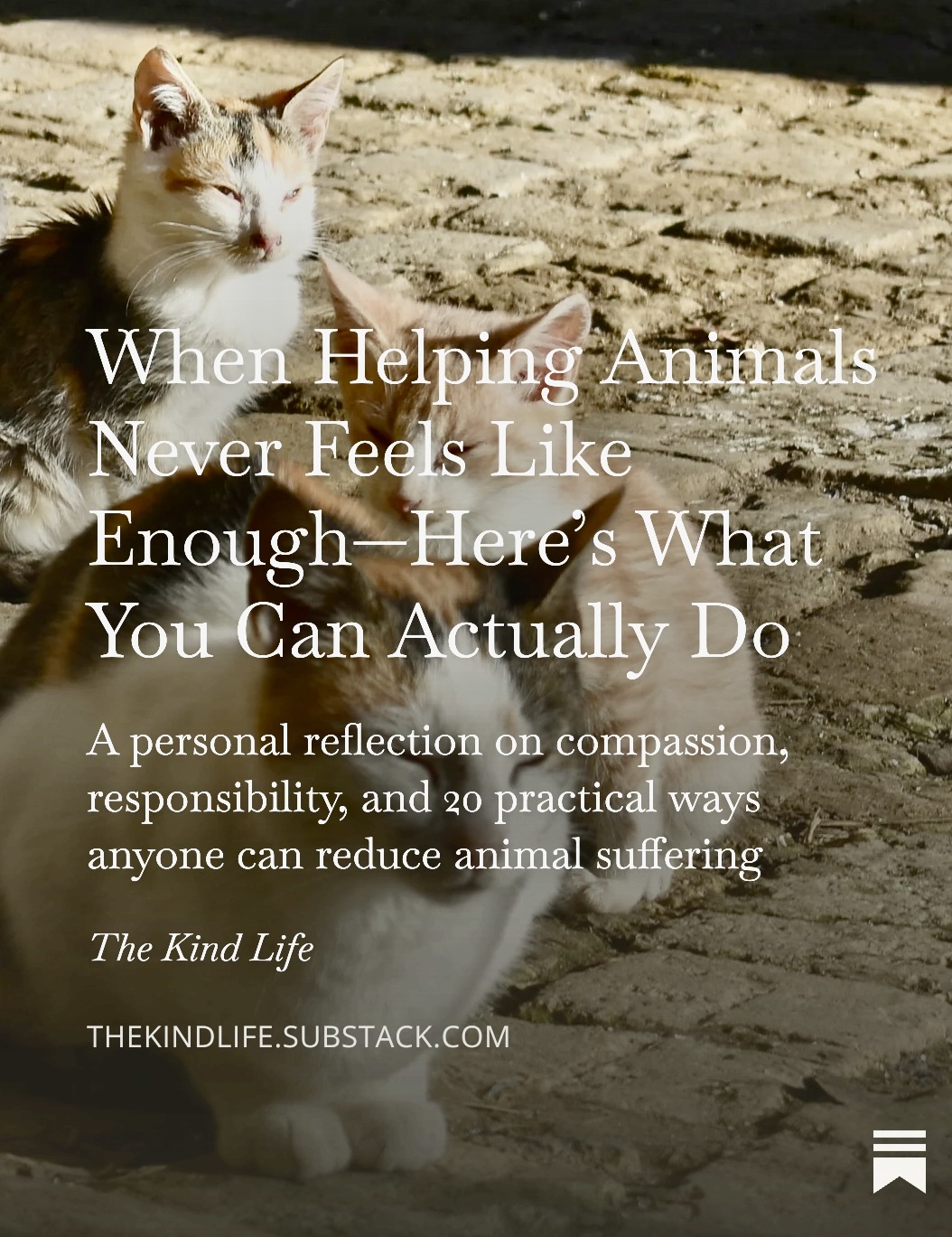
I confess that I’m almost never satisfied with what I do to help ease animal suffering. So much more can be done, and I often find myself wondering: at what point can I say, there—that’s good enough for now? For every animal I rescue, care for, or arrange help for, there are millions of others who need it. I can understand the urge to throw up one’s hands in defeat, because cruelty by humans is everywhere—institutionalized abuse, neglect, harmful ignorance, and intentional harm. Its pervasiveness can inure us to it, allowing us to more or less ignore it.
I admit to feeling something akin to envy (but not necessarily respect) for people who seem oblivious to animal suffering. It is understandable that one might turn away from it because of the perspective, what can only one person do? The answer, I think, is probably a lot more than you realize, without wholly upending your life. For 20 ways to make a difference, see the “Compassion in Action” section below.
I struggle with finding some degree of peace with what I actually do. The issue, as I see it, is that because the need is vast, the sense that it’s never enough is pretty much true. I can get stuck in that loop. The question for me becomes how to find balance: I want to extend a bit what I actually do, and I want to take some quiet satisfaction in knowing that what I do helps, rather than being crushed by the sheer enormity of the need.
I find this anonymous quote powerful: “Saving one animal doesn’t change the world, but the world changes for that one animal.”
Those of you who honor and love animals: I would love to hear your thoughts in the “Leave a comment” section, below, on how you navigate this issue.
Compassion in Action
20 Easy Things Anyone Can Do to Reduce Animal Suffering
You don’t need to “save all of them” to make a real difference. Small, consistent actions from ordinary people can quietly reshape how animals live in this world. Here are 20 simple things anyone can do, now.
1. Adopt from a shelter or rescue first.
Every time someone chooses adoption over a breeder or pet store, they pull a life out of the shelter system and reduce demand for mass breeding operations.
2. Spay or neuter your pets.
Routine surgery prevents unplanned litters, eases pressure on shelters, and often improves pets’ health and behavior.
3. Care for community animals humanely.
If you see stray cats or dogs, provide clean water and appropriate food, and connect them with local TNR or rescue groups instead of ignoring them or shooing them away.
4. Speak up when you see neglect or abuse.
If you witness serious cruelty or clearly unsafe conditions, report it to local animal‑control or humane investigators; early intervention can stop escalation.
5. Buy cruelty‑free and humane‑certified products.
Choose household and cosmetic brands that avoid animal testing and, where possible, look for certifications that signal higher welfare standards.
6. Have a bird feeder or birdbath.
A simple source of water or supplemental food can sustain birds and small wildlife through harsh seasons, especially in urban or suburban areas. Place birdbaths on the ground so that non-flying animals can reach the water as well.
7. Plant native, wildlife‑friendly plants.
Even a small yard or planter full of native flowers and shrubs supports pollinators, birds, and small mammals with almost no extra effort.
8. Cut back on animal‑product consumption.
Shifting even a few meals a week toward plant‑based options lowers demand for factory‑farming systems that cause massive suffering.
9. Support ethical brands and sanctuaries.
When you buy pet products, choose companies that donate to animal‑welfare groups or help fund sanctuaries and rescue work.
10. Donate supplies or money monthly to a shelter.
Shelters always need food, towels, blankets, and litter; even a small recurring donation can free up staff time and resources for direct care.
11. Foster an animal when you can.
Short‑term fostering gives traumatized or overcrowded animals a calmer home, improves their chances of adoption, and opens up kennel space for others.
12. Volunteer a few hours a month.
Cleaning, walking dogs, socializing shy cats, or helping with admin can dramatically stretch a small shelter’s capacity.
13. Organize a small donation drive.
Consider turning birthdays, holidays, or social events into opportunities to collect pet‑food, toys, or supplies for a local shelter.
14. Share adoptable‑animal posts online.
One shared shelter post can connect an animal with the right home far faster than waiting passively.
15. Talk kindly and clearly about responsible pet‑ownership.
Gently share basics (vet care, spaying/neutering, enrichment, not “gifting” live animals) with friends and family; this can prevent future relinquishment and surrender.
16. Support humane‑education programs.
Donate to, volunteer with, or promote school and community programs that teach children empathy toward animals and the impact of our choices.
17. Engage with local animal‑protection laws.
Sign petitions, attend town meetings, or contact officials to support stronger anti‑cruelty laws, community‑cat programs, and animal‑shelter funding.
18. Avoid products and experiences that exploit animals.
Skip exotic‑leather fashion, wildlife‑derived medicines, and entertainment that relies on stressed or captive animals (circuses, exploitative “photo” ops, etc.).
19. Reduce litter and keep wildlife areas clean.
Picking up trash in parks or along trails keeps plastic and debris out of animals’ mouths and paws and helps ecosystems stay safer.
20. Design your outdoor space with wildlife in mind.
Use native plants, retain unmowed edges, and limit harsh outdoor lighting to help birds, insects, and small mammals survive while minimizing conflict.
Photos courtesy of Anastasija Puskas, Unsplash and Jafetbyrne Photos