Gracie the cat found our way to us when my daughters were young. She had been thrown from a moving car and landed, limping, in the front yard of a kind couple who cared for her. They couldn’t take her in because they’re inside cat was quite territorial and wouldn’t allow it. And so they sought a home for the ginger-colored cat, and through a friend of a friend, she came to us.
When she entered our house, Gracie was respectful. She moved gently and silently, her body and pace relaxed. She observed people and animals before doing anything. Our resident cat was unthreatened and curious about her. Our rescue pit bull befriended her immediately, and he frequently showed his affection by slurping her face. Gracie tolerated it, squinted against it, shook off the spit, and then gazed fondly at the dog.
Gracie connected deeply with my younger daughter and allowed all the things that young girls do with cats: dressing her up in doll’s clothing, pushing her around in a pram, draping her over her shoulder and wandering through the house.
Gracie had an understanding of things. One example is this—she always slept with my younger daughter, but the one and only night she changed her routine was when our beloved pit died. That night, Gracie divided her time between all of us, lending her gentle presence and snuggling against us in our beds before moving to the next person.
I love this picture of her. The backdrop is a twilight snowfall. Gracie sat for a long time, gazing outward at the evening. When she turned around, she looked me in the eye, blinked slowly, jumped down, and sauntered through the house.
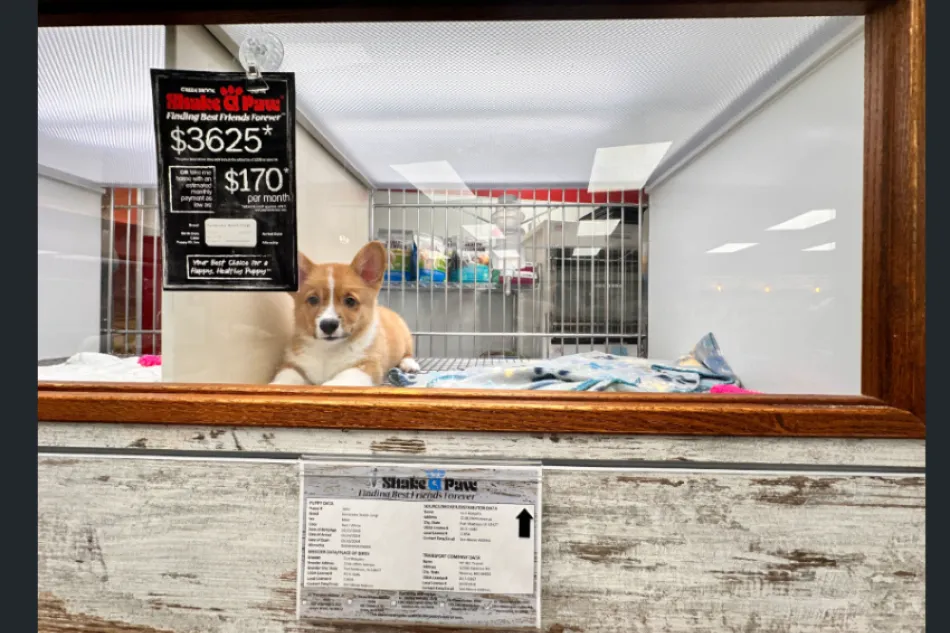
Every year, an estimated 2.1 million puppies are sold from roughly 10,000 puppy mills across the United States. In these massive breeding facilities, nearly 500,000 dogs are kept solely for the purpose of breeding. Many of them will be killed or discarded when they become too old to breed, never knowing what a loving home feels like. We are changing this: Earlier this year, our fight to end puppy mill cruelty reached a milestone worth celebrating: 500 localities across the U.S. have banned the sale of puppy mill puppies in pet shops. Kathleen Summers, outreach and research director for our Stop Puppy Mills campaign, was the very first full-time staff member at Humane World for Animals focused solely on stopping puppy mills. Summers has spent 19 years working to expose and shut down puppy mills. Here, she discusses five signs that a dog is from a puppy mill. Share these tips with your family and friends to spare them the heartache of ending up with a dog whose puppy mill past casts a long shadow over their lives.
“We noticed she had a runny nose, but the pet store said it was just a cold.”
“The puppy slept the whole way home, but we thought that meant she was just a laid-back dog.”
“We weren’t able to meet the puppy’s mother because the breeder said their house was hard to find and met us at the gas station instead.”
These are the kinds of messages we receive from families who become heartbroken and stressed when the seemingly perfect puppy they bought from a pet store, online or a questionable breeder turns out to have serious health problems. When we receive these types of complaints, buyers often add that when they look back, they realize there were red flags. A love of animals and an enthusiasm about the idea of bringing a puppy home can lead people to overlook signs that puppies or their mothers are not healthy, that conditions are not ideal, or that a seller is not being transparent. This is the exploitative business model of puppy mills and the pet stores that sell puppy mill dogs—obscuring the truth of how dismal puppy mills are while capitalizing on people’s natural love for animals.
Our puppy mills team has been collecting complaints from the public for 20 years. The warning signs we hear about most often are the following:
The puppy seems unwell or overly tired. If a puppy has a runny nose or seems lethargic, the pet store or breeder may describe them as “having a cold.” But puppies should be clean, alert and lively. While puppies do nap a lot, they should not seem drowsy or lethargic all the time, should not be coughing or sneezing, and should have clear eyes, ears and nose. Puppies should also be a minimum of 8 weeks old before offered for sale.
Something doesn’t smell right. Literally. A puppy (and their mother) should look and smell clean. If they have been living in poor conditions, they may smell or look dirty or even show signs of fleas. That being said, anyone can give a puppy a bath, so you should also see for yourself exactly where the puppies and parents have been living. It should be in a clean and spacious location, not in stacked cages.
The puppy doesn’t have veterinary documents. A list of vaccinations provided by the seller is not enough. A puppy should come with paperwork on veterinary letterhead, and that paperwork should include the dates and lot numbers of all vaccinations given, as well as information on the puppy’s wellness examination and deworming schedule. Otherwise, you have no way of knowing if the dog received the right vaccinations at the right time, or at the correct dosage and intervals.
You aren’t sure where the puppy has been. If a breeder offers to meet you in a parking lot or other third-party location, that’s a red flag. Responsible breeders will be proud to let you see where the puppies and their parent(s) spend their time. This is also why we caution against purchasing a puppy from a pet store or online. Puppy mills hide behind these third-party sellers or fancy websites.
The puppy’s mother seems to be afraid of you. Responsible breeders should allow you to meet the parents of a puppy—at a minimum, the mother. The mother dog should be friendly, clean, alert and happy to see you. A mother dog who seems afraid, lethargic or aggressive may be maladapted because she’s been living in poor conditions.
Our investigations into pet stores that sell puppies from puppy mills show time and again that these dogs suffer because they do not receive appropriate attention, socialization or veterinary care.
The best way to avoid supporting the puppy mill industry is to adopt a dog from an animal shelter or reputable rescue group instead. If you’re seeking to add a puppy to your family, there’s no shortage: Of the 2.9 million dogs who entered shelters and rescue organizations in the U.S. last year, 29% were puppies. You’ll not only be giving a home to a pup who needs one, but you’ll be keeping your hard-earned money out of the pockets of puppy mills. Learn more.
Kathleen Summers is outreach and research director for the Stop Puppy Mills campaign at Humane World for Animals.
This week, our friends at 12 Guardian, a rescue organization, were struck by 2 missiles, devastating their building where pets had been staged in advance of a planned evacuation. Miraculously, not a single animal or person was hurt in this attack. All of the pets will be examined by a veterinarian to ensure they didn’t receive concussions, as they were directly under the blasts.
Brave volunteers continue to risk their lives to save innocent animals from the front lines. Hundreds of animals- both owned and stray – are being rescued each week. Many families refuse to evacuate without their pets, while others are forced to leave animals behind in the care of local volunteers. Abandoned and injured animals are also being recovered by dedicated teams operating under extremely difficult and dangerous conditions.
We’re supporting local evacuation teams working across eastern, southern, and northern Ukraine. These volunteer-led groups play a critical role in transporting civilians -often elderly individuals, people with limited mobility, or families with children- as well as assisting with the evacuation and care of animals.
To add to regular pet food support, we are now providing 150 plastic dog kennels and 150 plastic cat carriers to evacuation teams and shelters in key regions. These resources ensure both pets and rescued strays can be moved safely and humanely.
The pond’s edge is glassy, the middle wind-rippled. From the birch tree I peer into the water. Pondweeds corkscrew up to the surface, blooming tiny flowers. Lily pads open themselves to the sky. I wait.
On the far shore a beaver slaps her tail. The woods creatures pause and look, then return to foraging. I wait.
Sun and shadow move across the far hill and meadow grasses sway. High summer has passed and the earth exhales toward autumn. I wait.
As the sun sinks toward the horizon, ephemeral insects dip and dance above the water. A flicker of silver rises toward the pond’s surface. I lean into the wind and dive. As the fish spirals out of the water, shedding sun-glinting droplets, I intercept it. Then I spread my wings and fly, hearing the whoosh, whoosh of my wings in the wind.
–
UntoldAnimalStories.org is a nonprofit organization that seeks to invite small acts of kindness toward animals.
We welcome guest bloggers. If you’re interested, please contact us at untoldanimalstories@gmail.com or via our contact page.
Of the approximate 135 million pets in the US, about 1/3 of them go missing, and 80%+ (45 million) of those cats and dogs are never found.
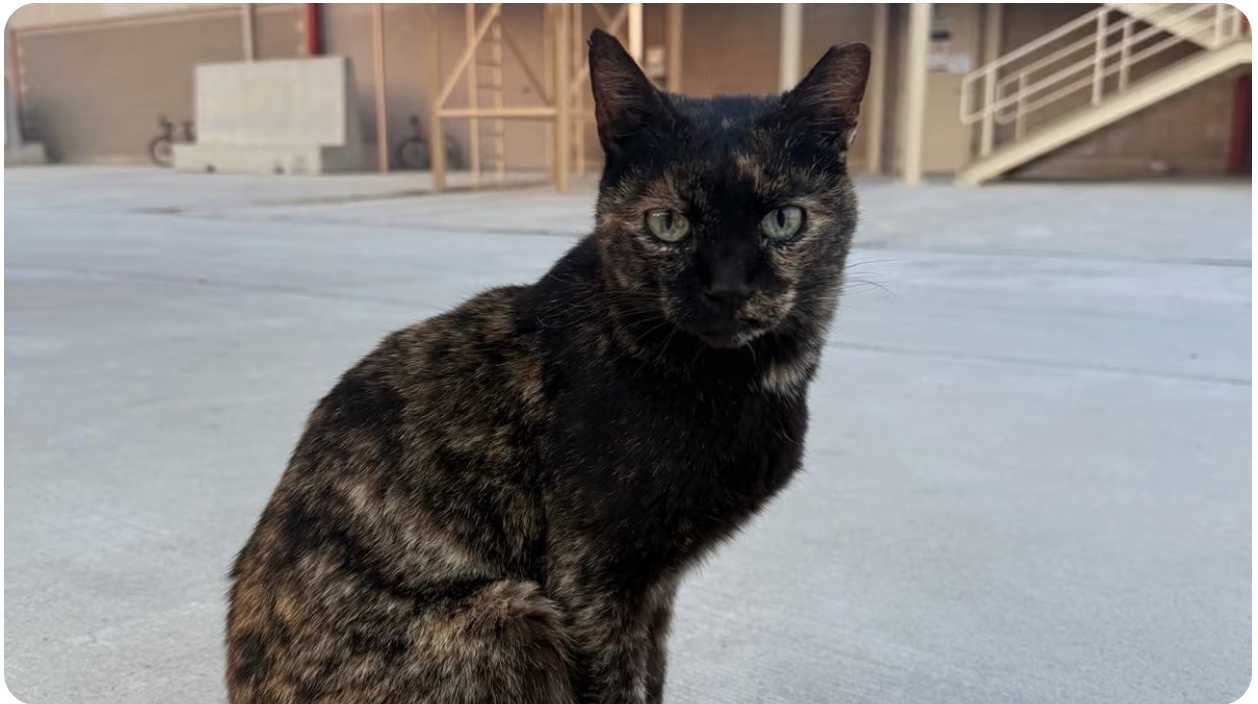
When people see a cat outside, it’s not uncommon to assume that a cat is feral rather than lost. It can be difficult initially to tell the difference between a lost cat and a feral cat, because both are likely to be wary), but here are some tips that can help you to tell the difference.
Lost/stray cat:
Might meow—feral cats do not meow at humans
May be skittish initially but may come to tolerate being approached or might seek out human help/contact
May hang out near houses, because of the familiarity
Might be friendly, as the cat has socialized with humans at some point.
Is alone (feral cats can be part of a community of feral cats)
The fur may appear dirty or ungroomed
Is diurnal (out during the day—because of adopting human schedules)
Has a collar or microchip
Feral cat:
Does not meow at humans
Is hypervigilant
Is skittish and not friendly and/or takes a long time to become trusting
Are more likely to be nocturnal or crepuscular (active at dawn and dusk).
May have the ear tip clipped
What to do for a lost cat:
Provide water and food
Provide cold weather shelter (cats were originally desert animals, and they do not do well in frigid weather)
If the cat is friendly, try to lure it inside so that the local animal shelter can pick it up or you can take it to the shelter (or to your vet)
Check for missing cats and advertise “found cat”: Put up signs, call the local shelter and vets, and check lost listing and advertise online at https://www.pawboost.com/, https://nextdoor.com
Assess whether it is sick or injured; if so, call your local animal shelter for help
What to do for a feral cat:
Life is rough for feral cats—they typically die within two years. Consider providing water and food
In certain angles of light, my spots are visible. They call me a black panther, but I am really a black leopard. When I was young I roamed with my mother in the riverside forest of Thailand. At my mother’s side I learned stealth and patience, how to slip silently through the forest, to drink from the rushing river, to kill only as much as we needed to sustain ourselves, to respect the boundaries of other, to know freedom.
By night the scent of the forest was fragrant with flowers and the earth was cool beneath our feet. By day the forest was a dozen shades of green.We slept cradled in the boughs of trees, safely hidden by the tangle of leaves.
One day we came across some tree branches plaited together on the ground. We walked around them, sniffing, exploring. My mother put a tentative foot on it and the ground gave way beneath her. She tumbled into a trap from which she could not get free.
I stayed by her through the night into the next day, when humans arrived. They talked excitedly when they saw us. I retreated into the forest, but not quickly enough. I was captured, my mother was killed, and they took us out of the forest. My mother’s body was used for ceremonies and luxury clothing. I was too little to be of use that way, so I was sold into the exotic pet trade.
I changed hands many times. Some of my owners, as they called themselves, were kinder than others. Eventually, I traveled across the water and came to this place called a zoo. My cage here is bigger than the cages in which I was accustomed to living. I can stride six paces in one direction, turn, and stride six paces in the other direction. People come to look at me, and mostly I ignore them. Sometimes I turn my golden-eyed gaze on them. In the eyes of the bigger people I see a tinge of fear. In the eyes of the little people I see only wonder.
There is a man who brings me food and water and talks to me in a calm voice. He told me that soon, soon, they will build me a bigger enclosure and I’ll have rocks, trees, a little trickle of a stream, and space in which to move.
Sometimes when the night sky is black and the stars glitter, I feel pulled toward my wild nature. My urge to roam is deep and strong and visceral. I close my eyes, and in my dreams go to the riverside forest and remember the fragrant night wind, the soft earth beneath my feet, the sound of the rushing river.
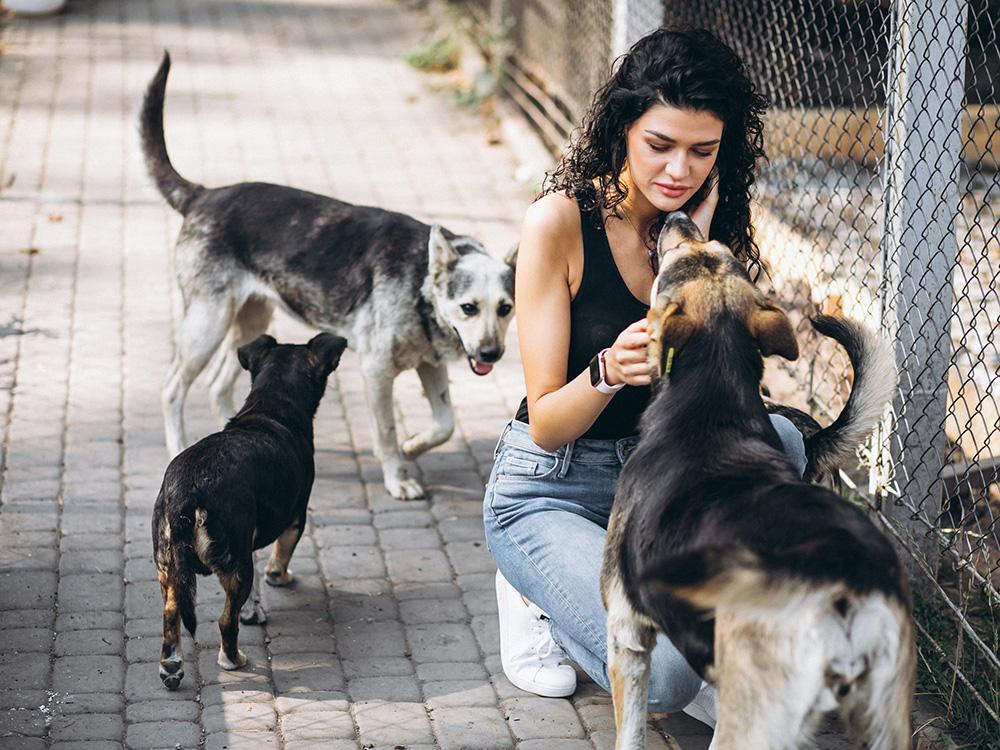
Looking at online listings for adoptable pets can be fun, but when you’re ready to decide on a dog or cat to bring home, it’s time to choose an animal shelter to visit. You may be surprised by which animal in your local shelter captures your heart and feels like the perfect fit for your home and life. Taking the time to interact with a potential pet in person can help you find the right pet for you, as well as give you the opportunity to ask questions of shelter volunteers.
When you feel prepared for your visit to an animal shelter, you can ease any anxiety you may have about shelter pet adoption and make sure that you’re ready for the commitment of pet parenthood.
Before visiting the animal shelter
While you can walk into an animal shelter any day they’re open, it helps if you can prepare yourself for the task of choosing a pet to adopt. Spend some time browsing online listings for your local shelter but don’t set your heart on a specific pet before you meet them. You may fall in love with a completely different animal at the shelter, so keep an open mind — and heart.
Consider what type of pet is the best fit
Before you visit a shelter, think about what you want in a pet.
Does your schedule allow for the needs of a dog, or is a cat a better fit?
Do you have the time to train a young dog or is an older dog more suited as a pet who already knows the basics?
Shelter volunteers can help you find the right pet for you. They know a lot about the animal’s personalities and temperaments and can answer your questions to pair you with the right animal for your family and household.
Do some research
Read up on the animal shelter online and learn what to expect from their adoption process. Every shelter and rescue has their own steps to adopting a pet, so make sure you understand required fees and the information you’ll need to fill out an adoption application. Some shelters may require a home visit to make sure your environment is suitable for your chosen pet, while others may only require you to fill out a form and provide references.
Gather your supplies
While you likely won’t bring home a new pet after your dog shelter visit, it’s still a good idea to have your home prepped for their arrival. Make sure to pet-proof your house or apartment, putting away any cherished personal belongings to avoid damage. Go on a shopping trip to purchase all the supplies you’ll need for your new family member, such as food and water bowls, a collar and leash, toys, and treats.
Choose a time to visit
Many animal shelters are fine with walk-ins during their posted hours, but if you want to make sure a volunteer is available to speak with you, it doesn’t hurt to call and schedule an appointment. Find a time that works for you and anyone else you plan to bring along, whether that includes other members of your family or a friend for moral support. If you’re not able to visit the shelter in person, ask if there are virtual animal shelter visits available.
Bring your entire family
A visit to the animal shelter should be a family affair. Bring along everyone who will share in the responsibility of caring for the new pet, so you can make sure the animal is the right fit for everyone involved.
Taking children along when you visit an animal shelter can be a challenge, so it’s important to establish rules for their behavior before you go. Bringing your kids along can help them feel involved in the decision and get them excited about caring for a new pet.
During your visit to the animal shelter
Keep in mind that shelter staff and volunteers are often busy, and you may have to wait before you can spend time with a potential pet. Prepare for the animal shelter visit experience to be a noisy one, with excited shelter dogs barking about new people in their space.
1. Be patient and understanding
Animals may act differently in a shelter environment than they would in a home. Be patient and understand that a rescue dog or cat could be overwhelmed by new people, especially if you bring children with you. Give the animal space to approach you on their own terms, and remind children to pet them gently.
2. Ask questions
Don’t hesitate to ask shelter staff questions about your potential new pet, such as how the animal shelter cares for their animals and what training the pet may have had. This is your opportunity to learn about an animal’s health history, any behavioral issues, and how well they do with other animals. You can also ask about the next steps in the adoption process.
3. Take your time
As exciting as it is to visit a shelter and look for a new pet, don’t be disappointed if you don’t find the right dog or cat immediately. Your goal should be to connect with an animal who fits with your lifestyle. Be sure to take your time and be open to any animal in the shelter being the right one for you.
Tips for visiting an animal shelter
When you’re looking for a dog or cat to adopt, seeing all the animals in a shelter can be overwhelming. Keep these tips in mind as you visit your local shelter.
Spend time with the animals to get a clearer idea of what pet is best for you.
Keep an open mind and give every animal the chance to steal your heart.
Consider pets who are less likely to be adopted, such as senior animals.
Stay safe and pay close attention to any posted signs or notices.
Commonly asked questions
How can I ensure a successful shelter visit when looking to adopt a pet?
The best way to ensure a successful shelter visit is to be patient with both staff and animals, and take your time when choosing a new pet to adopt. Don’t hesitate to ask questions of shelter staff, whether about the animals or the adoption process — or both.
Can I donate to the shelter during my visit?
Yes, you can donate to the shelter during your visit. Shelters are always in need of supplies and financial support to help care for their animals. The staff will likely be more than happy to accept a donation during your visit.
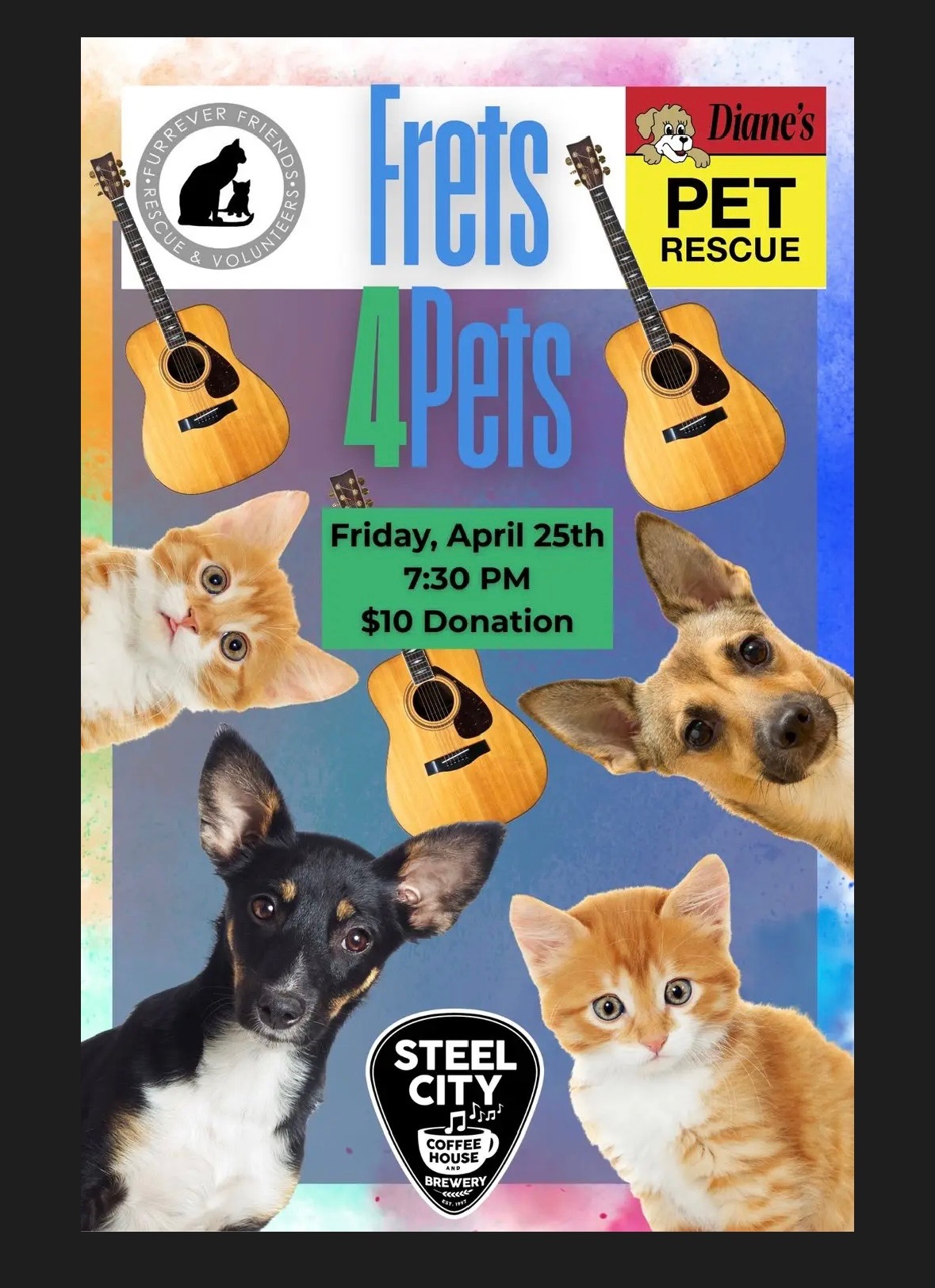
The concert will benefit a PA rescue and a NJ rescue. If you’re local, come out for an evening of diverse as well as food and drink! Steel City Coffee House, 203 Bridge Street, Phoenixville, PA 19406.




 Untold Animal Stories