The Elephant Herd That Comes to Dinner, Yearly

Mfuwe Lodge was built in Zambia in 1998 in the middle of a path that elephants take mango trees yearly.  The structure has not deterred them.  Every year when the mango trees’ fruit is ripe, the elephant herd arrives, peacefully tromp through the hotel’s reception area, descends the stairs into the courtyard, and feast on the fruits.  The matriarch, Wonky Tusk, brings her two-week-old baby, Lord Wellington, along, in an unprecedented show of trust between wild elephants and humans.  Short piece by wildlife photographer Nathan Pilcher.

The FBI Makes Animal Abuse a Top-Tier Felony

Recognizing the link between animal cruelty and acts of violence against humans, the FBI has started tracking animal abusers nationwide the way it tracks domestic violence, arson, assault, and homicide.  It has made animal cruelty a Group A felony, on par with homicide, arson, and assault. This new policy is likely to help protect both animals and people, and represents a shift toward humane treatment of animals.

Research has repeatedly demonstrated that animal cruelty is often a precursor to violence against humans. Tracking animal abuse perpetrators will help law enforcement to better understand and respond to animal abuse, and help prevent violence against people and animals. The majority of serial killers and school shooters, for example, abuse animals prior to turning on humans.

In the past, animal abuse records were thrown into a broader category with no ability to track the abusers. Now that incidents are tracked, police chiefs and law enforcement are given the data to identify abusers and change the way they police their community.

“Documented research is clear and long-standing, but most law enforcement agencies haven’t acted on it,” says John Thompson, Deputy Executive Director of the National Sheriffs’ Association, who worked to institute the new animal cruelty category. “The documented data is there, and it’s not just guesswork. The immediate benefit [of the new policy] is that it will be in front of law enforcement every month when they have to do their crime reports. That’s something we have never seen.”

Thompson said that translating the link between animal cruelty and violence against humans into enforcement is likely to be similar to the trajectory of domestic violence in the early 70s, when law enforcement was initially perplexed about why the abused woman didn’t just leave. “We didn’t understand the dynamics of domestic violence,” states Thompson, “and as that understanding changed, things got better. Animal abuse is going to follow the same timeline. For this problem to be solved you have to get the legislators to create the laws, law enforcement to enforce the laws, prosecutors to prosecute, and judges to convict.”

Wayne Pacelle, CEO of the Humane Society of the United States, states that there will be “a real incentive for law enforcement agencies to pay closer attention to [animal abuse],” and will allow those agencies to better “allocate officers and financial resources to handle these cases, track trends and deploy accordingly.”

While this new FBI policy is focused on tracking animal abusers and not on prosecuting them yet, it is a promising harbinger that stronger animal abuse laws and enforcement will come to pass.

Sources:

http://www.npr.org/2016/01/16/463094761/along-with-assault-and-arson-fbi-starts-to-track-animal-abuse

www.huffingtonpost.com/2014/10/01/fbi-animal-cruelty-felony_n_5913364.html

http://www.huffingtonpost.com/entry/fbi-animal-abuse-tracking_568fd1d9e4b0cad15e6468c8?section=green

10 Reasons to Adopt a Cat

Cats make up approximately 70% of shelter population. It’s sort of obvious what you should do…ADOPT! Don’t Shop! There are many advantages when it comes to adopting cats from shelters. Many are already spayed or neutered. They are also current on their shots. Shelter volunteers are there for one reason: the good of the animal. They aren’t interested in a profit and any donation you make goes right back into helping more animals in need. I love cats, how about you?

by Julie E.H., Animal Rescue Site blog
theanimalrescuesite.greatergood.com

A Puerto Rican Pup Whose Luck Changed

Valentina was found wandering the inhospitable streets of Puerto Rico. In an act of unthinkable cruelty, someone had covered her from the neck down in hot tar and set her loose to suffer. But Valentina was lucky; someone spotted her.

GreaterGood.org was born out of a desire to make a real difference—to connect people who want to help with people who are on the front lines in adverse situations. We work with over 150 charity partners worldwide, and operate several of our own on-the-ground programs to ensure your donation has maximum impact. Together, we can make a world of difference for people, pets, and the planet.

When emergency cases like Valentina’s come up, when disaster strikes a community in the U.S. or abroad, when biodiversity hotspots are threatened by development; when shelters are crumbling and schools are in desperate need of supplies, you can rest assured that your donation to Help Where It’s Most Needed is supporting meaningful programs that affect real, positive change.

Puerto Rico Animals pulled Valentina from the streets. With emergency medical funding from GreaterGood.org, they prepared for the agonizing process of removing the tar from her fur and skin. Afterward, she was practically a new puppy! We are thrilled to report that not only has she fully recovered from her ordeal, but she’s also been adopted into a loving forever home.

You can help. Your support makes all our work possible. Double the impact of your year-end donation today. 100% of your gift is tax deductible.

Click here to help dogs like Valentina


A Christmas Gift? – Stop Cruelty Before It Starts

children and thailand dogThroughout Southeast Asia, including Thailand, many animals are treated in horrific ways. In fact, some of these cruel practices are socially sanctioned. Based in Thailand, Soi Dog Foundation has embarked on a teacher-training program directed at Thailand’s younger citizens – the children.

Soi Dog Foundation’s Humane Education Program cultivates empathy and kindness by teaching children to understand the feelings of others. The program instills a sense of responsibility to make compassionate choices, empowers kids to improve their communities, and produces caring members of society. The Soi Dog Foundation’s humane education is designed to inspire young people to become compassionate, caring adults that will protect and honor Thailand’s animal population for generations to come. In addition to training teachers, Soi Dog Foundation distributes age-appropriate educational reading materials throughout Thailand’s schools.

You can help. Just $10 educates one child in Thailand about humane practices of animal welfare.  Put humane education materials in a classroom in Thailand for $20.00.  Train a schoolteacher to teach humane education in Thailand for $30.00.  Click here to prevent animal cruelty through education.

© by Soi Dog Foundation

What Are Animals Thinking and Feeling?

a short but powerful TED talk…

It’s Cold Out There

Dog in snow ID-100144221Please bring your animals inside.  Fur helps but doesn’t do much in icy winds and frigid temperatures.

Please, have a heart.  Bring dogs and cats inside.  They feel pain too.


photo courtesy of Spaniel in the Snow by Tina Phillips, freedigitalphotos.com

Easy Way to Help Adoption of Meat Trade Dogs into Loving Homes Worldwide

A gift idea for the holidays?

One of the lucky adoptees

One of the lucky adoptees

Countless dogs ‐ pets as well as street dogs ‐ are stolen and cruelly killed for the dog meat trade in Southeast Asia. Soi Dog Foundation has rescued thousands of dogs from this fate, and now these animals desperately need new homes. $20 covers all costs associated with getting one dog adopted. Your donation helps provides medical care and food, behavioral assessment, promotion of the animals online for adoption, and transportation  to Bangkok to fly to forever homes around the world. For this small amount you can play a huge part in giving these animals a second shot at life.


The mission of Soi Dog Foundation is to improve the welfare of dogs and cats in Thailand, resulting in better lives for both the animal and human communities, to end animal cruelty, and to ultimately create a society without homeless animals.


Click here – $20 provides ALL adoption expenses for 1 dog

Part V – I Came from the Deep South

continued from part IV  –

Mr. Bean, the cat, and I arrived at an armed truce, but I had the upper edge.  I know that in skirmishes between dogs and cats, the cats often lose.  I didn’t wish Mr. Bean harm, but I have thousands of years of instinct in me, and as much as I want to please my person, instinct is powerful.

The woman began supervising the cat and me at all times.  This seemed unnecessary to me.  Why, there were many times when Mr. Bean and I slept near each other, when he wound between my legs, when we walked by each other without comment.  To be fair, there were some times when I’d stalk him, when I hunkered low and keened on him, my eyes glittering black.  I knew I wouldn’t do anything actually, but the woman didn’t know this and she did not approve of my behavior.  She was irritated with me far too often.  I did not deserve this.

The trainer suggested that we adopt a second dog; she said that would likely get my focus off of Mr. Bean.  The woman said no–one dog was enough.  So that was that.

We went to the family reunion of adopted pets and their people at Main Line Animal Rescue.  I recognized the scent of the place before we turned down the lane and I sat up tall in the back seat to look.  When I jumped out of the car, I saw Jenny, a pit bull who was still there.   I overheard someone say that people have the wrong idea about pits and that they are actually one of the most devoted dogs.

Jenny and I greeted each other and I see other dogs I’d peripherally known who were now romping happily with their families.  There were new dogs there, many brought up from the South like me, and others rescued from inner city Philadelphia.

The shelter director saw me, walked over, and stooped down to pet me.  She asked us to walk through the kennels together; she wanted to show the woman something.

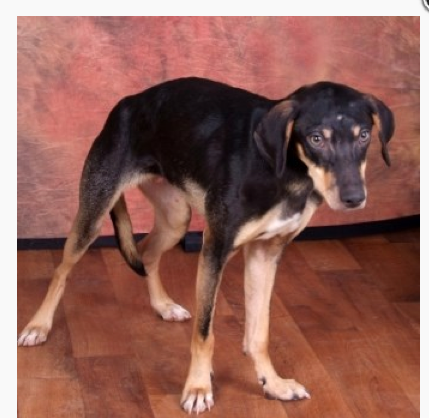
We passed the dogs, some with pleading eyes, some turned in on themselves and sad, some barking.  I was so happy not to still be there.  The shelter director stopped before the kennel I had been in, and there was Kentucky, who came up from Alabama with me.  He was the only one who had not been adopted, and he’d been at the rescue for a year.   Pointing to him, the director said, “Kentucky is a sweet fellow and has some remaining neurological defects from having contracted distemper in Alabama and survived it.”  Apparently the rural south is not big on vaccinating, spaying and neutering, and there are millions of homeless dogs, and a lot with preventable diseases.  Main Line Animal Rescue had had Kentucky checked out by University of Pennsylvania Veterinary School, and his neurological defects would not affect his ability to learn but his gait would remain odd, and he had a rounded back.  On occasion he fell over.Screen Shot 2015-06-26 at 4.50.25 PM

Kentucky and I sniffed at each other through the chain link door and he did a little jig, hopping on three legs and spinning in a circle.   The director said, “If you would consider adopting him.  He’s a good dog and he needs a home.  He’s very shy and the shelter is not a good place for him.  The likelihood of him getting adopting is slim.  People don’t typically want a special needs dog.

My person looked at him and grew very still. I watched her and knew what she was thinking.

to be continued

Part I

Borneo: Orangutans Are Dying as Indonesia Burns.

Serbian Animals Voice (SAV)'s avatarSerbian Animals Voice (SAV)

orangutans-fire-MAINOrangutans in the haze shrouding the Borneo Orangutan Survival Foundation camp on Oct. 5. (Photo: Antara Foto/Reuters)

John R. Platt covers the environment, technology, philanthropy, and more for Scientific American, Conservation, Lion, and other publications.

http://www.takepart.com/article/2015/10/22/orangutans-are-dying-indonesia-burns?cmpid=tpanimals-eml-2015-10-24-orangutans

Orangutans Are Dying as Indonesia Burns

Thousands of forest fires set by palm oil companies across Sumatra and Borneo threaten not just endangered apes but the global climate.

Indonesia is on fire.

Right now, tens of thousands of small forest fires are burning across the islands of Sumatra and Borneo, the only habitats for orangutans and other rare species.

Many of the fires appear to have been intentionally set by palm oil companies, which employ slash-and-burn agriculture to clear land of native trees to plant their cash crop, which is used as an ingredient in everything from food to cosmetics.

Richard Zimmerman, executive director of Orangutan Outreach, calls…

View original post 741 more words