Are you looking for a Christmas or holiday present for an animal lover? Since some backyard dogs don’t have appropriate “homes”/shelter, here’s a gift idea that animal lovers and dogs will appreciate. You can contribute, in the gift recipient’s honor, to a sturdy, insulated dog house that will be delivered to a backyard dog, providing warmth in the winter, protection from the elements, and shade in the summer.
The reasons why people tether their dogs 24/7 in all seasons vary—inherited family traditions normalizing it, lack of awareness of alternatives, landlord restrictions prohibiting indoor dogs, nonexistent or damaged fencing, and behavioral challenges/destructive indoor behavior. Sometimes, well-meaning people might not realize that these lonely backyard dogs can suffer. You can help via the links above or the ideas below.
Compassion in Action
• Build owner trust – Politely and by using friendly, non-accusatory language, offer help with supplies or walks. The owner is more likely to say yes to offers along the lines of: “I love dogs and have extra time/supplies, could I help with…?”
• Improve shelter and bedding – Add/upgrade a doghouse with walls, raised off the ground (wood pieces under four sides, reducing ground chill transfer), a door flap to block wind and rain, and straw for bedding and joint cushioning (not hay or cloth, which retain moisture and freeze).
• Ensure adequate water and food – Provide a tip-proof water bowl; donate quality food.
• Provide toys – Give the dog chew toys and balls to alleviate boredom.
• Watch for cruelty or neglect and report it – Document neglect (no water or shelter; skinny; an injury) and contact animal control or police department.
Gracie the cat found her way to us when my daughters were young. She had been thrown from a car and made her way to the yard of a kind couple who cared for her. Their inside cat was highly territorial and wouldn’t tolerate another cat, so they sought a home for this ginger-colored cat. Through a friend of a friend, she came to us.
When she entered our house, Gracie was respectful. She moved gently and quietly, her body and pace relaxed. She observed people and animals before doing anything. Our resident cat was unthreatened and curious about her. Our rescue pit bull befriended her, showing his affection by frequently slurping the side of her face. Gracie squinted against it, shook off the spit, and then gazed fondly at the dog.
Gracie connected deeply with my younger daughter in particular and allowed her to do the things that young girls sometimes do: dress the cat in doll’s clothing, push her around in a pram, and drape her over her shoulder and wander through the house.
Gracie seemed to have an understanding of emotional needs of her humans. One example is this: she had always slept with my younger daughter, but the one and only night she changed her routine was when our beloved pitbull died. That night, Gracie divided her time evenly between us, lending her gentle presence by snuggling against us in our beds before moving to the next person.
I love this peaceful photograph of her. Gracie sat for a long time gazing out at the twilight snowfall. When she turned, she looked at me, blinked slowly (the cat equivalent of a kiss), jumped down, and sauntered through the house.
Thanks for reading! Subscribe for free to receive new posts and support my work.
Roughly 6.5 million animals enter shelters in the US each year but only 3.2 million are adopted (ASPCA). Progress has been made: compared to 1973, the number of cats and dogs entering shelters annually is down more than 20 million (Humane World for Animals [formerly Humane Society of the United States]).
If you are in the market for a dog or cat, this site is searchable by location, species, gender, age, color, care and behavior, and whether they’re good with kids, dog, and cats: Find an adoptable cat or dog near you: https://www.petfinder.com/
I have loved dogs all of my life, but because my parents wouldn’t allow one in the house, I had to wait until I was out of the house and married before getting one. Since then, many dogs have been in my life, and all but one have been shelter dogs.
The one non-shelter dog was a retired show dog—a Cavalier King Charles Spaniel. She was a beautiful 10-year-old, extremely affectionate dog who, like all the dogs in my life, quickly bonded with me. After three months, she suddenly collapsed and died.
Afterward, my daughters began sending me photos of dogs from local shelters. One that caught my eye was a mixed-breed rescue named Sheba, thought to be under six years of age. She reminded me of my first dog, Prince, a Springer Spaniel mix who bonded with me instantly and seemed always to know want I wanted him to do without being asked. He also knew when I was coming home, although my arrival times varied. When we walked, he was at my side, never needing a leash.
Sheba’s adoption records showed that she had been seized by authorities in West Virginia “from a bad situation.” Like so many rescue dogs from the South, she was transported to the North for adoption. I adopted her in June 2023 through a local rescue, Hinde Animal Rescue in Media, PA.
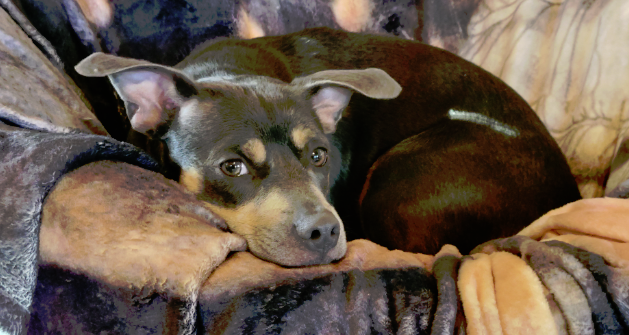
Sheba
Sheba bonded with me quickly, but her mistreatment caused her to be terrorized by almost everything and everyone else. When I stopped to talk with neighbors on our daily walks she would whimper and pull away. Traffic frightened her, as did anything sudden or different. With me, Sheba was calm. I felt honored to be trusted by her and sought ways to expand her sense of safe. A dog psychologist evaluated her but was unable to help her beyond prescribing Fluoxetine, which had to be halved due to side effects.
The elements of time and loving patience seem to have helped the most. It’s been two years since I adopted Sheba, and she now sits or lies down patiently when I talk to neighbors, and her fear of traffic has passed. She is a low-energy, calm dog who loves to walk slowly, doesn’t pull, and walks with a slack leash. She refuses to play fetch, and when I throw a ball for her, it is I who has to retrieve it. Sheba smiles when she looks at me and has become the love of my life. She has become the companion that she is because she lives in a consistently loving environment. I suspect I have derived as much comfort from living with her as she has from living with me.
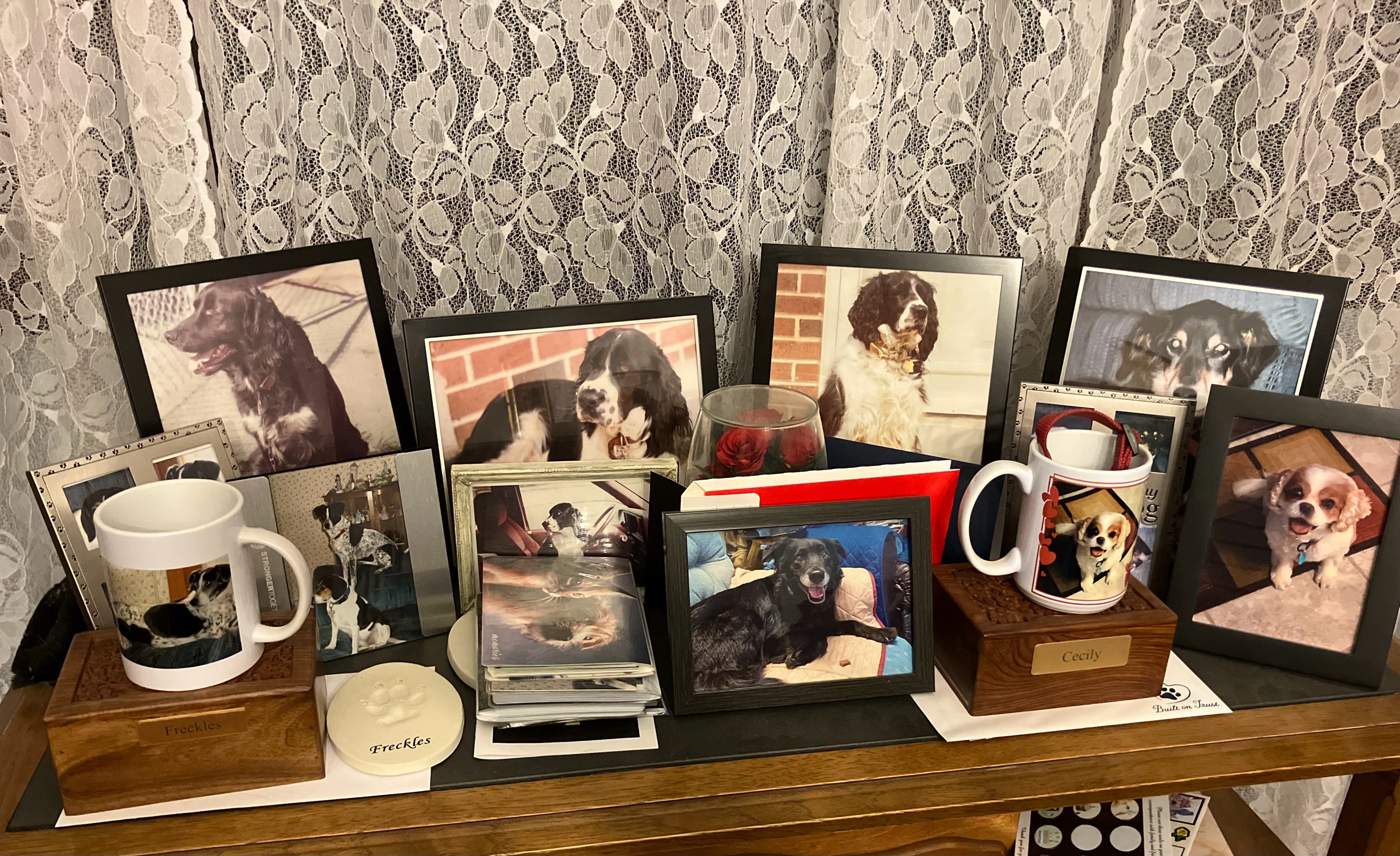
A tribute to all the dogs that have been in my life.
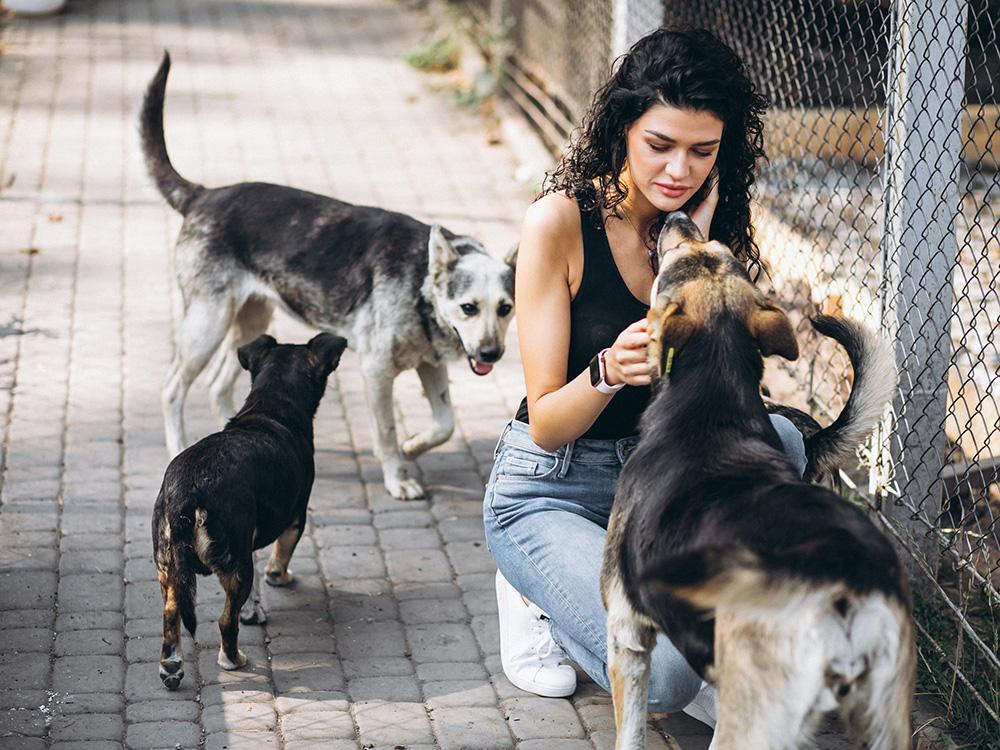
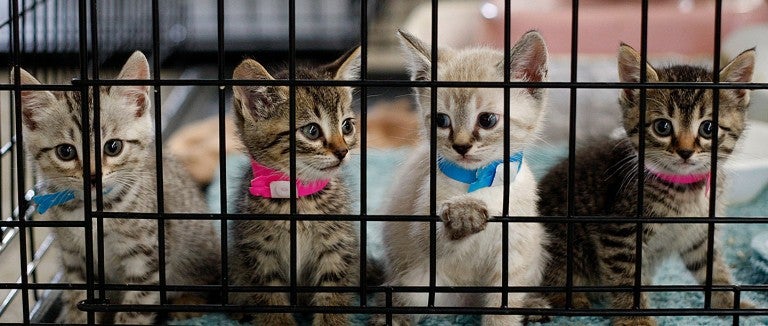
Looking at online listings for adoptable pets can be fun, but when you’re ready to decide on a dog or cat to bring home, it’s time to choose an animal shelter to visit. You may be surprised by which animal in your local shelter captures your heart and feels like the perfect fit for your home and life. Taking the time to interact with a potential pet in person can help you find the right pet for you, as well as give you the opportunity to ask questions of shelter volunteers.
When you feel prepared for your visit to an animal shelter, you can ease any anxiety you may have about shelter pet adoption and make sure that you’re ready for the commitment of pet parenthood.
Before visiting the animal shelter
While you can walk into an animal shelter any day they’re open, it helps if you can prepare yourself for the task of choosing a pet to adopt. Spend some time browsing online listings for your local shelter but don’t set your heart on a specific pet before you meet them. You may fall in love with a completely different animal at the shelter, so keep an open mind — and heart.
Consider what type of pet is the best fit
Before you visit a shelter, think about what you want in a pet.
Does your schedule allow for the needs of a dog, or is a cat a better fit?
Do you have the time to train a young dog or is an older dog more suited as a pet who already knows the basics?
Shelter volunteers can help you find the right pet for you. They know a lot about the animal’s personalities and temperaments and can answer your questions to pair you with the right animal for your family and household.
Do some research
Read up on the animal shelter online and learn what to expect from their adoption process. Every shelter and rescue has their own steps to adopting a pet, so make sure you understand required fees and the information you’ll need to fill out an adoption application. Some shelters may require a home visit to make sure your environment is suitable for your chosen pet, while others may only require you to fill out a form and provide references.
Gather your supplies
While you likely won’t bring home a new pet after your dog shelter visit, it’s still a good idea to have your home prepped for their arrival. Make sure to pet-proof your house or apartment, putting away any cherished personal belongings to avoid damage. Go on a shopping trip to purchase all the supplies you’ll need for your new family member, such as food and water bowls, a collar and leash, toys, and treats.
Choose a time to visit
Many animal shelters are fine with walk-ins during their posted hours, but if you want to make sure a volunteer is available to speak with you, it doesn’t hurt to call and schedule an appointment. Find a time that works for you and anyone else you plan to bring along, whether that includes other members of your family or a friend for moral support. If you’re not able to visit the shelter in person, ask if there are virtual animal shelter visits available.
Bring your entire family
A visit to the animal shelter should be a family affair. Bring along everyone who will share in the responsibility of caring for the new pet, so you can make sure the animal is the right fit for everyone involved.
Taking children along when you visit an animal shelter can be a challenge, so it’s important to establish rules for their behavior before you go. Bringing your kids along can help them feel involved in the decision and get them excited about caring for a new pet.
During your visit to the animal shelter
Keep in mind that shelter staff and volunteers are often busy, and you may have to wait before you can spend time with a potential pet. Prepare for the animal shelter visit experience to be a noisy one, with excited shelter dogs barking about new people in their space.
1. Be patient and understanding
Animals may act differently in a shelter environment than they would in a home. Be patient and understand that a rescue dog or cat could be overwhelmed by new people, especially if you bring children with you. Give the animal space to approach you on their own terms, and remind children to pet them gently.
2. Ask questions
Don’t hesitate to ask shelter staff questions about your potential new pet, such as how the animal shelter cares for their animals and what training the pet may have had. This is your opportunity to learn about an animal’s health history, any behavioral issues, and how well they do with other animals. You can also ask about the next steps in the adoption process.
3. Take your time
As exciting as it is to visit a shelter and look for a new pet, don’t be disappointed if you don’t find the right dog or cat immediately. Your goal should be to connect with an animal who fits with your lifestyle. Be sure to take your time and be open to any animal in the shelter being the right one for you.
Tips for visiting an animal shelter
When you’re looking for a dog or cat to adopt, seeing all the animals in a shelter can be overwhelming. Keep these tips in mind as you visit your local shelter.
Spend time with the animals to get a clearer idea of what pet is best for you.
Keep an open mind and give every animal the chance to steal your heart.
Consider pets who are less likely to be adopted, such as senior animals.
Stay safe and pay close attention to any posted signs or notices.
Commonly asked questions
How can I ensure a successful shelter visit when looking to adopt a pet?
The best way to ensure a successful shelter visit is to be patient with both staff and animals, and take your time when choosing a new pet to adopt. Don’t hesitate to ask questions of shelter staff, whether about the animals or the adoption process — or both.
Can I donate to the shelter during my visit?
Yes, you can donate to the shelter during your visit. Shelters are always in need of supplies and financial support to help care for their animals. The staff will likely be more than happy to accept a donation during your visit.
Jill was a young dachshund mix we fostered. She came from a kill shelter in the south. In these harsh environments, dogs have only a small number of days before they are euthanized to make room for the never-ending tide of homeless pets pouring in.
We often don’t know specifically what these dogs have endured, but they tell us about it through their actions and their fears. We could tell Jill had had a hard life. When she came to us, she didn’t want to be touched, and hid behind the furniture.
Her tail was gnarled from being chewed. She would chase it for long periods of time, spinning in circles, a sign of trauma likely stemming from neglect. Sometimes she would catch her tail and chew it, inflicting self harm.
We coaxed her out from her hiding place, and brought her out with us to show her some affection. She shrank from us at every touch, not believing we would be kind to her.
Finally it was time for bed the first night. Our dogs always sleep with us, so we brought Jill up to bed with us. We got in bed and placed her between us. Our dogs took their places curled up at our feet. We patted Jill and invited her to lay down and settle in for the night. Suddenly a look of astonishment came over her face, like a bolt of lightning. She looked at me, then my wife, then back to me. All at once it hit her: she was going to sleep with us, snuggling in the warmth and safety of our bed. Like Family! She was instantly elated, leaping back and forth between us, licking us with gracious kisses, wagging her stubby little tail as fast as she could.. She couldn’t believe it – she was going to be loved! After a prolonged outpouring of appreciation, she finally settled in and had what may have been the most restful night of sleep she ever had.
After that, she was different, not fearing us or hiding. She became playful and loving.
Before long, she was adopted into a loving family. We wished her well as she headed off to her new life. This was not the last we saw of her, however. We did dogsit her for a week when her family went on vacation. Her family had gotten her help for her lingering anxiety. She was on medication which helped alleviate her trauma.
Many foster dogs have experienced hardship, but few have such a sudden epiphany as Jill did. Instead, it usually dawns on them slowly over days or weeks that their lives have changed for the better, and they can rely on people to be kind to them. Because of this, the one thing they all have in common is a profound gratitude for being rescued. Even though they don’t understand the complex financial, legal, and medical issues surrounding their larger circumstances in society, they do understand very clearly that they’ve been rescued from a terrible fate. And they are eternally grateful for that.
I was walking in the fields the other day when I was overtaken by a strong, intruding thought: I want to adopt a dog. Wait, what? said I to myself. I’d already decided two years ago not to adopt another dog. I tried to put the thought aside, but it stuck with me.
My last rescue dog, Finn, passed suddenly in 2023. Finn’s death deeply saddened me—he was a sweet, special needs dog rescued from horrible conditions in Alabama. He had survived distemper as a puppy—the survival, a rarity—and had gait issues because of it. The “owner” of the 300-dog place from which Finn was rescued was jailed for animal abuse—another rarity. Finn was leery of everyone but family and close friends. There was no meanness to him. He was a gentle presence who emanated kindness and got along fabulously with my two cats.
At the time of Finn’s death, I was in the midst of helping my partner navigate a terminal illness. Overwhelmed by hospital visits, the impending trajectory, and care for my partner, I decided that I would stick only with my cats, who are loving, entertaining, and easy to care for. So sure was I that I had the ugly chain link dog fence, which came with the house when I bought it, removed.
Two years later came the inconvenient, unbidden recognition that I wanted to adopt a dog. After fighting the urge for a good week, I looked on petfinder.com at rescue dogs known to be friendly with cats. I perused hundreds of adoptable dogs (my god, there are so many rescue animals, including purebreds, that need homes; please consider adoption rather than buying from a breeder). I kept coming back to one and only dog, who met none of the criteria I had in mind. This particular dog is 9 months old (I wanted an older dog), much smaller than I had in mind (I wanted a dog the size of a pit bull or lab), and she was missing patches of hair from neglect, a bacterial infection, and exposure to the winter elements in West Virginia where she and her sisters were tied up, without shelter I believe. But there was something about the pup—maybe the look in her eye?—and I felt some ineffable connection with her. I called the rescue, talked at length to the foster parents, and arranged a “meet and greet” visit at my home. It went very well, and she was very respectful of the cats.
I pick up the pup in less than two weeks. I already have the vet appointment lined up, a new fence in the process of installation, and I repurchased all of the dog necessities I had donated two years ago. I cannot wait to welcome her into the family!
The following local organizations are working around the clock to support displaced and lost pets. Visit their websites and social pages to find their latest requests and learn how to best help them, because some are at or reaching capacity for donations. Much of this list comes from World Animal Protection, which has more information here.
Pasadena Humane has taken in hundreds of animals affected by the Eaton fire. Due to overwhelming support they have no more capacity for material donations or fosters, and have put a pause on volunteer applications, but are in need of monetary donations.
Pet owners in need of supplies can come pick up items at Pasadena City College, Lot 4, Level 1.
Los Angeles Animal Services has issued an urgent plea for fosters and adopters to take pets from their crowded shelters. This will open space in their six shelters for displaced animals and pets. You can sign up to foster or adopt for free — the adoption fee has been waived.
LA Animal Services is also accepting monetary donations.
Best Friends has an emergency response team on the ground assisting other animal welfare organizations.
They have opened two pet pantries in Sawtelle and Granada Hills where people can pick up pet supplies.
They have requested donations of large airline crates to help transport dogs to their shelter in Utah. They also have a wishlist on their website with needed items that you can order and send to them.
All of us can make a difference for animals in our everyday lives, whether it’s by adopting a pet, choosing products not tested on animals, eating a humane diet or engaging your community in animal protection issues. With so many widespread problems facing animals, it takes all of our collective efforts to confront these cruelties and change things for the better.
Here are 50 ideas for ways you can help animals in your community and across the country. Please share this list with any of your friends and family members who are also interested in advocating for animal protection.
14. Join us in applauding pet stores that have taken a stand against puppy mills—support the more than 1,000 stores that have joined our Puppy-Friendly Pet Stores initiative. Encourage local stores that do sell puppies to stop.
27. Shop our Amazon storefront for branded apparel that lets you wear your support on your sleeve.
28. Purchase pet health insurance from Petplan and receive a 5% discount—and with each completed application, Petplan will make a $20 donation to our Humane Society Veterinary Medical Alliance’s Rural Area Veterinary Services program. Use code HSUS20.
By providing your mobile number, you agree to receive autodialed, recurring text messages from the HSUS with updates and ways you can help animals. Message and data rates may apply. Text STOP to 77879 to opt out, HELP for info. Privacy policy.Terms and conditions.
The Humane Society of the United States is registered as a 501(c)(3) nonprofit organization. Contributions to the HSUS are tax-deductible to the extent permitted by law. The HSUS’s tax identification number is 53-0225390.
(From Humane Society of the United States) You’re driving your car when you see a dog or cat on the side of the road. With a sinking feeling, you realize they are alone. What should you do?
This is a wrenching scenario for all who care about animals. After all, what if your own pet were standing there? Use our guidelines for providing safe and effective help.
Don’t cause an accident
You can’t help an animal if you become injured in the process. Look in your rear-view mirror before braking, turn on your signal, pull your car completely off the road, turn off the ignition, set the parking brake, and put on the hazard lights. If you have emergency flares, prepare to use them.
Catch them safely
Safety first
A strange, frightened, and possibly sick or injured animal can behave unpredictably. A sudden move on your part, even opening your car door, can spook them and cause them to bolt—possibly right onto the highway. If the animal looks or acts threatening, or if you feel uneasy about the situation, stay in your car.
If possible, restrain the animal. Create a barrier or use a carrier, leash, piece of cloth, or length of rope to keep the animal in the area. Signal approaching vehicles to slow down if you cannot confine the animal, or divert traffic around them if they appear to be injured and is still on the roadway.
Use caution
Use caution when approaching the animal. Should you succeed in getting close enough to capture them, you stand a good chance of being scratched or bitten.
When moving toward the animal, speak calmly to reassure them. Make sure they can see you at all times as you approach, and perhaps entice them to come to you by offering a strong-smelling food such as canned tuna or dried liver.
Lure them into your car
If you are certain you can get help from animal control very soon, try to lure the animal into your car with food, close the door and wait for help. In most cases it isn’t a good idea to attempt to drive somewhere with a strange dog unrestrained in your car; they may become frantic or aggressive. Cats may do the same, as well as lodge themselves under the car seat, and it can be dangerous trying to extract them.
Call for backup
If you’re not able to safely restrain the animal, call the local animal control agency (in rural areas, call the police). Do so whether or not the animal is injured, and whether or not they are wearing an identification tag. Leave your phone number with the dispatcher, and try to get an estimate of how long it may take someone to respond. If possible, stay on the scene to keep an eye on the dog or cat until help arrives. Make sure you report to authorities precisely where the animal is by using road names, mile markers or landmarks.
Initiated by Doris Day and her Animal League as Spay Day USA in 1995, when the estimated euthanasia rate in overcrowded shelters was between 14 and 17 million dogs and cats each year, this annual event has grown to global proportions in 74 countries, resulting in the spay/neuter of millions of animals since its inception. The Doris Day Animal Foundation provides annual grants for World Spay Day, now organized under the auspices of the Humane Society of the United States, to promote spays and neuters across the country to help eliminate homeless pet overpopulation. While there is still much work to be done, we’re happy to report that currently the estimated number of dogs and cats euthanized in U.S. shelters has dropped to about one million annually.














 Untold Animal Stories