50 ways to help animals

The Humane Society of the United States

Easy steps to get involved and make a difference

kittens in cage at emergency shelter in Joplin, Missouri after tornado

Bruce E. Stidham / Stidz Media

All of us can make a difference for animals in our everyday lives, whether it’s by adopting a pet, choosing products not tested on animals, eating a humane diet or engaging your community in animal protection issues. With so many widespread problems facing animals, it takes all of our collective efforts to confront these cruelties and change things for the better.

Here are 50 ideas for ways you can help animals in your community and across the country. Please share this list with any of your friends and family members who are also interested in advocating for animal protection.

Support our campaigns and programs

Contact us

Woman holding dog and cell phone

Rasulov / Shutterstock

1. Sign up for email alerts to get the latest news and quick, simple actions to help animals straight to your inbox.

2. Sign up to receive text message alerts to do the same right from your cell phone.

3. Follow us on FacebookTwitter and Instagram

4. Share our videos on your website, blog or social networking page.

5. Subscribe to our blog for the latest animal news.

6. Attend Animal Care Expo (location varies), Taking Action for Animals in  Washington, D.C., or one of our many other events.

Be an advocate and spread the word

7. Write letters to the editor on our issues.

8. Urge family and friends to consider adopting from a shelter or rescue.

9. Post flyers in your neighborhood and local places of business.

10. Distribute flyers at events.

11. Encourage radio and television talk shows to discuss animal issues.

12. Sponsor a “Stop Puppy Mills” billboard in your community.

Portrait of a chicken in the grass

Burroblando

/

iStock.com

13. Ask your local restaurants and grocery stores to switch to cage-free eggs and to protect seals by boycotting Canadian seafood.

14. Join us in applauding pet stores that have taken a stand against puppy mills—support the more than 1,000 stores that have joined our Puppy-Friendly Pet Stores initiative. Encourage local stores that do sell puppies to stop.

15. Organize a World Spay Day event in your community.

16. Arrange coffee or lunch dates to introduce our fights to people who care about animals.

17. Work to get your local universities or your child’s schools to participate in Meatless Mondays or add vegetarian options to their menu.

18. Book and sponsor our subject matter experts for lectures at schools and universities—contact us if you’re interested!

19. Sponsor a local classroom and recommend our Nose-to-Tail program for elementary students or a young animal lover you may know.

Raise funds for our work

20. See how you can raise funds for animals at MyHumane.

21. Make a special one-time gift or support all animals all year round with an automatic monthly gift.

22. Make a memorial gift in honor of a friend or animal companion or give gift memberships to friends or family members.

23. Host a house party and have an executive or subject matter expert speak to your guests.

24. Ensure the HSUS is eligible for giving programs at your workplace and explore matching gifts from your employer. 

25. Donate your used vehicle to benefit the HSUS.
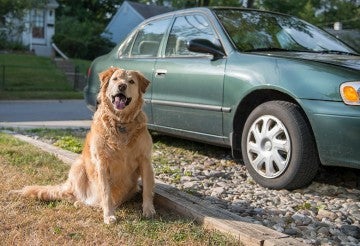
Dog sitting next to an old car

Meredith Lee

/

The HSUS

26. Include the HSUS as a beneficiary in your will.

27. Shop our Amazon storefront for branded apparel that lets you wear your support on your sleeve.

28. Purchase pet health insurance from Petplan and receive a 5% discount—and with each completed application, Petplan will make a $20 donation to our Humane Society Veterinary Medical Alliance’s Rural Area Veterinary Services program. Use code HSUS20.

29. Purchase or renew a subscription to All Animals magazine.

30. Order personal checks and create custom gifts from Zazzle.

31. Shop with our other corporate supporters and help animals with every purchase—coffee, flowers, wine, jewelry, and more.

32. Check out what people are selling to benefit us when you shop on eBay.

What you can do on your own

Help animals in your everyday life

White rabbit in the grass

mustafagull / iStock.com

33. Purchase cruelty-free cosmetics and household products.

34. Participate in Meatless Mondays and find delicious plant-based recipes for your next meal.

35. Adopt a pet from a local animal shelter or rescue group.

36. Support fur-free fashion by consulting the HSUS’s humane shopping guide.

37. Encourage your office to implement dog-friendly policies. Our book, Dogs at Work: A Practical Guide to Creating Dog-Friendly Workplaces, provides step-by-step advice.

38. Turn your outdoor space into a backyard sanctuary and find humane ways to coexist with wildlife.  

39. ID your animals and encourage others to do the same—and keep your cats safe indoors.

40. Prepare a disaster plan for your animals.

41. Learn what legislation is now pending in Congress and how you can help.

Get involved in your community

42. Learn how to help outdoor cats in your neighborhood.

Deer fawn in the grass near some flowers

Ken Canning

/

iStock.com

43. Encourage your local officials to find long-lasting, nonlethal solutions to conflicts with wildlife such as bats, coyotes, deer and more.

44. Provide for your animals’ future in case you can’t care for them.

45. Participate in Animal Rescue Team training and sign up to help animals in crisis.

46. Attend Humane Lobby Day for the opportunity to talk to state legislators about passing laws that protect animals.

47. Develop humane outreach programs in your community.

48. Determine which elected officials represent you at local, state, and federal levels. Attend lawmakers’ town meetings to urge them to support our fights.

49. Work for the passage of local ordinances in your community, for example, to protect chained dogs or improve the lives of dogs in puppy mills.

50. Volunteer!

Get HSUS news and action alerts

https://secured.humanesociety.org/page/78105/subscribe/1?ea.tracking.id=web_footer Mobile number

By providing your mobile number, you agree to receive autodialed, recurring text messages from the HSUS with updates and ways you can help animals. Message and data rates may apply. Text STOP to 77879 to opt out, HELP for info. Privacy policy. Terms and conditions.

Donate

About us

All Animals magazine

© 2024 The Humane Society of the United States Privacy policy and terms.

The Humane Society of the United States is registered as a 501(c)(3) nonprofit organization. Contributions to the HSUS are tax-deductible to the extent permitted by law. The HSUS’s tax identification number is 53-0225390.

Transparency in coverage.

You See a Dog or Cat on the Side of the Road-Sensible ways to help without getting in over your head

(From Humane Society of the United States) You’re driving your car when you see a dog or cat on the side of the road. With a sinking feeling, you realize they are alone. What should you do?

This is a wrenching scenario for all who care about animals. After all, what if your own pet were standing there? Use our guidelines for providing safe and effective help.

Don’t cause an accident

You can’t help an animal if you become injured in the process. Look in your rear-view mirror before braking, turn on your signal, pull your car completely off the road, turn off the ignition, set the parking brake, and put on the hazard lights. If you have emergency flares, prepare to use them.

Catch them safely

Safety first

A strange, frightened, and possibly sick or injured animal can behave unpredictably. A sudden move on your part, even opening your car door, can spook them and cause them to bolt—possibly right onto the highway. If the animal looks or acts threatening, or if you feel uneasy about the situation, stay in your car.

If possible, restrain the animal. Create a barrier or use a carrier, leash, piece of cloth, or length of rope to keep the animal in the area. Signal approaching vehicles to slow down if you cannot confine the animal, or divert traffic around them if they appear to be injured and is still on the roadway.

Use caution

Use caution when approaching the animal. Should you succeed in getting close enough to capture them, you stand a good chance of being scratched or bitten.

When moving toward the animal, speak calmly to reassure them. Make sure they can see you at all times as you approach, and perhaps entice them to come to you by offering a strong-smelling food such as canned tuna or dried liver.

Lure them into your car

If you are certain you can get help from animal control very soon, try to lure the animal into your car with food, close the door and wait for help. In most cases it isn’t a good idea to attempt to drive somewhere with a strange dog unrestrained in your car; they may become frantic or aggressive. Cats may do the same, as well as lodge themselves under the car seat, and it can be dangerous trying to extract them.

Call for backup

If you’re not able to safely restrain the animal, call the local animal control agency (in rural areas, call the police). Do so whether or not the animal is injured, and whether or not they are wearing an identification tag. Leave your phone number with the dispatcher, and try to get an estimate of how long it may take someone to respond. If possible, stay on the scene to keep an eye on the dog or cat until help arrives. Make sure you report to authorities precisely where the animal is by using road names, mile markers or landmarks.

https://www.humanesociety.org/resources/how-help-stray-pet

Ten Ways Kids Can Help Save Animals

From Peta

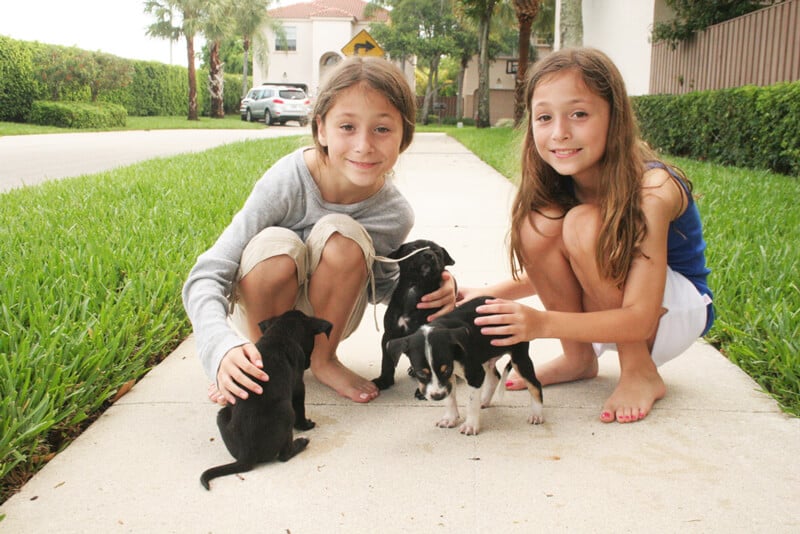
Did you know that you can help animals no matter how old you are? Take Sydney and Alexandria, for example. They’re only 12, and they’ve been donating their time to helping animals for years! There are millions of dogs, cats, bunnies, and other animals in need of homes all over the U.S., and there are so many ways for you to help them.

Alexandria and Sydney love helping animals in need, like these puppies they helped foster!

Alexandria and Sydney love helping animals in need, like these puppies they helped foster!

Here are Sydney and Alexandria’s top 10 ways for kids like you to help animals in shelters:

1. Educate your friends and family.

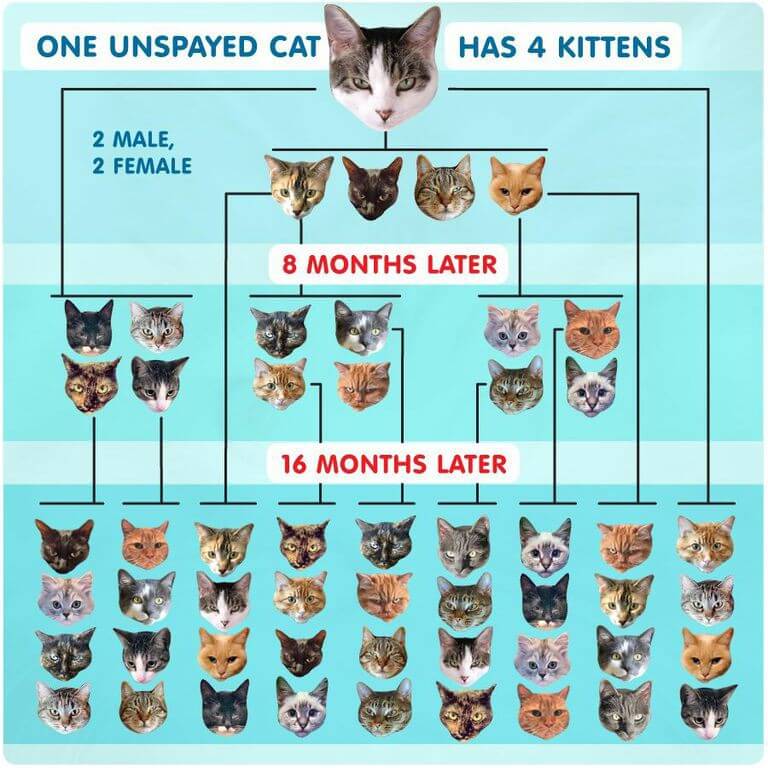
Teach people how important it is to spay and neuter their dogs and cats. Around 70,000 puppies and kittens are born in the U.S. every day, and there are nowhere near enough good homes for all of them. Spaying and neutering can help end the homeless-animal crisis!

spay-cat-overpopulation-crisis

2. Ask for birthday donations.

For Sydney and Alexandria’s 10th birthday, they decided that there was nothing they wanted more than to make animals in need happy. They asked their friends and family to give them donations for their local animal shelter instead of birthday presents, and they raised enough money to buy warm beds for dogs so that they wouldn’t have to sleep on the cold concrete floor.

3. Raise money for animals.

Head over to a local business, like a grocery or hardware store, with your parents and ask if you can hold a bake sale in front of the building. Once you get the OK, hang signs up in your neighborhood a couple of weeks in advance letting people know when, where, and why you’ll be holding the bake sale. Be sure to make lots of yummy vegan treats and create signs showing the prices of the goodies.

Bake Sale (4th Graders from Charlotte, NC)

Ask your parents to post about your bake sale on Facebook to make sure that lots of people will know about it! During the sale, make sure you have some cash with you to give people change and plenty of napkins and bags so customers can take their treats to go. And of course, be sure to put out a donation collection can. (Sydney and Alexandria have held many bake sales for animals, and they say that people often give a donation without even taking a treat!)

4. Volunteer at your local animal shelter.

You may need your parents’ help with this one, since some shelters require that volunteers be a certain age unless theyre with a parent. If you find a shelter that will let you volunteer, you can walk dogs, clean up after the animals, refill water bowls, and give out toys and treats. Even just being there to pet cats and scratch dogs behind the ears will help them feel less lonely.

5. Adopt animals from shelters.

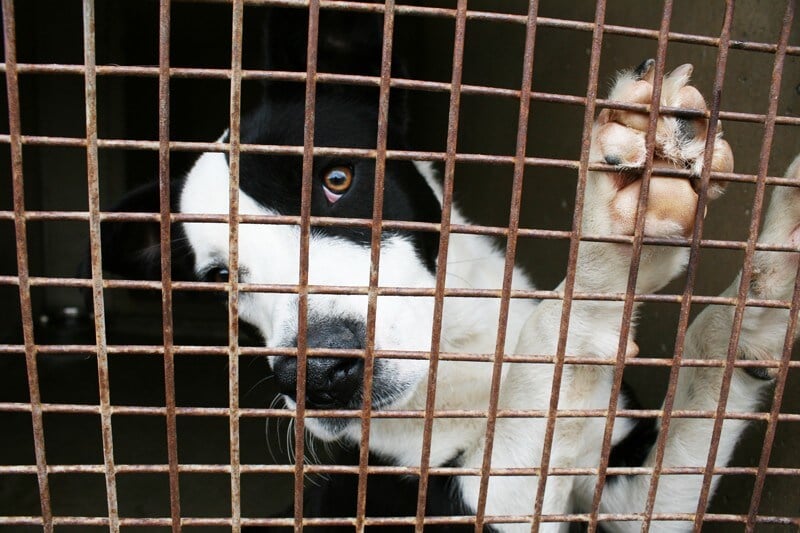
Dog-in-ShelterFreeImages.com/ vee bee

Instead of buying them from pet stores or breeders, be sure to always adopt animals from local shelters. Every year, more than 6 million animals are taken to shelters, and about half are euthanized because there aren’t enough good homes for them. If you have friends who are ready to take good care of a dog or cat (or any animal), urge them to adopt from a shelter instead of buying from a breeder or a pet store.

6. Set up a donation drive.

Ask your teacher or school principal if you can lead a donation drive at your school for an animal shelter. You and your parents can write a letter telling your school officials how you plan on doing it and why it’s important to collect items that animals in shelters need, like food, toys, leashes, beds, and blankets. You can ask your classmates and their friends and family to donate. And get a group of your own friends together to make colorful posters so you can spread the word about the donation drive!

7. Foster an animal.

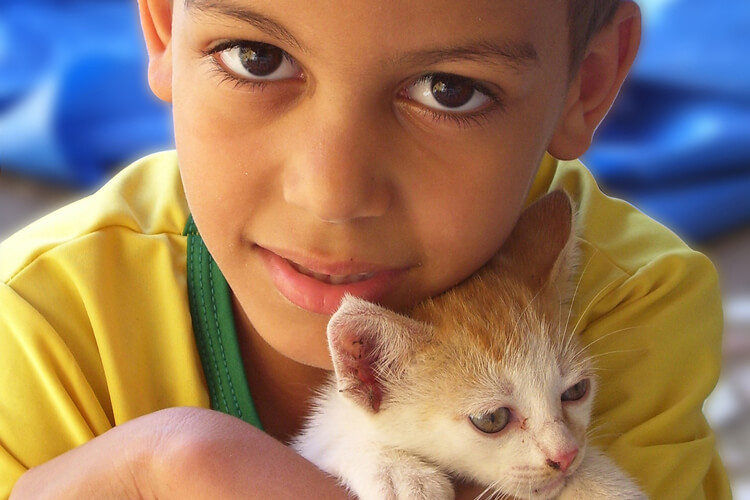
Ask your parents to help you foster a homeless dog or cat. There are so many animals in need of a safe temporary place to hang out while they recover from an illness or injury, and some puppies and kittens need a quiet place to grow, away from the busy animal shelter. If you can commit your time and resources to fostering an animal, you’ll be helping two animals—the one you take into your home and another one who will get a place in the shelter.

Boy-with-Kitten-CatFreeImages.com/ Aurelia Werneck

It can be hard to say goodbye to an animal you’ve been fostering once they’re adopted into a permanent home and no longer need you to take care of them. But the good news is that because of you, an animal got a second chance at life in a loving home, and that’s pretty awesome! Fostering an animal is a big commitment, so you’ll need to ask your parents to help while you’re at school. With their mom’s help, Sydney and Alexandria have fostered more than 25 animals. If they can do it, so can you!

8. Speak up.

When you see animals in trouble, try to help them. If you see a dog chained to a tree every day when you walk home from school, ask your parents to call your local animal control officers and tell them why you’re worried about the situation. If you ever see kids being mean to stray cats (or anyone hurting any animals) stand up for them if you can. If it’s not safe for you to get involved, then ask a parent or trusted teacher to help.

9. Be kind to animals of all ages.

Older-DogFreeImages.com/ Annette Sparrow

Elderly dogs and cats may sleep most of the day and not want to play very much, but they need love and care, too. Sometimes, people are more interested in puppies and kittens because they’re more fun and playful, and older dogs and cats get ignored or neglected. Make it a point to give some extra attention to the older animals at your local shelter whenever you stop by!

10. Spread the word.

Ask your parents to post a photo or a video of a dog or cat who needs a home on their Instagram or Facebook pages. Many shelters have fliers you can download and hang in local coffee shops and other businesses. If not, just make your own! Along with pictures of the animals, include their age and gender, whether or not they get along with other animals and young kids, and any health problems they have. Also, don’t forget to put in the shelter’s contact information for anyone who is interested in adopting. All it takes is one kind person to see your flier and decide to adopt!

Thank you for caring!

It Makes a Difference to That One

From http://www.lamanchaanimalrescue.org

A vacationing businessman was walking along a beach when he saw a young boy. Along the shore were many starfish that had been washed up by the tide and were sure to die before the tide returned.

The boy walked slowly along the shore and occasionally reached down and tossed the beached starfish back into the ocean. The businessman, hoping to teach the boy a little lesson in common sense, walked up to the boy and said, “I have been watching what you are doing, son. You have a good heart, and I know you mean well, but do you realize how many beaches there are around here and how many starfish are dying on every beach every day. Surely such an industrious and kind hearted boy such as yourself could find something better to do with your time.

Do you really think that what you are doing is going to make a difference?

The boy looked up at the man, and then he looked down at a starfish by his feet. He picked up the starfish, and as he gently tossed it back into the ocean, he said, “It makes a difference to that one.”

~Anonymous

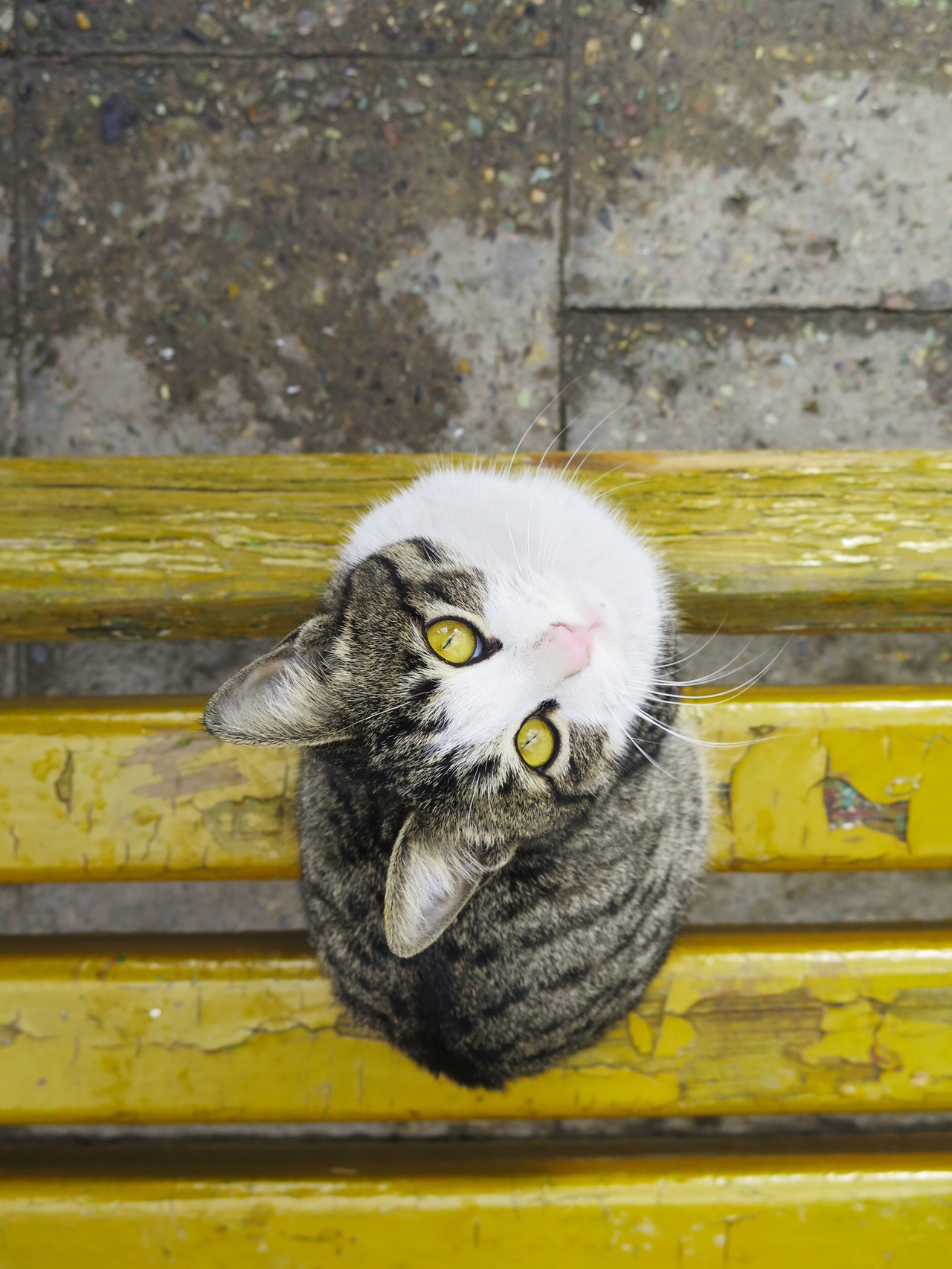
A Way to Help Stray Kitties

Helping Bears & Other Animals

World Animal Protection is a worthy organization. In 2016 they protected more than 100 million animals.  Please visit: https://www.worldanimalprotection.org/

Help a Cold Dog Survive the Winter

Dog in the Cold

Become a PETA “Angels for Animals” sponsor and help supply a sturdy new doghouse to a “backyard dog” struggling to survive the rain, snow, and freezing temperatures this winter.

Any amount helps contribute to building a dog house for an animal in need.  Please go to: http://bit.ly/2iFOr1L

We Can Do More Than We Think We Can

What does it take of us to help an animal in need?  A bit of time, perhaps, and some inconvenience.  We’ve helped one animal to suffer less.  This small victory does not have a widespread impact, but it certainly changes the world for that one animal.DSC_0135 2

It’s easy to bypass an animal in distress, a lost dog, a stray cat, injured creature, a starving animal.  It’s easy to turn away and to assume that others will do something.  Most of us don’t do anything.  It requires giving of ourselves or our time in some small capacity, and we’re busy, busy, busy.  I believe that each time we turn away, some small portion of our humanity is eroded.

Years ago I made an agreement with myself: when I see an animal in need, I will do whatever I can to remedy the situation.  I’ve found that “whatever I can do” is generally more than I had originally thought.  This has led me to capture stray dogs and humanely trap stray cats and deliver them to the SPCA, to gently instruct children and others in kindness to animals, to intervene when I see human cruelty to animals, to become a vegetarian, to inconveniently arrive late at meetings when I’m rescuing an animal.  I sleep better at night for all this.

My dream is to have a widespread impact on humane treatment of animals.  If each of us engaged in some small gesture of kindness, of help toward animals, so much suffering could be reduced.  Will you join me?

raleigh

Go Ahead: Put Some Water Out for Strays…

feral cat pexels-photo aug 2016It’s August, it’s hot, and rain is scarce in many regions.  Imagine being thirsty.

A bowl of water, refilled daily, along with some food, can ease suffering immensely.

Thank you….