One Small Pause, One Saved Life

Saving just one animal won’t change the world, but the world will change for that one animal

It only takes a moment to feel. Just drop your attention to your body and from there, perceive. This cuts through some of the mind chatter and justifications, and for just those few moments, you might feel your body and your emotions without much of a filter, without so many distractions.
What if we all practiced this kind of more direct experience now and then? My guess is that the world—and our treatment of people and animals—would be kinder, our actions would be more intentional.

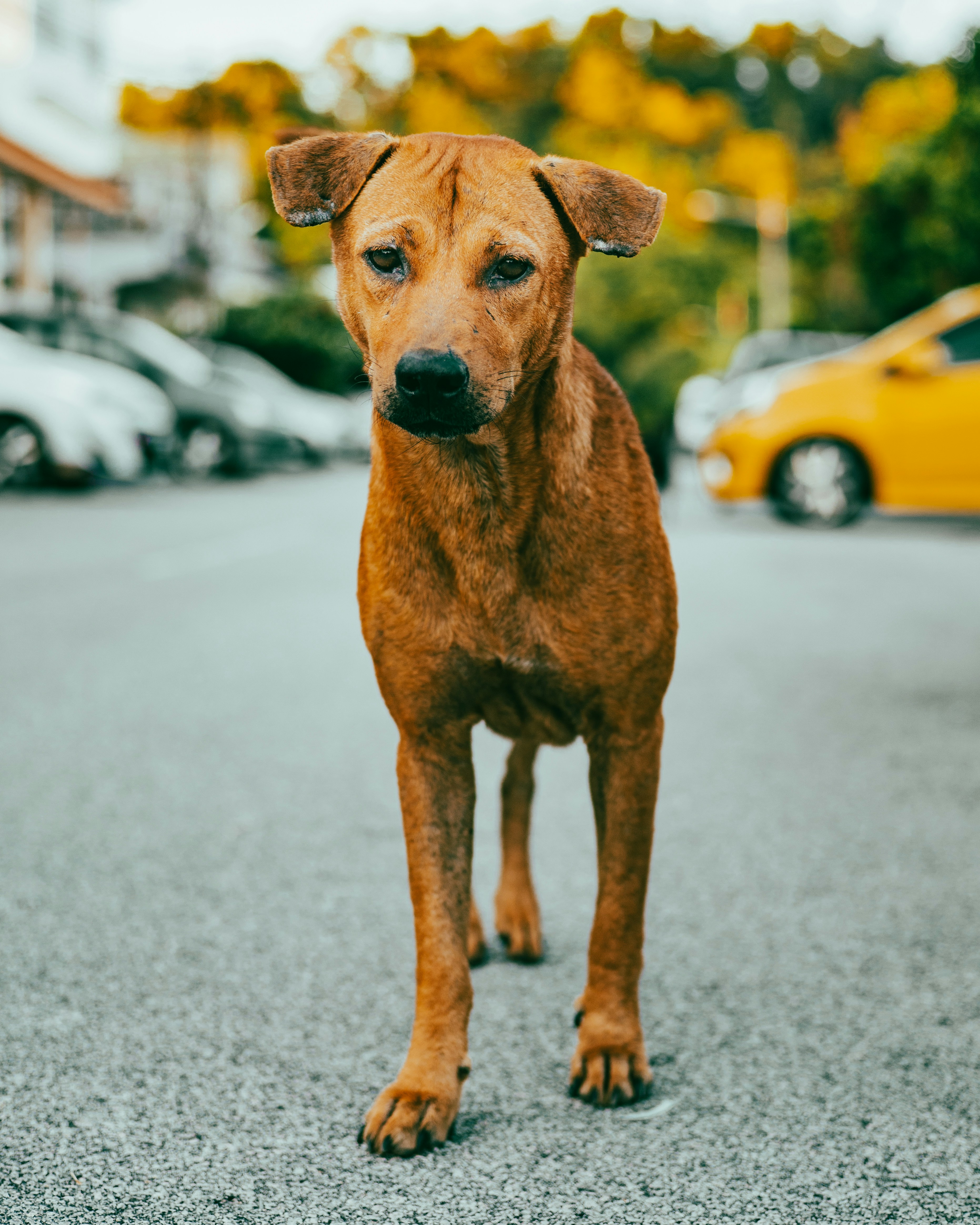
Here’s one example. The man waited in line at his favorite lunch stand on a busy city street in Philadelphia. He noticed the stray dog, again. He’d seen him on other days but hadn’t given the dog much thought beyond: oh well, survival of the fittest. The skinny dog sidled up to the lunch stand, sniffing the fragrant food and looking up at the people in line, hopeful. Those in line and the passersby ignored the dog. It’s easier and more convenient not to pay heed.

On this particular day, the man looked into the eyes of the dog and recognized something familiar, something like kinship, connection, and he felt empathy. He broke off a corner of his sandwich and held it out for the dog, who took it gingerly, swallowed it without chewing, and looked up at the man expectantly. The man pulled out his cell phone, and searched for and dialed the number for a local animal rescue.

The man sat down on a nearby bench, and the dog followed a few respectful steps behind him. He held out another piece of his sandwich to the dog, who ate it and wagged his tail. Over the next while the man gave the dog the rest of his sandwich in tiny pieces. A small white van pulled up and parked, and a uniformed woman climbed out. She glanced at the man, nodded to him, then crouched down and extended a treat to the dog. As the dog took the food, the woman spoke softly to him and slipped a leash over his head. The dog sat down at her side and looked up at her as if to say, what’s next? The woman asked the man if he’d seen the dog in the area before, made a few notes on her phone, and thanked him for caring enough to make the phone call. She slid open the side door of the van, and the dog jumped in, happily. Off they drove.

The man bought another sandwich, this one for himself. As he walked away, chewing thoughtfully, he felt good.

Compassion in action:

When you see a dog or cat that appears to be lost, hungry, or in danger of injury (like on a street), contact help. To find a list of local rescues and shelters, add in your town/area towns in the following link: Identify local rescues in your area (while the site is focused on adoption, this link lists rescues by locale).

You can also go to google.com and type in:SPCA near meor animal rescue near meor animal control near meor animal services near me

Thoughtful, weekly stories about animals, nature, and what it means to be human: https://thekindlife.substack.com/
A Conversation Across Species

What happens when a bird masters human logic, proving intelligence knows no species? Alex the parrot’s story will change your perspective. For the complete tale, exclusive reader Q&A, and weekly actionable insights —join me for free on Substack

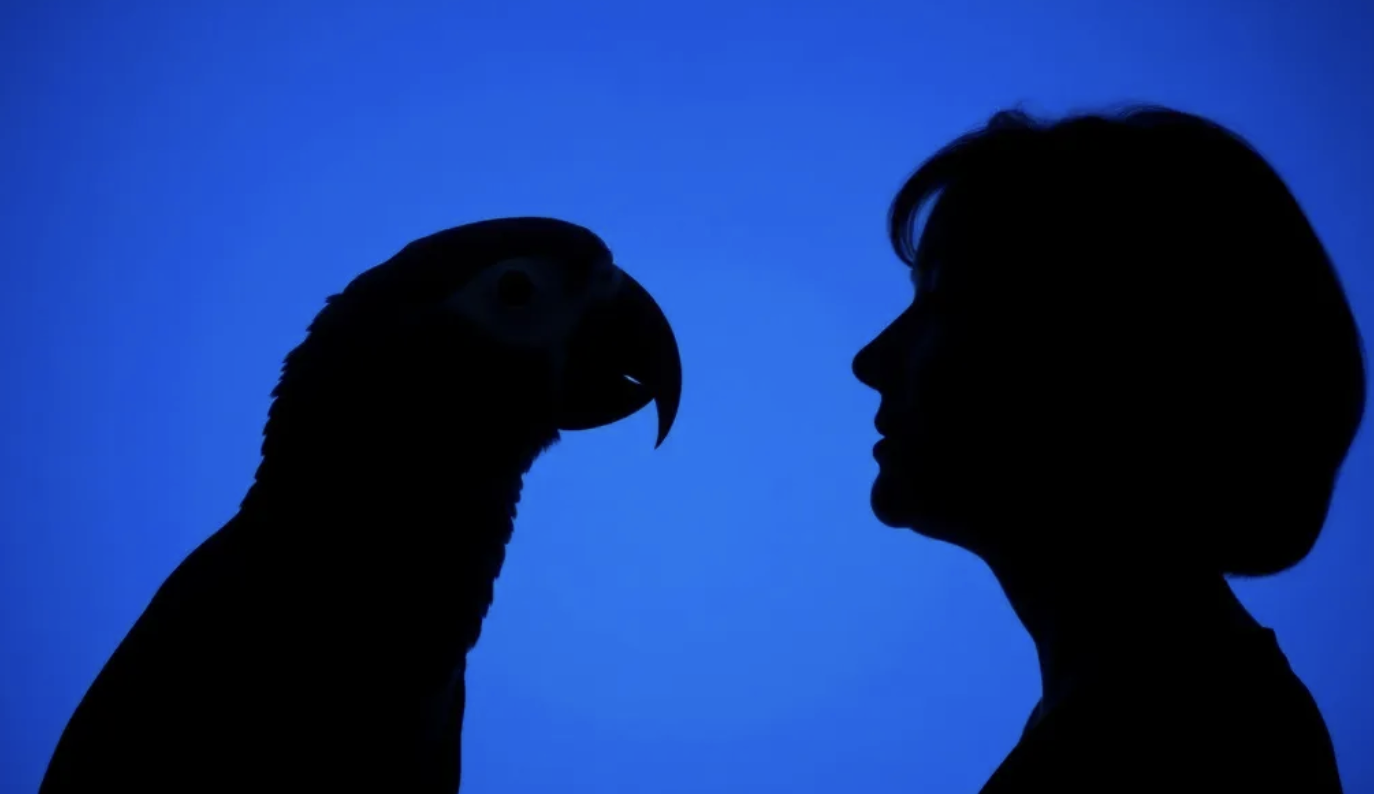
In the 1970s, a commonly held belief, especially among non–pet owners, was that animals were essentially automatons, reacting to stimuli but lacking the abilities to think or feel. Animal psychologist Irene Pepperberg sought to test the theory. In 1977, she brought Alex, an African gray parrot—a species famed for its mimicry—into her Brandeis University lab. She began an experiment that would eventually blur the boundary between human animal and nonhuman animal minds.

One of the ways Pepperberg taught Alex was through the Model/Rival technique, where two humans interacted in front of him so he could observe words used purposefully rather than merely repeated. Within a few years, Alex had a working vocabulary of more than a hundred words. Alex could identify objects by color, shape, or material—and even combine those concepts when asked questions like, “What color three-corner wood?” correctly answering “green.” He could infer absence, identifying a missing color through the process of elimination, demonstrating logic-based reasoning. When shown two items and asked, “Which is bigger?” or “Which is greener?” he chose accurately. He understood abstract ideas like “same,” “different,” and even “none,” correctly answering “none” when asked how many green keys were among a group of colored keys. He could also group objects conceptually (e.g., all keys as “metal,” all fruits as “food”).

Alex grasped the concept of individual identity; when researchers asked him which bird they were pointing to, he would appropriately answer “Alex” for himself or name another bird—like “Griffin” or “Arthur.” He identified letters by sound, not just shape. When Pepperberg showed him a written letter and asked, “What sound?” Alex could produce the correct phoneme, indicating phonological awareness—an ability linked to early literacy in humans.

He created words for unfamiliar objects by joining elements of known objects; he came up with “banerry” the first time he saw an apple, apparently blending “banana” and “cherry”—a creative leap suggesting flexible thought. He used refusals like “No” or “Don’t want that” with unambiguous purpose. Alex showed rudimentary counting skills, counting up to eight, and in controlled tests, adding together two small groups of items when asked, “How many total?”

Alex’s intelligence came with a distinct personality. He teased researchers by deliberately mislabeling objects, then laughing when they looked surprised. When a student once misidentified a color, Alex corrected her—“No, blue!”—and repeated himself until she agreed. When a trainer ate lunch without sharing it with him, Alex muttered “Naughty!” while turning his back in offense. When Alex lost his temper and bit a researcher, he later said, “I’m sorry,” without being prompted—a sign of contextual awareness and social repair behavior rather than mimicry. He showed empathy-like responses. If a researcher seemed upset or frustrated, Alex sometimes said, “Don’t be sad,” or “It’s OK,” echoing appropriate emotional cues.

Alex died unexpectedly in 2007. His final recorded words to Pepperberg were “You be good. See you tomorrow. I love you.” Alex left behind more than data; he left a challenge to our assumptions about animal consciousness. His life invites science to reconsider the borders of intelligence—not as an exclusive human territory, but as an area still largely unexplored across the living world.

Loved this animal tale? Subscribe for free here and join a community of people who love animals: thekindlife.substack.com

Compassion in Action:

Consider making compassionate consumer choices. Cruelty-free products are cosmetics, skincare, or household items not tested on animals at any stage, from ingredients to final formulation. Look for certifications like Leaping Bunny, which requires strict no-testing policies throughout the supply chain as well as independent, third-party verification.

If you know of others who might enjoy this, please:

Share

Leave a comment

This is just the start—join my Substack for deeper dives into untold animal adventures, weekly updates, and a community of animal lovers: thekindlife.substack.com

New Substack: The Kind Life

The Kind Life

Read on Substack

Please take a look on Substack and subscribe for free for a weekly dose of hope with real stories, insights, and simple actions you can take to improve animal welfare.

The Kind Life

I’m Carolyn Cott, an animal-welfare advocate and professional writer who’s always asking, “How can we make things better for the creatures who share our world?” Perhaps you’re asking the same question.

Whether you’re a seasoned rescuer, a caring pet parent, or someone who simply wonders, “What can I do to help?” this space is for you. Here’s what you’ll find:

  • Heartfelt, real-life stories of animals (and humans) that uplift and surprise
  • Research and insights into animal behavior, antics, and communication
  • Myths versus facts about animals, animal advocacy strategies that work, and human-animal connection
  • Interviews with vets, rescue workers, trainers, and public officials
  • Practical ideas—mini-actions and meaningful moves—that you can easily act on

I know that a lot of writing about animal welfare can feel heavy or alarming. Here we shift the tone to hope and curiosity rather than fear, to connection over detachment, and to actions—big and small—that are doable and feel meaningful.

I’d love to hear from you: your thoughts, your questions, even weird things your dog or cat does (my ears will perk up), and topics you’d like to see featured.

Here’s to kindness in action, discovery in every paw print, and shared steps toward a gentler world. Please subscribe for a weekly letter delivered to your inbox and please share this post. Thank you!

Warmly,
Carolyn Cott

This post is public so feel free to share it.

Share

Leave a comment

The Kingfisher’s Flight

The pond’s edge is glassy, the middle wind-rippled.  From the birch tree I peer into the water.  Pondweeds corkscrew up to the surface, blooming tiny flowers.  Lily pads open themselves to the sky.  I wait.

On the far shore a beaver slaps her tail.  The woods creatures pause and look, then return to foraging.  I wait.

Sun and shadow move across the far hill and meadow grasses sway.  High summer has passed and the earth exhales toward autumn.  I wait.

As the sun sinks toward the horizon, ephemeral insects dip and dance above the water.  A flicker of silver rises toward the pond’s surface.  I lean into the wind and dive.  As the fish spirals out of the water, shedding sun-glinting droplets, I intercept it.  Then I spread my wings and fly, hearing the whoosh, whoosh of my wings in the wind.

UntoldAnimalStories.org is a nonprofit organization that seeks to invite small acts of kindness toward animals.

We welcome guest bloggers.  If you’re interested, please contact us at untoldanimalstories@gmail.com or via our contact page.

Ollie & Spuds – Chapter 6

Think, Think, Think

Spuds wakes up and sniffs the air. It’s warm-cool and carries the smell of green growing things. Feeling hopeful, Spuds stretches and then gently paws Ollie’s cheek to wake him.

Ollie twitches and opens one eye as a warning to Spuds. Spuds pointedly turns away and looks upward, as though the sky is suddenly interesting. Then she leaps onto Ollie’s back. This sends shivers up Ollie’s spine. He sits up abruptly, which sends Spuds careening off of him. She lands gracefully, looks at him expectantly, and paces. We need to go out, now.

Ollie does a down-dog stretch and then shakes. The motion starts at his tail and progresses to his snout, from which spit flies like raindrops. Spuds squints against this.

They walk out the alley and onto the street together and make their rounds: trash cans, dumpsters, the park. Ollie finds half of a bagel beneath a park bench and offers to share it with Spuds, who has no interest. She’s scanning the area under a thicket of shrubs for any movement of mice. No luck. They amble on, skirting a stray dog working on a garbage bag, and slip down a side street.

Ollie smells something delicious. His raises his head, flares his nostrils, and takes off at a trot. Spuds runs to keep up with him. Ollie’s nose leads him to a truck parked in an alley. The door of the truck is rolled up and delicious scents come from within it. They look around, see no one, and scamper up the ramp.

There are cheeses, lots of cheese—in wheels, in boxes. Ollie selects a ripe-smelling cheese wrapped in cloth, holds it between his paws, and tears the wrapping. Together the animals devour it, their snouts covered in soft cheese. Partway through their feast they glance at each other with glee.

So engrossed are they that they do not notice a man approaching the truck. He is unaware of the animals and rolls down the steel door. Ollie and Spuds dash toward the opening. Spuds sees she can make it through the remaining opening, but Ollie is too chesty. She stops. Ollie looks at her, wrinkling his brow. Spuds looks away.

Slits of daylight edge the door. The engine starts and the truck jolts forward. Ollie and Spuds splay their feet, lower themselves to the floor, and look at each other with wide eyes.

As the ride proceeds smoothly they are able to stand up. Ollie is nose level with a round of cheese. He takes a bite of it. Spuds watches and then jumps up on the cheese wheel and eats as well.

They eat until the truck lurches to a stop. They hear voices outside the truck and position themselves at the side of the door, Spuds first, Ollie behind. When a man rolls open the door, they leap from the truck and run, looking back. One of the men stoops down and calls to the animals, extending his hand outward, palm up. The other man says, ”If we can catch them, I’ll drop them off at the humane society on the way back.”

The men walk toward them slowly, calling softly, but Ollie and Spuds sprint toward the woods. There they tuck themselves behind a boulder and peering through leafy undergrowth, watch the men walk away.

When the men are out of sight, Ollie and Spuds look around. The fields that surround the town from which they fled are dotted with clusters of trees and farms and edged by hedgerows. In the far distance, there is another small town. At the bottom of a steep slope behind them they hear a stream and walk toward it, Spuds picking her way gracefully, Ollie sliding downhill in places. They drink their fill.

Ollie lies down, rests his head on his paws, and closes his eyes. Spuds paws gently at Ollie’s snout, and when he opens his eyes she looks pointedly, repeatedly between the deeper woods and Ollie.

Ollie rises with a groan and follows Spuds through the woods. She doesn’t always choose a path suited to Ollie’s size; at places he has to scoot on his belly. They come to an outcropping of rocks protected by thicket of bushes and there lie down. A large animal ambles into view. It chews slowly in a circular way, bending its head toward the earth and raising it, its mouth bristling with grasses. The creature looks at Spuds and Ollie with a long, steady, neutral gaze. Spuds nestles closer to Ollie, and they sleep.

(c) 2024 Carolyn Cott – To be continued

Ollie & Spuds – Chapter 4

With That Picture in Mind, She Could Sleep

Spuds returned to the alley where she had lived with her kittens and sniffed the air, smelling their scents. She walked out the alley and never returned.

She spent her nights wandering, half-heartedly hunting for food, nibbling at tidbits in dumpsters. Spuds slept during the day wherever she felt reasonably safe, tucking herself behind boxes and dumpsters or in a cluster of trees and shrubs in a park. She had difficulty sleeping without her kittens to curl around, but there was one hopeful image that allowed her to drift toward sleep: kind hands taking care of her kittens, giving them food, water, care. Her first thought upon waking was of her kittens: the way the sun shone on their fur, their ticked whiskers alternating white and tan to the tips, their stubby tails, fuzzy and broad at the base and tapering.

One morning when Spuds was searching for a place to sleep, she wandered into a part of the city where women’s high-heeled shoes clicked purposefully on the sidewalk and men’s overcoat tails flew behind them in the wind. Shiny, large cars purred along the street. She sniffed the air and followed the scent to an alley with a fragrant-smelling dumpster. At the end of the alley she noticed a mouse moving along a wall. Noiselessly and slowly, with her ears flattened to disguise herself, she moved toward the mouse, pounced, and missed. Only then did she notice the dog. He was stretching and keeping a wary eye on her.

To be continued

(c) Carolyn Cott 2023

Ollie & Spuds – Chapter 3

Holding the Gaze of Each One

Spuds hunted by night and slept by day. She moved every few days, eventually coming to the city where she was able to augment hunting with cast-off food in garbage bins.

Spuds came across a band of other cats in a city park and tried to live with them, but they were as prone to fighting as they were to grooming each other. She left and eventually made her home in a partially crushed box in a trash pile on a quiet side street. It was often bitter cold, but there were plenty of mice to hunt. Water was the issue. She learned to drink to excess when it rained and to withstand thirst when it did not. In the coldest weather, the water froze, and Spuds went without water for days. It was difficult not to crave it and sleep was her only escape, but sleep was never deep and sound. Part of her mind remained alert for danger.

By late winter, Spuds’ belly had grown. One morning she birthed four tiny kittens, three orange, and the smallest a pale ginger. These little creatures evoked more love in Spuds than she’d ever felt, even beyond that she felt for the old man.

The need for food increased and so she hunted more. Each time she left her kittens she communicated to them soundlessly through pictures in her mind: do not move, do not mew. She held the gaze of each of them in turn before leaving.

As the kittens grew, Spuds couldn’t keep them sequestered, and they needed to be taught to hunt. They wandered with her on some nights through the streets and alleys searching for food. Twice she had to fight dogs to keep her kittens safe. Once the ginger-colored kitten barely escaped the wheels of a car.

Spuds sensed the time was near when the kittens would wander off to start their own lives. At dawn after a night’s hunt, when they settled down to sleep, Spuds sent them images of the life she once had, of the life she hoped they would find: a fireplace, kind hands setting down bowls of food and water, a soft place to sleep, and safety, safety, safety.

During one of her solo nighttime wanderings, Spuds came upon a building from which came a chorus of meows and barks. Spuds listened. In the varied calls there was mostly complaining and questioning.

Over the next two days she ventured out during the daytime to the building, hid in the shrubbery and watched. A van came and went, from which emerged a large man stuffed into a uniform. His face was always serious. The dogs he brought in were often skinny and haunted looking. The cats he brought in were yowling and flattened to the bottom of their carrying cases. Other people came and went, some teary-eyed and bringing animals in, some bringing animals out and chattering to the bewildered-looking cat or dog.

Spuds gathered her brood over a feast of freshly caught mice. The kittens finished their meal and Spuds crunched through the remains of mouse bones. After they had washed their faces, cleaned their whiskers, and were content, Spuds sent them images of her plan. They paid attention, watching her intently, and then they slept together one final time. Spuds awoke once and looked at her sleeping kittens, memorizing their shapes and the way their breathing moved their bodies gently.

When the moon was high, Spuds nudged the kittens awake. They yawned, stretched, and trailed after her through the streets to the place of meows and barks. Spuds settled them beneath a shrub by the front door and waited. As the sun rose, Spuds licked their faces and looked into their eyes, conveying love. When each kitten held her gaze and blinked slowly, Spuds moved her focus to the next kitten.

People started coming to the building, their purposeful footfalls clicking on the pavement. Spuds saw the man in the uniform coming up the walk. She nudged the ginger-colored kitten out from under the shrub. The kitten meowed. Spuds nudged the other kittens and they followed their sister.

The uniformed man looked down at the kittens and sighed. He scooped up all four of them in his arms at once and then saw Spuds. He called to a woman coming up the walk behind him. She reached beneath the bush toward Spuds, but Spuds panicked and dashed away. The woman ran after her, but Spuds was faster. Before turning the corner, Spuds looked back toward her kittens, watching the last stubby orange tail disappear through the door.

to be continued

© 2023 Carolyn Cott

Ollie & Spuds – Chapter 2

A Well-Shod Foot

The cat’s name is Spuds. The old man who’d found her thought she looked like the color of Yellow Finn potatoes. He’d pulled the mewing, trembling kitten out from under a bramble on a roadside. He stroked her fur with work-rough hands, looked into her gold-green eyes, and took her home.

Spuds had a good life with the old man: She curled up on the rug by the wood stove in winter, dozed on the screened porch in the summer. Spuds loved the old man; they understood each other. But one morning when she went up to his room to inquire about breakfast, something was different. She jumped onto the bed, stood on his chest, and peered at him. She could sense him, but he wasn’t there. She meowed, calling to him. Then she saw a picture in her mind: it was he, and his eyes were blue, dazzling, and loving. Then the image receded and he was gone, as was the sense of him being in the room. Spuds looked at him one last time and left the room.

Four days passed during which Spuds clawed her way through a bag of cat food and found that fresh toilet water wasn’t completely undrinkable.

Then one person came and then a cluster of them—people Spuds had never seen before. They pawed the old man’s possessions, argued with each other, and carried things out of the house. Spuds watched. A woman noticed Spuds and picked her up in one hand, dangling her. Her bangle bracelets clanged together as she walked to the door and dropped Spuds outside. Spuds sniffed the air and turned to go back inside. The woman blocked Spuds’ way with a well-shod foot. “You’re free now kitty, go away.” She closed the door with a thud.

Spuds looked for a long while at the closed door. Then she walked down the driveway. Before turning onto the road, she looked back at the house. The windows glinted in the sun.

to be continued

(c) 2023 Carolyn Cott

Ollie & Spuds – Chapter 1

By Carolyn Cott ©2023

Chapter 1 – The Alley

It’s been three days now since the cat appeared in Ollie’s alley. He thinks of it as his alley because he’s been there how long now? Two months, maybe four. He remembers arriving there. There was snow.

The man had unchained him, pulled him into the car, and drove. Ollie wanted to enjoy the car ride, but something was very wrong. The man hunched over the steering wheel, his jaw tight. The children weren’t there, although the back seat smelled vaguely of peanut butter, and the woman wasn’t in the front seat, turned toward and talking to the children.

The man stopped on a deserted city street. Looking both ways before opening the back door, he pulled Ollie out by the scruff of the neck and sped off.

Ollie ran after the car as it moved farther away, turned a corner, and was gone. He memorized the place where it had turned. Panting, he sat down, only then noticing the cold. The sun had just risen, casting chilly light on the blank faces of the buildings. A tattered awning blew in the wind. A spear of an icicle crashed onto the sidewalk.

Ollie ate snow but it wasn’t enough to quench his thirst and it made him shiver. He wandered the streets, looking for a familiar landmark and searching for food. Then he found the alley that smelled of food and garbage.

Ollie tucked himself behind a stack of wooden pallets and lay on a pile of cardboard where he felt relatively safe. A man in a stained apron pushed open a door with his foot and heaved a delicious-smelling bag into a dumpster. When the door clanged shut, Ollie scampered up the stack of pallets and into the dumpster, tore at the bag with his teeth, and ate.

He developed a routine of wandering the streets at night hunting for food and returning to his alley in the early morning before cars and people arrived. He learned it was not good to be out when people were about. There was an afternoon when boys chased him: chubby-cheeked boys in blue uniforms, dragging book bags and pitching stones at him. Most whistled past, but one hit him. Ollie yelped and slowed down. They were almost upon him when he ran again, cutting across a busy road, and losing them. Returning to his alley exhausted and thirsty, Ollie went to the base of a downspout and drank the small amount of water there. He slipped behind the pallets, curled into a tight ball, and slept.

Ollie frequently dreams of home, of his children, of the bowls of fresh food and water. When he wakes, he holds onto the memory before opening his eyes.

One morning Ollie smells something new. With his head still resting on his paws, he scans the alley and spots the flash of a ginger-colored cat, skinny and in pursuit of something at the far end of the alley.

Ollie rises and stretches, keeping an eye on the cat. The cat pounces and misses a mouse that leaps into a small hole in the wall. She then saunters into a narrow beam of sunlight slanting down between the buildings and washes herself, the sun sparking on her ginger fur. She lies down, curls her tail neatly around her toes, and closes her eyes to slits. She knows the dog is there. She is watching.

– to be continued –

A Puerto Rican Pup Whose Luck Changed

Valentina was found wandering the inhospitable streets of Puerto Rico. In an act of unthinkable cruelty, someone had covered her from the neck down in hot tar and set her loose to suffer. But Valentina was lucky; someone spotted her.

GreaterGood.org was born out of a desire to make a real difference—to connect people who want to help with people who are on the front lines in adverse situations. We work with over 150 charity partners worldwide, and operate several of our own on-the-ground programs to ensure your donation has maximum impact. Together, we can make a world of difference for people, pets, and the planet.

When emergency cases like Valentina’s come up, when disaster strikes a community in the U.S. or abroad, when biodiversity hotspots are threatened by development; when shelters are crumbling and schools are in desperate need of supplies, you can rest assured that your donation to Help Where It’s Most Needed is supporting meaningful programs that affect real, positive change.

Puerto Rico Animals pulled Valentina from the streets. With emergency medical funding from GreaterGood.org, they prepared for the agonizing process of removing the tar from her fur and skin. Afterward, she was practically a new puppy! We are thrilled to report that not only has she fully recovered from her ordeal, but she’s also been adopted into a loving forever home.

You can help. Your support makes all our work possible. Double the impact of your year-end donation today. 100% of your gift is tax deductible.

Click here to help dogs like Valentina