Sheba’s Transformation: From Fear to Friendship

by Robert Leardi, MD

I have loved dogs all of my life, but because my parents wouldn’t allow one in the house, I had to wait until I was out of the house and married before getting one. Since then, many dogs have been in my life, and all but one have been shelter dogs.

The one non-shelter dog was a retired show dog—a Cavalier King Charles Spaniel. She was a beautiful 10-year-old, extremely affectionate dog who, like all the dogs in my life, quickly bonded with me. After three months, she suddenly collapsed and died.

Afterward, my daughters began sending me photos of dogs from local shelters. One that caught my eye was a mixed-breed rescue named Sheba, thought to be under six years of age. She reminded me of my first dog, Prince, a Springer Spaniel mix who bonded with me instantly and seemed always to know want I wanted him to do without being asked. He also knew when I was coming home, although my arrival times varied. When we walked, he was at my side, never needing a leash.

Sheba’s adoption records showed that she had been seized by authorities in West Virginia “from a bad situation.” Like so many rescue dogs from the South, she was transported to the North for adoption. I adopted her in June 2023 through a local rescue, Hinde Animal Rescue in Media, PA.

Sheba

Sheba bonded with me quickly, but her mistreatment caused her to be terrorized by almost everything and everyone else. When I stopped to talk with neighbors on our daily walks she would whimper and pull away. Traffic frightened her, as did anything sudden or different. With me, Sheba was calm. I felt honored to be trusted by her and sought ways to expand her sense of safe. A dog psychologist evaluated her but was unable to help her beyond prescribing Fluoxetine, which had to be halved due to side effects.

The elements of time and loving patience seem to have helped the most. It’s been two years since I adopted Sheba, and she now sits or lies down patiently when I talk to neighbors, and her fear of traffic has passed. She is a low-energy, calm dog who loves to walk slowly, doesn’t pull, and walks with a slack leash. She refuses to play fetch, and when I throw a ball for her, it is I who has to retrieve it. Sheba smiles when she looks at me and has become the love of my life. She has become the companion that she is because she lives in a consistently loving environment. I suspect I have derived as much comfort from living with her as she has from living with me.
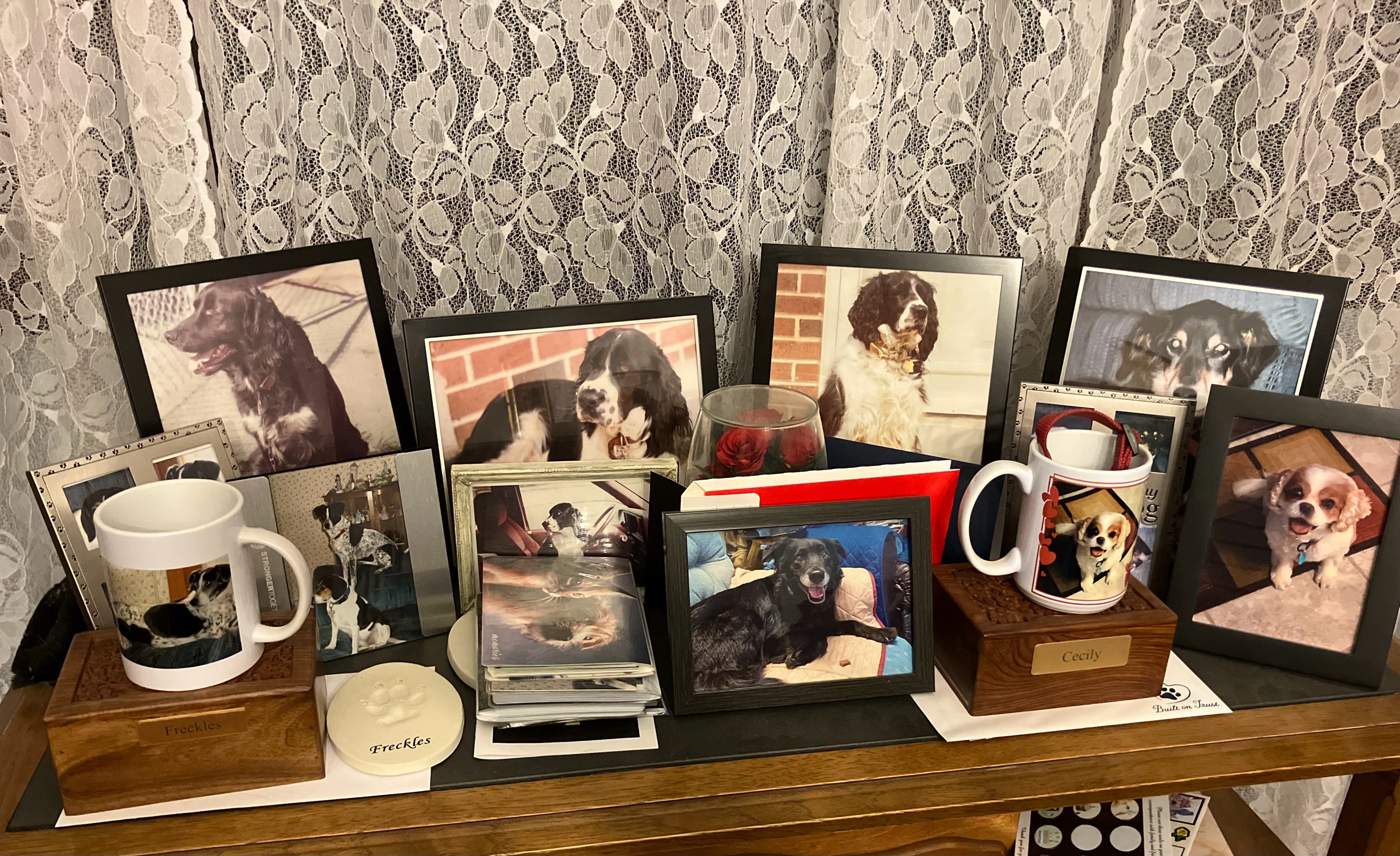
A tribute to all the dogs that have been in my life.

ARMCHAIR ANIMAL ACTIVISM – Ask Sec. of State John Kerry in Intervene for Former Bomb-Sniffing Dogs in a US-Owned Facility

https://animalpetitions.org/132540/shut-down-security-company-that-allegedly-massacred-dogs/

You Can Help Protect Women and Pets From Domestic Violence

Goal: 25,000 Progress: 14,391
Sponsored by: Humane Society of the United States

No one should have to choose between leaving an abuser and protecting a beloved pet, yet far too many women are forced to make this very choice.

The solution is the Pet and Women Safety Act (PAWS) Act. This legislation would help protect women and their pets in two ways: by setting a national policy that includes protections for pets of domestic violence victims and by establishing a federal grant program to assist in acquiring a safe shelter for pets.

The PAWS Act recognizes that domestic violence impacts all members of the family — including the four-legged.

Tell Congress you want pets to be protected under the Pets and Women Safety Act!  US readerslease consider signing this petition.  Thank you!

http://theanimalrescuesite.greatergood.com/clickToGive/ars/petition/HSUS-PawsAct?gg_source=ars&gg_campaign=Ad%20-%20468x250petition-protect-pets-and-women-from-domestic-violencears&gg_medium=house&gg_content=2016-04/468x250petition_160418111633.jpg

The FBI Makes Animal Abuse a Top-Tier Felony

Recognizing the link between animal cruelty and acts of violence against humans, the FBI has started tracking animal abusers nationwide the way it tracks domestic violence, arson, assault, and homicide.  It has made animal cruelty a Group A felony, on par with homicide, arson, and assault. This new policy is likely to help protect both animals and people, and represents a shift toward humane treatment of animals.

Research has repeatedly demonstrated that animal cruelty is often a precursor to violence against humans. Tracking animal abuse perpetrators will help law enforcement to better understand and respond to animal abuse, and help prevent violence against people and animals. The majority of serial killers and school shooters, for example, abuse animals prior to turning on humans.

In the past, animal abuse records were thrown into a broader category with no ability to track the abusers. Now that incidents are tracked, police chiefs and law enforcement are given the data to identify abusers and change the way they police their community.

“Documented research is clear and long-standing, but most law enforcement agencies haven’t acted on it,” says John Thompson, Deputy Executive Director of the National Sheriffs’ Association, who worked to institute the new animal cruelty category. “The documented data is there, and it’s not just guesswork. The immediate benefit [of the new policy] is that it will be in front of law enforcement every month when they have to do their crime reports. That’s something we have never seen.”

Thompson said that translating the link between animal cruelty and violence against humans into enforcement is likely to be similar to the trajectory of domestic violence in the early 70s, when law enforcement was initially perplexed about why the abused woman didn’t just leave. “We didn’t understand the dynamics of domestic violence,” states Thompson, “and as that understanding changed, things got better. Animal abuse is going to follow the same timeline. For this problem to be solved you have to get the legislators to create the laws, law enforcement to enforce the laws, prosecutors to prosecute, and judges to convict.”

Wayne Pacelle, CEO of the Humane Society of the United States, states that there will be “a real incentive for law enforcement agencies to pay closer attention to [animal abuse],” and will allow those agencies to better “allocate officers and financial resources to handle these cases, track trends and deploy accordingly.”

While this new FBI policy is focused on tracking animal abusers and not on prosecuting them yet, it is a promising harbinger that stronger animal abuse laws and enforcement will come to pass.

Sources:

http://www.npr.org/2016/01/16/463094761/along-with-assault-and-arson-fbi-starts-to-track-animal-abuse

www.huffingtonpost.com/2014/10/01/fbi-animal-cruelty-felony_n_5913364.html

http://www.huffingtonpost.com/entry/fbi-animal-abuse-tracking_568fd1d9e4b0cad15e6468c8?section=green