Shelter

A four-part story by pioneering educator and award-winning author Karla McLaren.
© Karla McLaren 2014

I don’t merely love animals; animals were my shelter and my sanctuary when I was little. The animals in my neighborhood helped me survive the overwhelming emotional realities of a childhood filled with abuse, and to be honest, they helped me learn how to love, how to trust, and how to endure. I don’t merely love animals; I respect them, I admire them, and I value them. I admire their intelligence, their empathy, their dignity, and their sense of humor. When people ask me jokingly, “Were you raised by wolves?” I proudly say “Yes: house wolves and housecats.”

So when my local animal shelter sent out a call for volunteers to help socialize the animals, of course I went, got trained, and began to work with hundreds of homeless dogs, cats, horses, birds, goats, rabbits, turtles, and pigs. This is the story of a few of the characters I met there.

He wasn’t merely not looking at me.  He was staring past me with an intensity that said, “You’re so not here that even the thought of you not being here fills me with disgust.”  I get that every now and then, and though it does hurt, I’ve learned not to crumble.

I gingerly push a meaty treat through his kennel door and onto the left side of his blanket, away from where he sits, but still within his field of view. “Well Mr. Crankypants, Mr. Dark Cloud of the Kennel, Mr. Hate, everyone gets a treat, no matter how rotten they are.” My friend in the next kennel, the silly brindle-colored hound dog Jake, waits patiently (as we’ve been trying to get all the dogs to do).  I move in front of Jake’s kennel, give him a treat from the pouch on my belt, and pet him and talk to him. I overplay our relationship a bit for the benefit of Hate Boy, whose kennel card identifies him as “Milton.”  Really, some people should not be allowed to name animals.

I shouldn’t be in this part of the kennel.  I’m just a volunteer, and I’m not supposed to go behind the sign that says “Staff Only,” but I nearly always ignore the rules and just shrug apologetically if anyone catches me.  This area is a chained-off part of the shelter, which is made up of rows of roomy kennel cages on either side of a cement walkway. My job this morning is to “greet and treat” all of the dogs so that they’ll associate the front of their kennels (and people peering at them) with positive things.  We want them looking eagerly at people – not sulking or shivering underneath their blankets, or sitting alone out in their private dog runs.  We want them to have the best chance of being adopted.

Milton, Jake, and the other dogs in the chained-off area are isolated from the public for some reason, and I’m not supposed to interact with them.  I used to stop at the chain that separated them from the rest of the kennel, but their crestfallen looks were just too hard to ignore. All of these dogs’ kennel cards explain why they’re behind the chain and separated from the other dogs.  Sometimes, they’re recuperating from surgery (all animals at our shelter are spayed and neutered, thank goodness).  For instance, my goofy friend Jake had a twisted leg that required surgery, and he’ll be in this isolation area until his cast comes off.  Sometimes, these dogs are waiting to be temperament tested (denoted by a blue “T” on their cards).  Sometimes, they’ve been temperament tested and found wanting (the blue “T” will have a red line through it), and they’re awaiting a decision about their fate.  Milton’s T was red-lined; he was a fate boy.  But this didn’t mean he couldn’t have a treat while he was waiting – at least that’s what I think.

Temperament testing is different than training testing – where we find out if a dog knows basic commands.  All of the staff and volunteers are taught how to train and resocialize animals, because no matter what their previous owners write on their surrender sheets, many animals end up at the shelter because they’re poorly trained.  They’ve been rewarded for rotten behaviors, and ignored when they’re being good, so they become what their owners inadvertently ask them to become.  We expect that, but what’s really frustrating is that we can usually get a dog turned around behaviorally in just a few training sessions.  If people would just swallow their pride and pay for some training, they’d have happy and well-adjusted animals that they wouldn’t need to bring to the shelter.  Habits can be changed.  What I’ve learned is that most animals are very reachable, and they’ll do whatever their human wishes if they’re just asked in the right way.  However, if a dog (like Milton) is temperament tested and found to be unreachable, he’ll most likely be euthanized.  At this shelter, we get basketsful of puppies and kittens, crippled animals and sick animals that owners can’t afford to treat, older pets whose owners have died, stray animals from all over the county, and renters’ pets whose presence actually stops their owners from finding a place to live.  No matter how many adoptions we manage in a day or a week, more animals come pouring in and the kennel is nearly always full to capacity.  There’s just not enough shelter space for animals like Milton who have decided that people are the enemy.  We can only do so much.

When people learn that I work at the shelter, they imagine that I’m overwhelmed by the need and sadness of the animals, but really, that’s not how it works. The trick is to just love everyone and not get too attached to specific personalities. A little bit of love can go a long way, and the more love the animals experience, the more likely they are to feel welcoming toward people and end up being adopted. No matter what, the names on the kennel cards will change, and life will move forward. Adoptions happen regularly, foster parents step forward, and many of the animals find homes.  There is hope, and whatever sadness I might feel is actually reduced by being here, by helping, and by loving the animals.

I finish giving treats to the dogs in the chained-off area, and as I head back into the regular kennel, I throw Milton a kiss, just to be funny – but he steadfastly refuses to look at me, and he hasn’t touched the treat I gave him.  Oh well. It’s time for my second round through the kennels.

to be continued next week…
for part 2: https://untoldanimalstories.org/2014/03/14/shelter-part-2/
for part 3:
https://untoldanimalstories.org/2014/03/21/shelter-part-3/

Karla McLaren is a pioneering educator and award-winning author whose empathic approach to emotions revalues even the most “negative” emotions, and opens startling new pathways into the depths of the soul. She is the author of The Art of Empathy: A Complete Guide to Life’s Most Essential Skill, the trailblazing book The Language of Emotion: What Your Feelings Are Trying to Tell You, and the interactive online course Emotional Flow. Karla has taught at such venues as the University of San Francisco, Naropa University, Kripalu, and the Association for Humanistic Psychology. She is currently developing new forms of empathy and social interaction curricula for neurologically diverse people.

The Art of Empathy

What if there were a single skill that could radically improve your relationships and your life? Empathy, teaches empathic pioneer Karla McLaren, is that skill. In The Art of Empathy: A Complete Guide to Life’s Most Essential Skill, McLaren presents her groundbreaking model of The Six Essential Aspects of Empathy to help you understand and nurture healthy empathy in every part of your life.  Informed by four decades of empathic experience, plus current insights from neuroscience, social science, the arts, and healing traditions, The Art of Empathy teaches you how to become a healthy and happy empathic presence in a world that needs you.
Ollie & Spuds – Chapter 2

(continued from previous post)   The cat’s name is Spuds.  The old man she’d lived with thought she looked like the color of yellow Finn potatoes.  He’d pulled her as a kitten out from under a bramble—mewing and shaking—on a busy roadside.  He gently stroked her fur with large, rough hands, looked into her gold-green eyes, and took her home.

Spuds had a life of luxury with him: curled up on the rug by the wood stove in winter, lounging on a sunny perch on the screened-in porch in the summer watching red cardinals and blue birds.  Spuds liked the old man, a lot; they understood each other.  But one morning when she went up to his room to remind him it was feeding time, something was different.  She jumped up on the bed and stood on his chest and peered at him.  She could sense him, but he wasn’t in there his body.  She called out to him.  Then she saw him in her mind’s eye, and his eyes were dazzling.  Then he receded and was gone.

Four days passed before anyone came to the house.  By then Spuds had clawed her way through the bag of cat food and found that fresh toilet water wasn’t completely undrinkable.

People came then, many of them, people who had never come before.  They pawed the old man’s possessions, argued with each other, and carried things out of the house.  Spuds watched.  A woman noticed the cat and picked her up, bangle bracelets clanging together, and put Spuds outside.  Spuds sniffed at the air, then turned to go back inside.  The woman blocked Spuds’ way with a well-shod foot.  “You’re free now kitty, go away.”

Spuds looked for a long while at the closed door.  Then she walked down the driveway and before turning onto the road, looked back at the house.  The windows glinted empty and cold in the sun.
Ollie & Spuds will be continued

Chapter 1: https://untoldanimalstories.org/2014/02/15/ollie-spuds-chapter-1/

Chapter 3:  https://untoldanimalstories.org/2014/05/04/ollie-spuds-chapter-3/

Ollie & Spuds – Chapter 1

There is a lane I recall, somewhere deep in dim memory.  I see it snow covered and winding and edged by black trees.  It is the way home.  I never returned there.
© 2014 Carolyn Cott

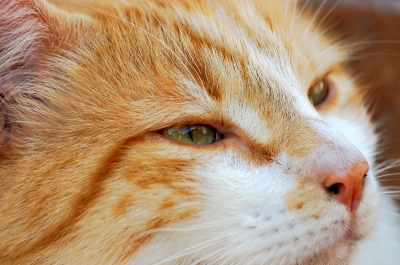
He lifts his nose to the wind and sniffs.  Something new.  With his head still resting on his paws, he opens his eyes and sees a flash of a ginger-colored cat, skinny and in pursuit of something, at the far end of the alley. red cat from free digital

Ollie climbs out from under a pile of rags and cardboard and stretches, keeping an eye on the cat.  The cat pounces and misses as the mouse leaps into a small hole in the brick wall and disappears.  The cat saunters into the one ray of sunlight angling between the tall buildings, sits down and begins washing herself.  The sun sparks on her ginger-colored fur.  Her movements are measured and deliberate.  Her eyes are slits, but she sees, she knows he is there.  She is watching.

It’s been three days now that the cat has appeared in his alley.  He thinks of it as his alley because he’s been there how long now?  Maybe two months, maybe four.  He remembers coming there.  There was snow.

The man had hunched over the steering wheel, his jaw set.  Ollie wanted to enjoy the car ride, but something was very wrong.  The kids weren’t there, although the back seat smelled vaguely of peanut butter.  The woman wasn’t there.  She had cried and stroked his fur before the man unchained him and yanked him toward the car.  The woman had whispered something to the man, who swung around toward her, his teeth clenched, saying, “No.  No.”

The man stopped the car on a deserted street.  He looked both ways before opening the back seat door, pulled Ollie out by the scruff of the neck, and sped off.

Ollie ran after the car as it moved farther and farther away, turned, and was gone.  He memorized the place where the car had turned.  It might be important.  Panting, he sat down, only then noticing the coldness of the snow.  He looked around.  The sun had just risen, casting chilly light on the faces of the buildings.  There were no people.  A tattered awning blew in the wind. A spear of an icicle crashed onto the sidewalk.

For two days Ollie ate only snow to quench his thirst, but it made him shiver.  He wandered the streets, looking for a familiar landmark and searching for food.  Then he found the alley.  It smelled of garbage and food.

Ollie tucked himself behind a stack of wooden palettes and waited.  A man in a stained apron pushed his way out a door and heaved a luscious-smelling bag into a dumpster.  When the door clanged shut behind the man, Ollie scampered up a pile of cinder blocks and bricks, dropped down into the dumpster, tore at the bag with his teeth, and ate.

He fell into a routine, wandering the streets in the night and returning to his alley in the early morning when cars and people came into the streets.  He had learned it was not good to be out when people were on the streets.  There was an afternoon when the boys chased him: chubby-cheeked, dressed in blue uniforms, with book bags dragging behind them, they ran after him pitching stones at him.  Most whistled past, but one hit.  He yelped and slowed down, and the boys laughed.  They were almost upon him when he ran again, cutting across a busy road and turning a corner to lose them.  Returning to his alley exhausted and thirsty, he went to the low depression in the concrete at the base of a downspout looking for water, where a small puddle remained.  Then he curled up into the tightest ball he could, and slept.

Ollie & Spuds…to be continued

Chapter 2: https://untoldanimalstories.org/2014/02/21/ollie-spuds-chapter-2/

photo by Dan courtesy of freedigitalphotos.net

Wink

as told by Kim Kemple Cott

winkWink came into our lives one day when my mom, Helen, was attempting to adopt a different dog than Wink.  Six months after her rescue dog, Zac the Vizsla, passed on, my mom starting looking with very specific criteria: the dog had to be a small, manageable size and had to be a rescue.

I’d been helping her search for a month by contacting local SPCAs and humane societies and by checking on www.petfinder.com (as of this writing, petfinder.com is featuring 332,076 adoptable pets from 13,476 adoption groups nationwide).  The right dog hadn’t shown up yet.

A friend suggested we try a particular rescue organization in the next county over.  I called my mom, picked her up, and we headed out there.  We got lost en route, stopped to ask for directions, were given directions to a different rescue, and got lost again.  After getting lost a third, time, we asked a police officer.  He wasn’t sure where the rescue was but said that he’d find out.  He pointed us the right way and we arrived after having wandered through much of the county.

We walked up and down the aisles, drawn by so many sweet animals.  We settled on a little brown dog and went to the front desk to provide them with the kennel cage number.  While we were waiting in line, my mom noticed a small black dog sitting in the office of one of the shelter workers.  My mom and I looked at each other, both somehow knowing: this was the dog.  My mom asked about him and was told he was up for adoption; he’d just had his eye removed the day before (kids had beaten him  and he was found lying under a front porch).  One of the shelter workers had taken a particular interest in this Pomeranian/Chihuahua mix, named him Eduardo, and cared for him personally.

As part of the shelter’s adoption process, my mom’s landlord had to be called to verify that he allowed pets.  He was unreachable.  This was a problem, because we really, really wanted to take the dog home that day.  We explained to the shelter worker that the landlord had already given verbal permission, that my mom had a previous rescue dog living there, etc.  The worker looked into my mom’s eyes, then into mine and said she’d be back shortly.  We waited anxiously.wink black and white

She came back, stacking the adoption papers into a tidy pile, saying, “Everything is in order,” and winking at us.  We smiled conspiratorially, signed the papers, picked up the pup, and headed home.

He was tentative and scared at first, but well behaved, and he bonded quickly with my mom and me.  Mom named this sweet creature Wink.  She took him everywhere to help him socialize with people and dogs.  So many people were kind to him.

One day my mom took him into a consignment shop.  The shopkeeper said, “We don’t allow animals in our store.”  Mom smiled warmly, leaned in, and said, “I know, and isn’t it so nice that you let me bring him in here.”

•   With so many good, adoptable pets available—and with an average of 1 in 4 pets in humane societies nationwide being purebreds—why not consider adoption rather than supporting the supply-demand cycle of pet breeding.

•   From the American Humane Society: It is a common myth that pet overpopulation means there are “not enough” homes for all the shelter animals. In reality, there are more than enough homes, but not enough people are choosing to adopt from a shelter. Seventeen million Americans acquire a new pet each year—more than double the number of shelter animals. Only 3.5 million people, or about 20 percent, choose to adopt their new pet. The rest choose to buy their pets from pet stores or breeders, or they choose a variety of other cheap or free sources. 

Despite increased public awareness over the past 40 years about the need to spay and neuter pets, 35 percent of pet owners in the U.S. still choose not to do so. Many among this group intentionally choose to breed their pets, either for profit or for what they mistakenly believe to be a “fun” experience. Others choose not to spay or neuter out of ignorance, believing that their pets won’t breed accidentally.

Carlos de Mockingbird

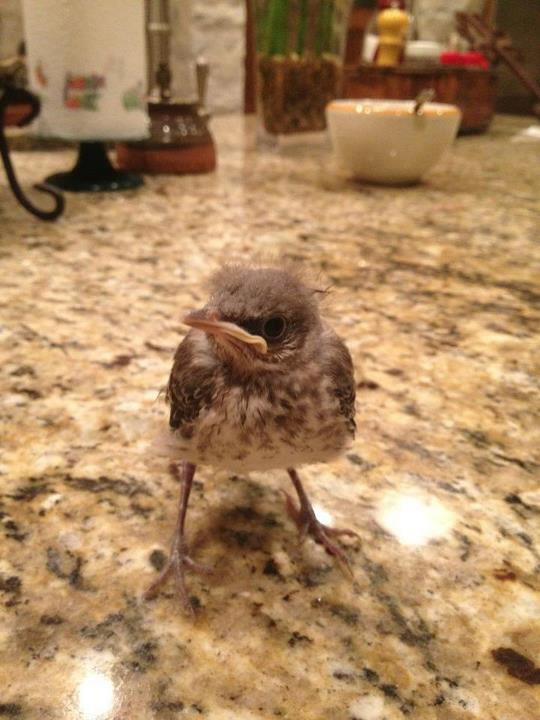
baby mockingbirdI saw the dog coming toward me.  My impulse was to move but I couldn’t.  As the dog bounded toward me, I looked up at the nest in the oak tree from which I’d fallen, fervently wishing I were there.

The woman yelled just as the dog’s mouth closed around me, but then something unexpected happened.  The dog held me gently in his mouth and walked to the woman, who by then had quit yelling.  The dog lowered me to the ground.  I blinked at the dog and the woman, then squeaked so hard that I lifted off the ground slightly.  The woman laughed, cradled her hands around me, and took me home.

I spent my early life inside the house with my people until my downy feathers turned into full-fledged feathers.  Then they started putting me on the rail of the deck—to acclimate me.  I lived in and liked both worlds, the wild one and the domesticated one.

Gradually I came into the house less and less often, although I did occasionally peer in the window to see what was happening.  I became friends with other birds, learned their songs, and started a family of my own.

The woman walks to her mailbox daily.  I swoop down and perch on the top of it, arriving just before she does.  She calls me by name and I sing a song for her.  Sometimes it’s a sparrow’s song, sometimes a wood thrush’s, sometimes a meadowlark’s.  She listens appreciatively, says a few kind words, then walks back to the house, sifting through her mail.  I watch her go, spread my wings, and fly.

Do you have a rescue story to share? Please email untoldanimalstories@gmail.com

Letter from a Dog to His Person

face of a labrador ... ID-100186636Dear Dad,

I asked Mrs. P to write this note for me.

I am getting bigger and I’m wanting an elevated food and water bowl. I like to gulp down water but when I am hunched over, my stomach hurts.  I am a bigger boy now, so may I please have a “big boy” food and water station?

Also when Mrs. P walks me, she uses a leash that goes long and short (retractable).  I have so much fun with this kind of walk.  I can walk bouncy bouncy just a little bit ahead of her, and I always look back and know that she’s still there behind me.  This brings joy to my life.  Would it be possible for you to get this kind of leash?

I love my crate.  It’s my safe spot, but I’m confused about the crate pad I lie on.  I chewed on the material that covers the foam because at first I was curious about what was underneath the material, and then later because I prefer the foam by itself.  Mrs. P told me that Home Depot sells foam by itself, which can be easily replaced when it gets dirty.  I am sorry about chewing the crate pad material, again.

Last but not least, can we discuss my bathroom?  I love my bathroom but I don’t know how to clean up after myself and I sometimes step in the mess.  Would it be possible to clean it up more often?  I wish I could use the potty like you, but I prefer to drink out of it.  Mrs. P and I cleaned my bathroom today.  I really enjoyed spending time outside and helping her.  I can tell she really loves me, just like you do.

I want to thank you for all you do for me.  You are the best dad ever.  I can feel when you’re happy, troubled, sad or just plain tired.  I don’t know how I do this…it’s just “inside” me, and I know things.

I missed you and am glad you are back.  I know you would never abandon me, so when Mrs. P and I spend time together, I am comforted that I will see you soon.

Loving you unconditionally,
Charlie

Who is Mrs. P?  See www.friendsofmrsp.org
Labrador Retriever, freedigitalphotos.net, by Photokanok

It Only Takes a Moment to Feel

It only takes a moment to feel.  Just drop inside your body, and from there, perceive.  This cuts through the clutter and diversion of mind chatter and justifications, and for just those few moments, you can perceive what is without much of a filter.

What if everyone practiced this heart-based seeing to a greater or lesser extent?   Probably the world—and our treatment of people and animals—would be much kinder.  ID-100222200

Here’s one example.  The man waited in line at his favorite lunch stand on a busy city street in Philadelphia.  He noticed the stray dog, again.  He’d seen him on other days but hadn’t given the dog much thought beyond: oh well, survival of the fittest.  The rumpled-looking dog sidled up to the lunch cart, sniffing the fragrant food and looking up at the people in line, hopeful.  Like all the other passersby and people in line, the man ignored the dog.  It’s easier not to pay heed.

On this particular day, however, the man looked into the eyes of this creature and recognized something.  He broke off a corner of his sandwich and held it out for the dog, who took it gingerly from his hand.  Then he pulled out his cell phone, called directory service, and dialed the number of the local humane society.

The man sat on a nearby bench, the dog following a few respectful steps behind.  He held out another piece of his sandwich to the dog, who swallowed it without chewing then looked up at the man, expectantly.  Over the next half-hour the man gave the dog the rest of his sandwich in small pieces while checking his phone for the time and peering up and down the street.  Finally, a small white truck pulled up and parked, and a uniformed woman climbed out.  She glanced at the man, nodded to him, then crouched down and extended a treat to the dog.  As the dog took the food, the woman spoke softly to him and slipped a leash over his head.  The dog sat down at her side and looked up at her as if to say, what’s next?  The woman asked the man if he’d seen the dog there before, and thanked him for caring enough to make the phone call.  She opened the back of the truck, and the dog jumped in, happily.  Off they drove.

The man bought another sandwich, this one for himself, and as he walked away, chewing thoughtfully, he felt good.

To find the phone number of your local shelter, add in your zipcode:  http://theshelterpetproject.org/shelters

Brown stray dog courtesy of freedigitalphotos.net – tiverylucky.

The Stray Black Kitten

I saw him again the other day, the black kitten that is growing into adolescence and toward adulthood.  He made it through the 0 degree Pennsylvania weather.  I hope that he found some place to shelter and was not, as I feared, huddled against a tree trunk with icy winds whipping around him.

Now that the weather has shifted, I will resume trying to humanely trap him (when I know he will not be sitting for hours in the trap, freezing, before I can get to him) and deliver him to the SPCA.  I hope that I can do so before he has sired kittens—all of which will be homeless, feral, and lead shortened lives.

When I saw the kitten the other day, he was sniffing around for food by the water saucer on my patio (since most animals do not eat ice or snow, I bought an outdoor water heater and placed it in a large plant saucer).  I stepped outside with the Mason jar of cat food I keep by the front door, walking slowly and speaking softly to him, but he ran off.  At the blue spruces at the edge of our property, the kitten turned around and looked at me.  I stood still, regarding him and looking into his wide, green-golden eyes, and I swear I saw him soften a little.

I poured the food into a tidy pile, plucked a leaf from the water saucer, looked at him again—his eyes had never left me—and went back inside.  He did not come right away, though later he did.  I can tell when the food has been eaten by a cat or a raccoon.  Raccoons hoover up every molecule of food, while cats eat only until they are full, sometimes leaving a small ring of food from which they’ve eaten away the center.

Once I trap and deliver the kitten to the SPCA, here is what will happen:  he will be euthanized.  I do not have qualms about this.  I think it’s infinitely preferable to the life he’ll lead in the wild—hungry, thirsty, scared, fighting for scarce resources, exposed to the elements, mistreated by some humans, and sooner than later, injured and diseased.  A feral cat typically lives only a few years, and they are not easy years.

There are approximately 40,000 million homeless cats in the US alone, though many think that number is a gross underestimate.  According to the University of Washington, each breeding pair of feral cats can produce between 100 to 400 kittens in seven years that live to reproductive age and subsequently reproduce, with each of those 100 to 400 mating and producing 100 to 400 kittens that live long enough to reproduce.  Given this exponential growth rate, it’s no wonder there’s overpopulation, and with overpopulation, the species as a whole and the individuals in it suffer.

Some humane societies are mandated to do feral capture, spay/neuter, and release.  I am vehemently opposed to this.  Some dedicated Trap-Neuter-Return (TNR) proponents provide food, water, and shelter for the neutered/spayed, ear-notched, and returned cats in their area, but this is rare.  More often, the cats are returned to a life of less-than-subsidence living.  While TNR can reduce overpopulation, which is good for the species as a whole, it does absolutely nothing for the suffering of the individual.

The black kitten will be given a humane, painless death by caring hands.  He will not be adding to overpopulation, and he will not go hungry or suffer.  I’m okay with that.


Humane trap:  http://amzn.to/1hLd1In

Outdoor water heater:  http://amzn.to/1ezfeU4

Animal-Speak and Other Joys

IMG_2134 At the close of the year, I sit quietly, a cup of tea in hand and two cats nearby, and reflect back on the year.  What has been steady and true for me throughout the year is my family, my dearest, oldest friends, and my animals.  Each brings joy, peace, and comfort in their own way, and I’m deeply grateful for them.

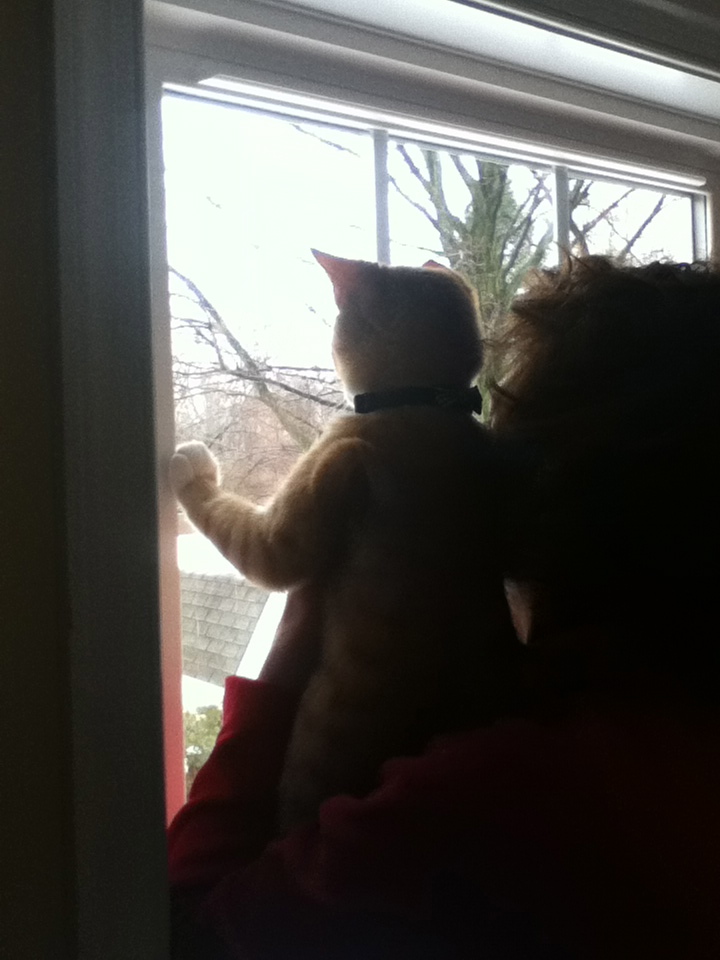
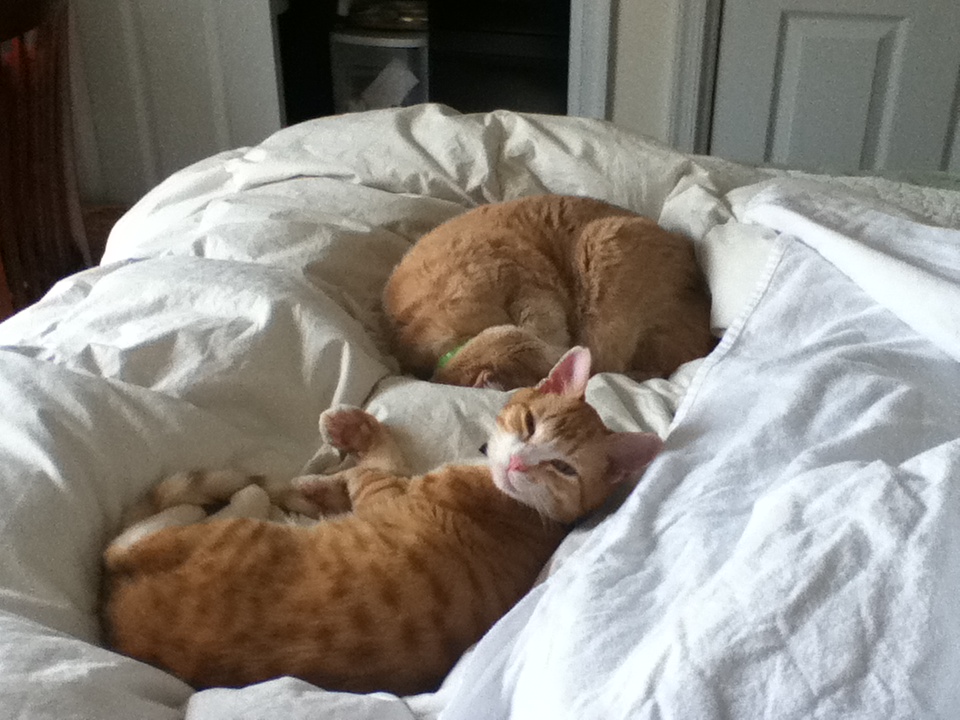
The ones I spend the most time with—because I work at home as a writer—are my cats, Gracie and Mr. Bean.  Mr. Bean, who was infamously IMG_1924chronicled in the four-part “I Was Born on an Amish Farm in the Middle of Winter,” https://untoldanimalstories.org/2013/09/13/i-was-born-in-the-middle-of-winter/  blog post (several posts down, September 2013), is transforming gradually from over-the-top rambunctiously biting and playful to a more dignified, loving version of himself.  Even Gracie tacitly approves of him from time to time.

Gracie, though, I think she might be something akin to enlightened.  She is consistent in her loving behavior, and she never says an unkind word, so to speak, to anyone.  I suspect she sees things as they are, and despite what others might do, she acts unwaveringly in alignment with the principles of kindness, acceptance, and generosity of soul.  IMG_0072

IMG_0882A home with a pet feels different from a home without pets.  To me, homes without can feel spacious, but the space has a stillness and emptiness.  A home with a pet feels friendlier, fuller, as if the very air has love in it.  Animals give so much.  There are the antics, which amuse; the unconditional affection, which satisfies; the steady presence, which brings comfort; and, of course, the opportunity to do animal-speak.

If you don’t have a pet and are reading this, you’ll think the lot of us are certifiably nuts.  If you have a pet, I’m willing to guess that you do animal-speak:  the animal does something, and you provide the narrative of their thoughts and actions, in a slightly different voice than your own.

Animals have a different sort of wisdom than we do—one that is un-derailed by thinking and believing our own thoughts.  They trust their instincts above all else, seeing clearly beyond any veil of pretense and delusion to the heart of the matter.  These “lesser” beings, to some, have much to teach us.IMG_1873

Happy Holidays

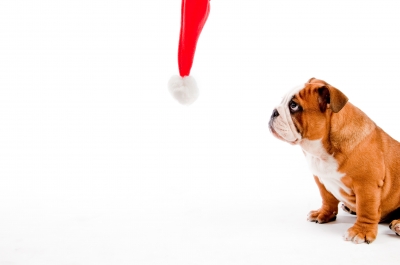
Santa Hat & Dog courtesy of photostock and freedigitalphotos.net

Santa Hat & Dog courtesy of photostock and freedigitalphotos.net

Thank you to our Untold Animal Stories supporters, guest bloggers, and all those who take the time and care to treat animals with kindness.

Merry merry to all of you and your furry friends.