
 |
|
 |
|
|
Author: www.untoldanimalstories.org


Ollie & Spuds – Chapter 3
Chapter 3 – With that Picture in Mind, She Can Sleep
© 2014 Carolyn Cott
Chapter 1: https://untoldanimalstories.org/2014/02/15/ollie-spuds-chapter-1/
Chapter 2: https://untoldanimalstories.org/2014/02/21/ollie-spuds-chapter-2/
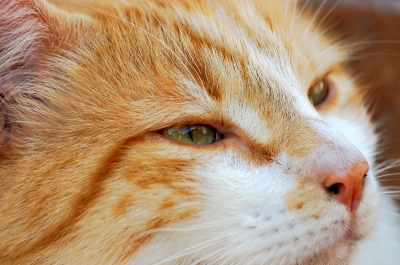 Spuds had no plan. By night she hunted. By day she slept. She moved from place to place, restless.
Spuds wandered eventually into the city. Spuds learned to spot potential danger and change direction instantly. She came across a band of other cats in the park tried to live with them, but they were as prone to fighting as they were to grooming each other. She left and eventually made her home in a partially crushed box in an abandoned trash pile. It was often bitter cold, but there were plenty of mice to hunt. Water was the issue. She had to learn to drink when it rained and went thirsty when it did not. When the water froze in winter, she went without for longer periods of time. It was difficult not to crave water; sleep was the only escape from that gnawing need, but sleep was never deep and sound—Spuds learned to keep part of her mind alert for danger even in sleep.
By the late winter, Spuds’ hunger and belly had grown. One cold morning she birthed four tiny kittens, three orange, and the tiniest a pale ginger.
Spuds had never loved as much as she loved her babies. The need for food increased, so she’d leave her kittens huddled together, first communicating to them soundlessly not to move, not to mew. She held the gaze of each of them, then trotted off to hunt for her family.
She came to an area where the air was fragrant with food, women’s high-heeled shoes clicked on the sidewalk, and men’s overcoat tails flew behind them in wind. There were shiny lights and big cars along the street, and fragrant alleys and dumpsters behind the buildings.
The next night she moved her kittens, one at a time, in her mouth, waddling as fast as she could through the streets, to their new home. She nudged the kittens beneath a stack of wooden pallets. There was no cardboard to tuck into and the concrete was cold, but food was available. There were always trade-offs.
Spuds would jump easily up and into the dumpster, emerging with delicious tidbits she’d present to her kittens. Once the kittens had eaten, she would do so, and then they curled together, the whole lot of them purring. This was her happiest time.
As the kittens grew, Spuds couldn’t keep them sequestered, so they wandered around together with her searching for food. Twice she had to fight dogs to keep them safe. Once the smallest ginger-colored kitten barely escaped the wheels of a passing truck.
Spuds sensed the time was drawing near when the kittens would wander off and start their own lives. When they settled down to sleep together, she sent them mental pictures of the life she hoped they would lead: images of a warm fireplace, kind hands setting down bowls of food and water, a soft place to sleep, and safety, safety, safety.
to be continued…
Chapter 1: https://untoldanimalstories.org/2014/02/15/ollie-spuds-chapter-1/
Chapter 2: https://untoldanimalstories.org/2014/02/21/ollie-spuds-chapter-2/
photo by Dan courtesy of freedigitalphotos.net
An Urban Intervention to Make the Invisible Visible
Alex the Befriender
 Written by guest blogger, Susanne Cott
Alex. He was something. More, actually, than I could have asked for. Adopted in 1996, Alex was a male tabby with magnificent green eyes and an abusive past. We bonded, deeply. No matter where I was in the house, he sought me out and came to sit beside me. He dozed beside me as I slogged through the voluminous work of graduate school. He accompanied me through various ups and downs in my life. His level gaze brought me a sense of balance. His antics made me smile.
When family members came to live with us in 2009, two cats came with the package. One of them was a black cat named Raleigh, a fearful cat whom we sometimes referred to as a “special needs kitty.” Uncharacteristically of male adult cats, when Alex and Raleigh first saw each other, they simply looked at each other without hostility. They moved closer and closer to each other, and Alex accepted Raleigh into his home as his friend.
When it was time for Raleigh to move to his new home, he had a difficult time adjusting and hid in a closet of his new home for nearly a week. The decision was made to give Raleigh to me, and Alex and Raleigh became roommates. They were always around each other and loved to wrestle. In my memory, I can still hear their little playful meows.
Raleigh passed away unexpectedly, and young, in 2012. Alex was the only cat in the house then. He mourned his friend’s loss—I could tell—because he seemed uninterested in everything.
Several months later, we adopted two kittens—sisters—Tessa and Daisy. We were a bit worried about how Alex would feel having two new kittens in his house. True to his open-hearted disposition, he wasn’t unkind to them. One day, Alex was taking a nap on a sunny spot on the screen-in porch. Tessa sidled up to him and lay down up against him. Alex swung around and looked at her, then apparently decided it was okay. He closed his eyes and slept and Tessa did the same. snuggled up against him. Alex had a generous soul.
Alex greeted me at the door everyday, like a dog, when I came home from work. In the last couple of months of his life, he’d lost almost all of his hearing and I had to find him when I returned home. When I did, he invariably would glance up at me and greet me with an adorable little chirp-meow that sounded like hello.
By November of last year, Alex’s health had declined drastically and he was barely eating and drinking. The vet and I made the decision to euthanize him. We did so on November 29, and it was one of the hardest things I’ve had to do. He was, in many ways, my best friend.
Alex was buried alongside Raleigh in the backyard under the bird feeder, which they had spent countless hours watching through the screen. Above their graves there are a circle of stones and flowers, and the birds swoop in for their food.
I believe I will see Raleigh and Alex again one day. Alex and Raleigh, you will never be forgotten, and I love you both.
Spay/Neuter and Vaccinate a Street Dog in India
 from http://www.animalrescuesite.greatergood.com
Despite some of the strictest animal welfare laws in the world, thanks to its ancient spiritual philosophy of ahimsa (non-harming), India teems with animals on its streets, particularly dogs. With each litter born on the streets, canine overpopulation worsens, leading to malnutrition, untreated injuries, and the spread of disease, especially rabies.
Vishaka Society for the Prevention of Cruelty to Animals (VSPCA) works to reduce the overpopulation of street dogs. In cooperation with the local government, VSPCA vaccinates against rabies and spays or neuters loose dogs. VSPCA’s veterinarians use sterile techniques, pre- and post-operation pain control, and gas anesthesia when possible.
Unlike pet dogs which owners bring in and take home after the operation, street dogs need to be humanely caught and kept for several days while they heal from their surgery, then brought back to the same place for release. This is a very specific practice that has to be done absolutely right — dogs haphazardly released into the wrong neighborhood can be killed by other resident dogs.
VSPCA’s program is one of the most advanced in India, and sterilizes an average of 40 dogs a day when operated by four veterinarians. All these dogs are vaccinated against rabies, and their ears are notched for identification and protection.
VSPCA is a growing and struggling operation that also provides emergency animal care and shelter. No other similar services for injured street animals exist in the area.
You can help VSPCA in its vital work. This Gift That Gives More™ vaccinates and spays/neuters a street dog in the Indian state of Andhra Pradesh.
Migrating elk herd and the little guy left behind…a happy ending
Shelter – part 4
© Karla McLaren 2014
As the third round of the greet-and-treat begins, I change my normal pathway through the kennels, and crouch down and whisper to the dogs I treat on my way down the T-leg toward Nana’s – so that she can’t see me coming. As I reach her kennel, still crouched down, I catch her, standing up and peering over her wall, waiting for me. I speak quietly as I stand up, “Hello, you criminal!” and Nana makes a noise that sounds just like Scooby Doo getting caught with a sandwich, “oirp?” Hah! She drops down from her perch, sits properly and quietly, and looks at me with sparkling eyes. ”Good girl Nana, down,” I say. I throw my voice a bit to the dogs near her who are unusually quiet, for once, “Down and quiet, good dog!” Nearly everyone in Nana’s area gets a third-round treat today (for the first time), and as I pass her on my way back, I give her another treat, the outlaw.
The third round goes well, with more than half of the dogs figuring out all three behaviors: seated, still, and quiet. It’s still very noisy; we have a lot of new dogs who are afraid and riled up – but even in the midst of the noise, many dogs are getting the picture and learning how to calm themselves in spite of the clamor. As I continue through the shelter, I take a moment at Peaches’ kennel: the little sweetie has mastered two out of three behaviors. She’s quiet and calm, but she’s still down on the floor, and I don’t actually think she can sit, so I open her kennel door. I carry a leash with me in case dogs need to come out of their kennels for some reason during the greet-and-treats, but I don’t think Peaches can walk, so I close myself in her kennel with her to see what’s going on.
Peaches lifts her head happily and then flips over on her tummy and wriggles nearer to me, and I sit down to be with her. Peaches is a love: soft, cuddly, and wanting to be picked up. As I lift her, she struggles a bit to get herself into my arms, and she curls up like a baby, nuzzling and kissing me. I hug her and kiss her, and talk sweet nonsense to her as I run my free hand over her legs and feet: her front legs seem normal, but both of her back legs are floppy, and they have almost no muscle tone. They’re also pointing backward, which explains her seal movements and her inability to sit. I also gently palpate her umbilical hernia, and she doesn’t yelp or pull away, so it doesn’t seem to be hurting her. I wonder why she’s up front instead of back with Jake and Milton, but she’s so adorable that I think the staff is hoping she’ll be adopted before they start on her surgeries. If I could have a dog, I would totally take Peaches; I think they’ve made a good call.
After a few minutes of kissing and snuggling, I leave Peaches with extra treats and let myself out of her kennel. All of the dogs nearby have been quiet and patient as they watched me in Peaches’ kennel (including, unbelievably, the terriers), so they all get another treat. I head back to the chained-off area, but I see Brandon (one of the staff behaviorists) there, uh oh. He’s taking one of the other T dogs out into the private training area to check her temperament. I hope he doesn’t see the treats I gave Milton, oy.
I loiter around the chain and wait for Brandon to take his T dog outside. When he does, I duck under the chain and peer into Milton’s kennel, and I don’t see any treats – not the one on the blanket, and not the one on the bottom of the kennel door where I left it, whew. However, I also don’t see Milton, and I feel a bit of panic – did they take him? I call to him and kneel down to peer through the small opening that leads to his run, but I don’t see him. I look for Jake, but he’s not in his kennel either. I run (okay, I walk quickly but calmly, so the dogs won’t start barking again) back through the kennels, into the back rooms, past the laundry room overflowing with blankets, towels, and dog beds, and into the small room where the animals are euthanized. The room is empty, and Milton isn’t anywhere. I can’t shake my dread.
I walk back out into the kennels and head to the private training area to ask Brandon what happened, but when I get outside, I see him with Milton, who’s off leash and playing (!) in the sunshine with the female T dog. I feel a huge sense of relief, but I play it cool, “Oh hey, you’ve got Milton out again.” Brandon answers, but keeps his focus on the dogs, “Yeah, he’s such a smart dog that it didn’t feel right, redlining him. It was bugging me all night, and today he seemed to get that he had another chance.” I watch Milton running around, twisting, playing, and chasing the other dog, and they begin running around in circles, racing, faking each other out, and escaping from each other. I become a base in their game of tag, and Milton circles me twice before running off, happily engrossed in the game. I stand where I am, breathing deeply. Vast mountains of laundry call to me, but I turn my smiling face to the sun for a moment, and let the tears fall.
for part 1: https://untoldanimalstories.org/2014/03/07/shelter/
for part 2: https://untoldanimalstories.org/2014/03/14/shelter-part-2/
for part 3: https://untoldanimalstories.org/2014/03/21/shelter-part-3/
for all Untold Animal Stories: www.untoldanimalstories.org
Karla McLaren is a pioneering educator and award-winning author whose empathic approach to emotions revalues even the most “negative” emotions, and opens startling new pathways into the depths of the soul. She is the author of The Art of Empathy: A Complete Guide to Life’s Most Essential Skill, the trailblazing book The Language of Emotion: What Your Feelings Are Trying to Tell You, and the interactive online course Emotional Flow. Karla has taught at such venues as the University of San Francisco, Naropa University, Kripalu, and the Association for Humanistic Psychology. She is currently developing new forms of empathy and social interaction curricula for neurologically diverse people.
The Art of Empathy
What if there were a single skill that could radically improve your relationships and your life? Empathy, teaches empathic pioneer Karla McLaren, is that skill. In The Art of Empathy: A Complete Guide to Life’s Most Essential Skill, McLaren presents her groundbreaking model of The Six Essential Aspects of Empathy to help you understand and nurture healthy empathy in every part of your life. Informed by four decades of empathic experience, plus current insights from neuroscience, social science, the arts, and healing traditions, The Art of Empathy teaches you how to become a healthy and happy empathic presence in a world that needs you.
Shelter – part 3
© Karla McLaren 2014
Milton’s behavior in round two is interesting. He has moved very far away from the untouched treat I placed on the left side of his blanket, and he sits very still on the rightmost side of the front of his kennel, staring fixedly, straight ahead. I sneak some sideways glances at him from my kneeling position. He’s a very handsome boy with a Doberman’s black and brown coloring, but his body shape and size is closer to a Beagle’s. He’s a fit, compact little guy, with a clean short coat and healthy skin and paws. I know that he hasn’t been given a bath here at the shelter (no one has time), so he’s clearly very careful about his own hygiene. Very self-contained. Milton’s body language interests me, because even in the confines of his kennel, he has many choices. If he really didn’t want to see me, he could simply go outside in his run, and effectively disappear. He could also curl up against the wall and present his back to me. He could push the treat outside his kennel, tear up his blankets, or rush the kennel door and bark menacingly. But he does none of these truly antisocial things. Instead, Milton has entered into a relationship with me – and in all honesty, I think he’s trying to teach me manners.
I continue to kneel, and I watch Milton out of the corner of my eye. His eyes do not seek mine, but his stare has changed from the beady malevolence of our first meeting to a more relaxed yet determined stare. If we were humans, and if we were looking at each other, this would be a staring contest. But with Milton in charge, it’s a not-staring contest, and Milton is in it for the duration. I can see Jake in the next kennel, sitting patiently and quietly, but getting antsy as he waits for me, and I wonder about my next move in Milton’s dance. I wonder if I should take the offending treat away, but I think that would be a mistake. It was a gift, which means it belongs to him now. And though he hasn’t eaten it, he is using it to communicate with me. I don’t want to make the wrong move.
If I were a dog, Milton’s determined stare of avoidance would mean that I had broken a social rule. My response, if I didn’t want to get into a fight, would be to cease my incorrect behavior and make myself small and subordinate. I wondered if this would be a good thing. At the shelter, we’re supposed to position ourselves as the lead dogs in this pack, but I grew up with animals who knew with absolute certainty that they were the real leaders. My brother’s brilliant dog, Johann, pretty much trained himself and looked after my sisters and brothers as if he were our uncle. My cat Sofia, who learned to open doors and turn on faucets, lived life on her own terms. Or my little bonsai stray, Kiku, who had every disease known to felinity and never grew much larger than a kitten, yet who taught herself to use her litter box, to put herself to bed every night, and to understand all the intricate rules of human-cat wrestling.
I felt that Johann, Sofia, and Kiku would be offended by the shelter’s training methods, even though these methods were humane and respectful for most animals. These three were self-contained animals, very self-aware, and extremely quick to decipher all the rules of the house and human relationships. I wondered if Milton was this kind of animal, and if he had had the extremely bad luck to have an owner who treated him like a knucklehead, which to be fair, some dogs truly are. I wondered if Milton was not so much hateful and dangerous as he was affronted by treatment that did not respect his innate intelligence and his dignity.
I made a decision. I looked up and down the kennel rows to make sure no staff person was around, and I lay down on the cold cement walkway in front of Milton and curled my head in supplication. I waited for a few seconds, and then reached my hand gently toward Milton’s kennel door – not touching it, but asking if I could. I peered up at Milton, and he looked down his nose at me for a long second, then looked away, off to the left. I looked in that direction, too. I touched my side of the metal frame of his kennel door – I didn’t put my hand inside. Milton didn’t look back at me, but he slowly reached out with his left paw and touched the frame on his side. We weren’t looking at each other, and we weren’t touching, but we were both looking in the same direction and touching the same door frame, and we had reached some kind of compromise in Milton’s world.
I didn’t want to break the mood, but I was cruising for a bruising from the staff if I got caught here – especially if I got caught letting a dog take what the staff saw as a dominant role. So I whispered, “Thank you Milton – you’re a good dog,” and I slowly placed a new treat on the bottom frame of Milton’s kennel door, between his paw and mine. I got to my knees slowly and crawled to Jake’s kennel. The poor sweetie had been waiting very patiently, so I patted him through the kennel bars, scratched his long ears, and gave him two treats, and then went further into the chained-off area. On my way back out, I lowered my head when I got to Milton’s kennel. I didn’t look at him, but I whispered, “I love you Milton. You’re a very good dog.”
The third round through is the final training moment before I start walking specific dogs, doing mountains of kennel laundry, or working in the cat annex. In the first two rounds, I had established myself as someone to look forward to, and I had given all of the dogs some idea of correct behaviors (and two almost free treats). This time, the treats have a real cost – the dogs have to be seated, still, and quiet, and almost isn’t rewarded on the third pass. Many dogs get very excited and begin to bark as I near them, but I make eye contact, raise my finger to my lips, shake my head, and say, “NO, quiet.”
to be continued next week…
for part 1: https://untoldanimalstories.org/2014/03/07/shelter/
for part 2: https://untoldanimalstories.org/2014/03/14/shelter-part-2/
Karla McLaren is a pioneering educator and award-winning author whose empathic approach to emotions revalues even the most “negative” emotions, and opens startling new pathways into the depths of the soul. She is the author of The Art of Empathy: A Complete Guide to Life’s Most Essential Skill, the trailblazing book The Language of Emotion: What Your Feelings Are Trying to Tell You, and the interactive online course Emotional Flow. Karla has taught at such venues as the University of San Francisco, Naropa University, Kripalu, and the Association for Humanistic Psychology. She is currently developing new forms of empathy and social interaction curricula for neurologically diverse people.
The Art of Empathy
What if there were a single skill that could radically improve your relationships and your life? Empathy, teaches empathic pioneer Karla McLaren, is that skill. In The Art of Empathy: A Complete Guide to Life’s Most Essential Skill, McLaren presents her groundbreaking model of The Six Essential Aspects of Empathy to help you understand and nurture healthy empathy in every part of your life. Informed by four decades of empathic experience, plus current insights from neuroscience, social science, the arts, and healing traditions, The Art of Empathy teaches you how to become a healthy and happy empathic presence in a world that needs you
Shelter – part 2
UntoldAnimalStories.org is pleased to present part two of a four-part tale by pioneering educator and author Karla McLaren.
© Karla McLaren 2014
continued from March 7 post…
We work to keep the dogs calm and quiet in their kennels, but it’s hard because so many new dogs come in regularly, and the cement-and metal kennels amplify their noise powerfully. Today, all the kennels are full – some with two or more dogs who came in together, so we’ve got more than eighty dogs here. If even ten percent start barking, the noise can be deafening and very stressful for everyone (there’s a huge jar of free earplugs in the lobby; it’s that noisy). My greet-and-treat visits are a way to calm the dogs, and they’re a central part of kennel training and socialization, with a rhythm that’s so predictable that the kennel vets know it by heart. On my first pass through the kennel, everyone gets a hello and a meaty treat no matter what they’re doing or not doing. I want each dog to see people as fun, and to look forward to my next visit. Some of the more savvy dogs predict the desired behavior – they sit calmly and meet my eyes – and I praise them clearly so that the other dogs can hear.
On the second round, the dogs have to perform in some way for their treat. Any of these three behaviors – sitting, being calm, or being quiet – merits a treat. And the dogs really can’t fail – even a terrier who leaps all over her kennel like a tiny tornado can at least calm down a little bit. I help the hyper dogs by making a great show of hunkering down next to their kennel and using hand gestures while I ask “Can you get down?” Most of the dogs will follow my lead, and the trick is to reward them as soon as they manage a desired behavior. For some dogs, I have to wait until they stumble onto something – anything – desirable, but if I have patience, I can catch even the most chaotic dog in some form of a correct behavior.
The key is to ignore – completely – any bad behaviors, and reward good behaviors as soon as you see them. Rewards don’t have to be food as they are at the shelter; petting, hugs, and praise are just as effective. We use delicious desiccated liver treats at the shelter as a way to ease the general depression that plagues shelter dogs. Food is not the best kind of love, but it gives the dogs something to look forward to and some bright spots in their stressful days.
On today’s second round, nearly everyone is figuring out which behaviors are required before the treat is given. Some hyper dogs can’t stop barking, and some dogs clearly don’t know the “sit” command, but I catch everyone doing something right, and praise them all with a hearty “good dog.” Today, something unusual pulls my eye to a small dog in one of the kennels near the entrance, which is where the cutest, smallest, and most adoptable dogs generally are. This one is a sleek, sable-brown little girl named Peaches who squirms around joyfully in her kennel like a tiny harbor seal. She pushes herself nearer to me as I pass, so I kneel down and peer in as I pet her beautiful brown forehead, which she pushes up to the chain links of her kennel door. She rolls over to show me her belly, and I see a lumpy umbilical hernia pushing up through her skin, and the strangest leg conformation in her hind quarters, but she won’t stop squirming long enough for me to figure out what’s going on. Her kennel card doesn’t mention anything. I stoop down and kiss her on her nose, which is small enough for her to poke almost completely through a chain link, and I promise to come back.
I head down a T-leg of the kennel rows toward the home of the silly Nana. She’s a gigantic Saint Bernard with a kidney condition that requires daily medication, and she’s been here a while. Her owner couldn’t afford to take care of her, so she’s here waiting for someone with a big house, a big yard, and a big wallet for her meds. Though some dogs become despondent after a long time in the kennel, Nana, who has been here for three months, is endlessly cheerful. Nana thinks the greet-and-treat game is very funny, and she’s put her own spin on it. Because she’s so huge, she can rise up and see over the cement walls of her kennel (they’re 6 feet tall). When Nana sees me approaching, she likes to rile up the other dogs and get them barking. When I arrive at her kennel, though, she makes a great show of sitting very prettily and being ever so quiet while the other dogs display their very bad manners. I thank her loudly for being quiet, and I make “shush” gestures at the other dogs. I usually treat Nana twice in each round – once on the way into her kennel row, and once on the way out. She’s so big that my little cracker-sized treats are probably just a drop in a bucket! On round three, I’m going to see if I can get her to stop riling everyone up, even though I do appreciate her excellent sense of humor.
As I near Milton and Jake and the chain again, I wonder how Milton will view me this time – what his approach will be. This second treat is supposed to act as a kind of exchange between me and the dogs; it’s a prelude to entering into a working relationship. Some of the dogs already have this figured out – they’re in graduate school. Some, like the wildly leaping terriers, haven’t even entered preschool, and they’re going to need a lot of work. But with Milton, I wonder if there’s even a hope of getting him anywhere near the idea of a relationship.
When I reach Milton’s kennel, I approach him in the proper way: I kneel down to his level and present the side of my body to him – I don’t face him. Many dogs see face-to-face approaches and largeness as a threat (if one dog faces another and tries to make himself appear larger, that’s often an invitation to a fight in dog language). I also don’t bare my teeth, extend my hand, or poke my fingers into Milton’s kennel. Those are also threats – they’re aggressive moves, and Milton requires politeness, space, and respect.
to be continued next week…
for part 1: https://untoldanimalstories.org/2014/03/07/shelter/
for part 3: https://untoldanimalstories.org/2014/03/21/shelter-part-3/
Karla McLaren is a pioneering educator and award-winning author whose empathic approach to emotions revalues even the most “negative” emotions, and opens startling new pathways into the depths of the soul. She is the author of The Art of Empathy: A Complete Guide to Life’s Most Essential Skill, the trailblazing book The Language of Emotion: What Your Feelings Are Trying to Tell You, and the interactive online course Emotional Flow. Karla has taught at such venues as the University of San Francisco, Naropa University, Kripalu, and the Association for Humanistic Psychology. She is currently developing new forms of empathy and social interaction curricula for neurologically diverse people.
The Art of Empathy
What if there were a single skill that could radically improve your relationships and your life? Empathy, teaches empathic pioneer Karla McLaren, is that skill. In The Art of Empathy: A Complete Guide to Life’s Most Essential Skill, McLaren presents her groundbreaking model of The Six Essential Aspects of Empathy to help you understand and nurture healthy empathy in every part of your life. Informed by four decades of empathic experience, plus current insights from neuroscience, social science, the arts, and healing traditions, The Art of Empathy teaches you how to become a healthy and happy empathic presence in a world that needs you.
Communicating with a Big Cat
 Untold Animal Stories