2014 Victories for Animals Worldwide and in the US

The Dog Warrior

guest post by author Dale Ryan*

L1030450In 2011, Steven Spielberg directed the film “The War Horse.” For many viewers, the world was enlightened by the dangerous and courageous work done by horses. This is the centennial year of the “Great War.” World War I relied not only on soldiers and horses for battle, but more than twenty thousand dogs were involved in the war effort. The Germans, as well as the British and other European allies, trained dogs of many different breeds to fight in the war.

Throughout the last hundred years, dogs have served in the military. Risky jobs included carrying messages in dangerous war zones, carrying medical supplies, and participating in reconnaissance missions. For example, terriers were trained to ‘Rat Out’ fighting trenches. Doberman pinschers had the awful job of carrying and delivering explosives. Many dogs died, yet they saved the lives of many soldiers. Military dogs have served their countries in battle, but unfortunately, many have been left behind because they are considered to be “excess equipment.”

The idea that so many dogs have been placed in war zones and then abandoned has outraged many soldiers, not to mention others. To add insult to injury, so many breeds of dogs that helped in the war effort have also been unfairly judged by society. Insurance companies and landlords, for example, have put too many restrictions on “man’s best friend.” As a result of these punitive measures by landlords and insurance companies, intelligent, and faithful dogs have been placed into dog shelters with the hope of being adopted, or just abandoned. Abandoned dogs do not fare well.

Thankfully, so many people have recognized the unfairness and mistreatment of military dogs as well as specific breeds of dogs at home. Whether a dog is navigating a foreign minefield or escaping from a rural fighting kennel, certain dogs face many extraordinary challenges. Prejudice comes in all forms. Humans and canines are faced with many challenges. Fortunately, dog adoptions are rising in great numbers and negative perceptions of dog breeds are changing.

After researching and reading about the “Dogs of War,” I decided to write my second dog book. The Painted Pilgrim is about a very unusual dog named Pellegrino. Pellegrino is an intelligent, lovable, and sensitive dog. At the same time, he is a bright pink dog. He is not your “garden variety” type. Meanwhile, two characters in the book want to adopt him but their intentions for wanting him are not the best. On the other hand, the director of the shelter is very vigilant and on high alert when it comes to her wards. Luckily, Pellegrino has his two buddies by his side, a pit bull name Buddha and a terrier named Blossom. For young readers, The Painted Pilgrim has lots of intrigue, mystery, and irony. The book is illustrated and comes in both paperback and e-book editions.

What you can do:

http://wardogsmakingithome.org/  This an active charity that partners veterans with PTSD with shelter dogs.

http://warriordogfoundation.org/   Warrior Dog Foundation helps to transition dogs from an operational environment into a state-of-the-art kennel facility, caring for each individual SOF K-9 with dignity and grace, including both mental and physical rehabilitation for the rest of their lives.

L1030267

Photos: Dale Ryan, the author, at the GSPCA in Guernsey • Artwork from Dale’s book “The Painted Pilgrim,” which will be released on 1/15/15 • A print, owned by Dale Ryan, from WWI by the British artist, Snaffles, showing a regiment with its dog.

* Dale Ryan is the author of Sleeping With The Beast, which was chosen for the Los Angeles Times 2012 Summer Reading List. Dale’s new book, The Painted Pilgrim will be released on 1/15/15.  Dale lives in Litchfield, CT with her husband and two dogs.   L1030461


Empath, Voyeur or Action? What Type of Advocate Are You?

DSC_0135 2by Gretchen Pachlhofer, co-founder of www.untoldanimalstories.org

Let’s face it.  If you are reading this blog, you are an animal advocate.  You love to read stories about animals and nature.  It touches that chord, deep inside you, the place that very few humans allow themselves to venture. It’s a special place deep within ourselves that we tuck tightly away for fear of our true feelings being exposed to those around us. That is the source of the feelings that allows us to honor animals.  Animals allow us to stop, and feel, and experience being in the present moment.

Empathy for animals is the key ingredient that allows us to take the first step in helping all creatures great and small. Whether it be a stray cat, a dog that has been dumped on the side of the road, or a bird that has fallen out of the nest, there is no way we can just turn away and ignore the situation.  If you choose to actually stop and do something to contribute to the given situation, you have just entered the world of being an Action Advocate. Congratulations!

Another choice is to be a Voyeur Advocate for animals. You read the blogs, you identify with the feelings that are unlocked inside as you immerse yourself in your own private reading experience. It make you feel good to read all the wonderful stories that others have chosen to share. Now, I’d like to just toss this out to you—what would happen if you made the choice to take the next step and actually DO SOMETHING to help animals? What would it feel like to actually BECOME an Action Advocate?

I want to share my recent story with y’all (yes, I am from Texas) and hopefully you can take the giant step forward and join me.

I recently relocated to a rural area of the Texas Hill Country.  I sold my business and now have a choice to continue to make a difference for animals.  I found a group of women who run a shelter located on a ranch in acute need of regular volunteers to help care for the dogs and cats in their facility. I chose to make a commitment to volunteer once a week for 3-4 hours.  Volunteering is such a rewarding experience and the animals give back ten times of the effort I give weekly.  I jokingly call it my “therapy time” but there is a lot of truth to that statement.

So all of you reading this, I want to throw something out to you.  Over the next couple of weeks, think of something you can DO for animals, then TAKE ACTION and do it. And then, if you feel inclined, chime in and tell us what you did.  This is not a contest.  The purpose is to create a community for Untold Animal Stories for all of us to share and become more interactive. Email us at untoldanimalstories@gmail.com

Rahat Means Relief – Ingrid Newkirk Answers Questions about Animal Rahat

copyright 2014 by http://www.animalrahat.com

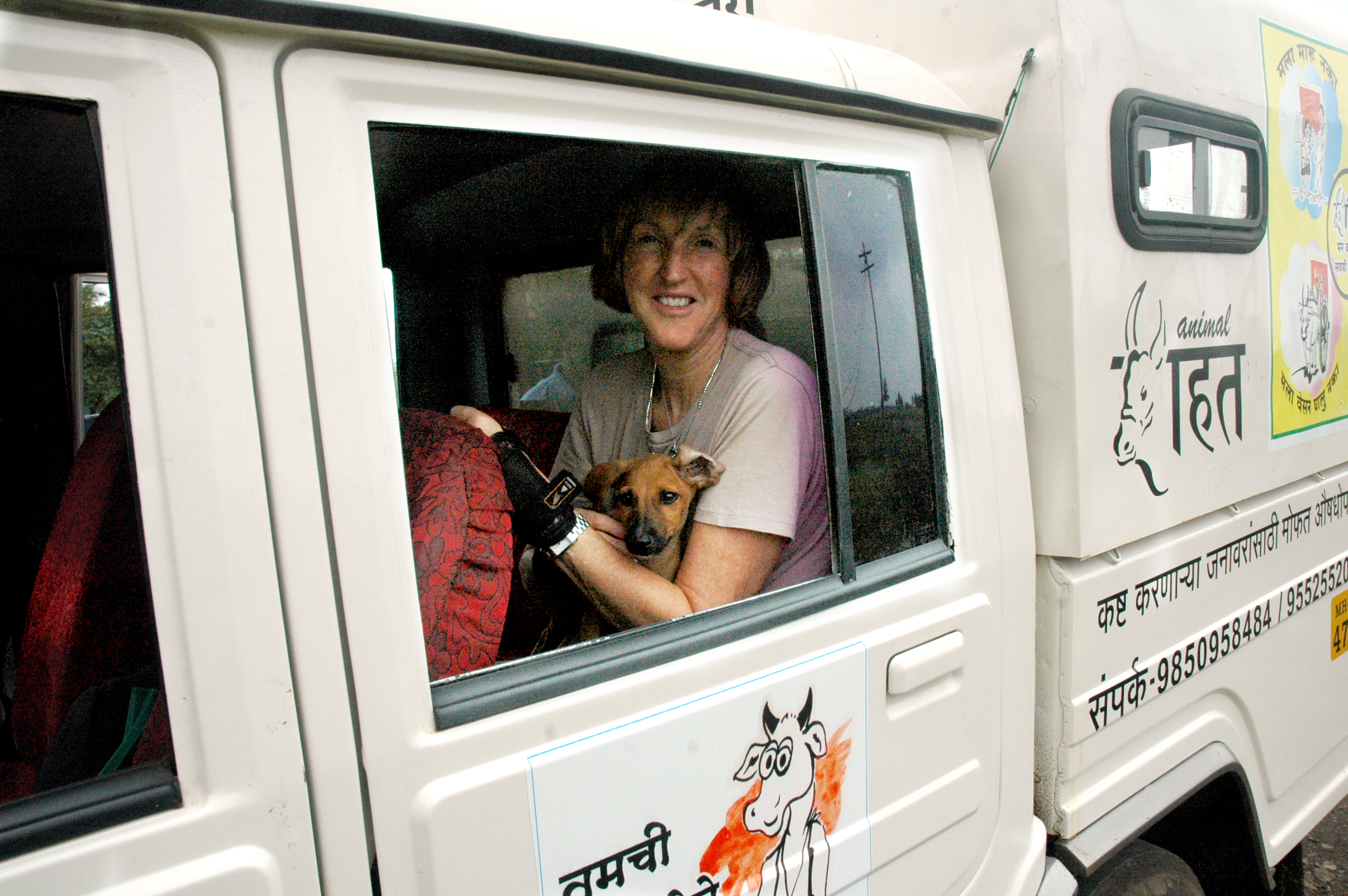
Animal Rahat is a unique program that aims to help some of the most neglected animals in the world—the bullocks, donkeys, and other working animals in India.  Animal Rahat was founded in 2003 to provide these animals with relief. This lifesaving program now offers services throughout three districts in Maharashtra, one of the largest states in India. Animal Rahat is run by a dedicated staff that includes veterinarians, veterinary assistants, animal caretakers, and a full-time community educator. All of Animal Rahat’s veterinarians are on call for emergencies and advice around the clock, every day of the year.

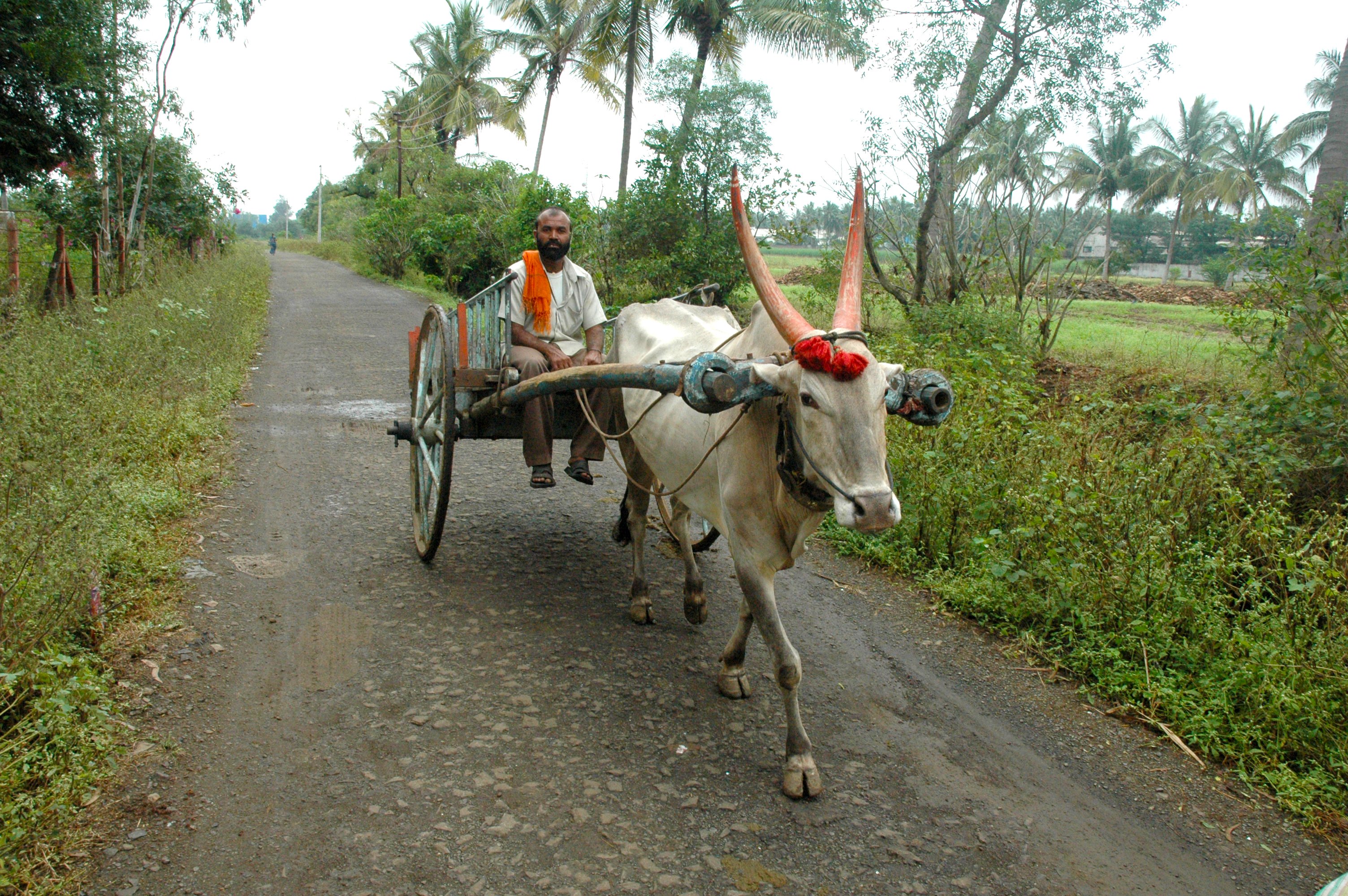
One of the more common sights in India is that of a bullock trudging along in the heat, straining under a heavy yoke to pull an overloaded, poorly balanced cart. These gentle animals often suffer from dehydration, untreated sores, and muscle strain, and sometimes they are subjected to frequent beatings.

Please consider making a donation today to help rescue more animals from captivity, save imperiled wildlife, train government workers in humane animal-handling techniques, and stop traditions, such as ear-cutting, that harm animals. Thank you!

Ingrid Newkirk Answers Questions about Animal Rahat:

Since its founding more than a decade ago as an organization dedicated to bringing relief to India’s working animals, Animal Rahat has become one of the most successful forces for all animals in need throughout the Sangli, Solapur, and Satara districts of Maharashtra. Members of the hard-working Rahat team—which operates solely on charitable donations—will go just about anywhere and do just about anything to rescue animals ranging from dogs and cats to chameleons and cobras. In this exclusive conversation, PETA President Ingrid Newkirk tells us what inspired her to start Animal Rahat, what improvements she’s seen in the past 10 years, and what readers can do to make a real difference in the lives of abused, injured, sick, and overworked animals.

6-20-Rescue-different-pup-last-day-mange
Was there one case in particular that gave you the idea to start Animal Rahat?

I’ve always wanted to get help for the poor bullocks whose whole life is lived in servitude and who come to a bad end. When I was a little girl living in India, I went to the aid of a bullock who had collapsed and was being beaten. The sight of him never left me.

Could you tell our readers a little about the conditions endured by working animals in India? 

These dear animals have every conceivable horror visited upon them. Their situation epitomizes slavery: born to the yoke, castrated by having their testicles crushed with a rock, their nostrils pierced with a hot iron and a rope threaded through them that will forever be the way they are pulled, and whipped to make them run faster, even on sore and aching limbs, with a whip made of the skin of the bullock who went before them. It is a hard, hard life of constant toil filled with suffering.

4-52-Great-cart-thin-bull-colorful2

What is one major abuse that you think we’ll see the end of within the next five or 10 years?

There isn’t one single abuse, but we have just won a victory against jallikatu, the racing and fighting of goaded bulls, and we will replace many bullock carts with mini-tractors in sugarcane factories.

2013-01.buffalo-bull-fight

Animal Rahat charters buses to transport villagers to the annual Chinchali Fair—sparing horses and donkeys grueling days-long journeys—and has given sugar cane haulers tractors to replace their emaciated bullocks. What are some other innovations that Animal Rahat has introduced?

The tractors, the buses, introducing chemical restraint so that bullocks can be operated on without pain, constructing sand pits so that when the bullocks are cast to the ground to be shod, they do not break a hip or otherwise become injured from the rocky terrain, and we are also pointing out the suffering caused by horn raspers—men who pare down the bullocks’ sensitive horns to make them look younger when they are offered for sale—among other things.

Many cruel practices continue because of ignorance rather than malice. How is Animal Rahat educating communities about the basic needs of working animals?

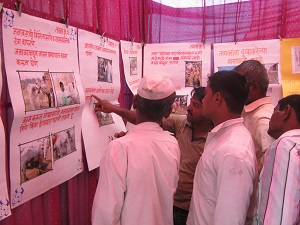
Other than wanton cruelty, like beatings when an animal collapses, most abuse is born of ignorance, a belief that animals do well without water, that they do not need rest, that they are super-resilient to heat, a misunderstanding of their nutrient needs and their pain tolerance, and so on. We have humane education in many schools to try to stop this cycle of abuse caused by ignorance, and we hold information tents at fairs, go to villages and hold meetings, and counsel people with sick and injured animals.

2014-02.Chinchali Fair bullock eating at rest camp1

How does Animal Rahat work with local law enforcement agencies to stop abuses? 

We work by giving seminars to police officers, and we ask for police help when we learn of an illegal bullfight or race, for instance.

poster gallery

Do you think the spread of Western culture in India’s big cities will change how animals are treated in the regions where Animal Rahat works? 

It changes because with money come vehicles, and with vehicles, the need to use bullocks decreases. We were successful in banning bullock carts for oil deliveries in Mumbai.

Poverty is so prevalent in many regions of India—what would you say to people who might question using resources to help animals when many humans are also suffering? 

Poverty is rampant, and no one can afford veterinary care, so providing it benefits humans as well. Teaching kindness is a kindness itself.

Are there ways in which animals are treated better in India than they are in Western countries? 

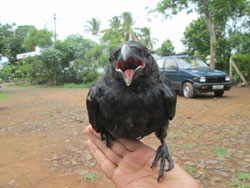
Yes, wild birds—pigeons, crows, and all birds—are fed every day in designated areas in the cities and towns, for instance, as a religious matter. The number of vegetarians is high, too, of course, although it’s decreasing. However, the most sacred “deity” animals, from elephants (Ganesh) to bulls (Nandi), cows (Krishna’s favorite), and monkeys (Hanuman), are treated very badly these days.

crow-rescued

How has Animal Rahat expanded its mission since its founding in 2003?

We started in one small area with one veterinarian and an assistant. Today we are building a proper sanctuary, and we have seven vets and a total staff of about 40, covering five separate districts in Maharashtra.

Is there one rescue story that sticks with you? 

There are many, but perhaps the one I remember best was the discovery of a bullock who had suffered a broken hip bone eight years earlier when a man threw a cinderblock at him in a fit of temper and who had been unable to walk since and must have endured unimaginable pain. We found this bullock tied by a small rope to the same pile of cinderblocks, never having been able to lie down on a flat surface. We were able to persuade the owner to let us take him to our sanctuary and allow him to live out his days there in comfort, with loving care, green grass, shade, and fresh water.

What can people reading this blog do to support Animal Rahat’s work?

Donate a portion of their income to those with nothing but pain in their lives: the bullocks, donkeys, and ponies rescued and helped by Animal Rahat. That will allow us to buy medicines, to go out into distant fields where animals have collapsed, and to render emergency medical care where otherwise none would be available.  To donate securely: https://secure.peta.org/site/SPageServer?pagename=Animal_Rahat&autologin=true

Farmer Serenading Cow Herd

Be an Angel for a Dog in Need in the Summer Heat

Dogs chained or confined to a pen outside without shelter suffer terribly during the sweltering heat and raging storms of summer, particularly in rural areas where people say “dogs are meant to live outside” and laws to address cruelty are not enforced.

sad dog for angel post ID-100150769As temperatures climb across this summer, dogs without adequate shelter are at risk of dehydration and heatstroke, which can cause a terrifying, painful death.  Many dogs depend on PETA’s “Angels for Animals” doghouse program to find them and then to give them the shelter and attention that they need in extreme weather.

By becoming an “Angels for Animals” sponsor today, you’ll be providing a sturdy new doghouse to a “backyard dog” struggling to survive long days outside without shelter from the blazing sun (and the winter winds). The doghouses are made to last and will provide shelter for years to come.
You can choose to purchase a doghouse in full or partially.  Please help a “backyard dog” this summer by giving today…whatever you can afford.  http://bit.ly/1k6jvil
On behalf of the dogs, thank you and woof!
Photograph courtesy of Arztsamui (“Poor Animal”), freedigitalphotos.net


The Noble, Gentle Greyhounds of Spain in the Wrong Hands

Lori Kalef
SPCA International

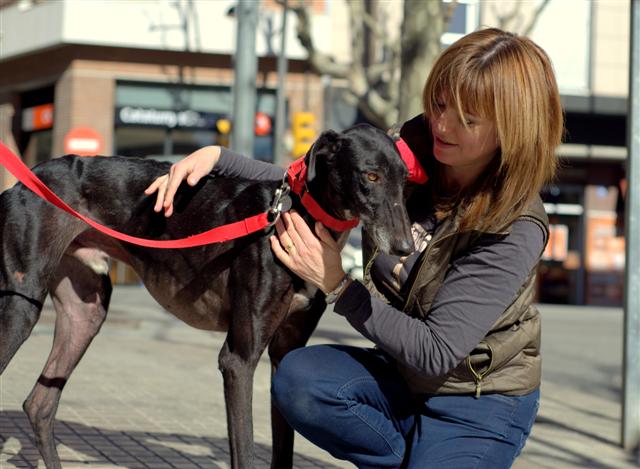
In the south of Spain, there is a form of hunting hares where the hunters use Spanish Greyhounds, or Galgos in Spanish, as weapons to find their prey. This form of hunting is forbidden in each of the European Union countries through their domestic animal protection laws, but unfortunately Spain still lacks these regulations.

Roy is one of the lucky ones. With your signature on the international petition (http://bit.ly/1egDtIr), we can make a difference and change the lives of many more greyhounds than only Roy and a handful of others.Roy3

Tens of thousands of Spanish Greyhounds have the misfortune to be born into the wrong hands of these hunters each year. These noble animals are used strictly as tools during the hunting season, which begins in the early fall and ends in February. They are then discarded in the most barbaric manner, which many hunters believe will bring prosperity for the following season’s hunt. The dogs are often beaten, burned, buried alive, doused with acid, thrown into wells, or tortured in other ways. Some die slowly by a method the hunters refer to as ‘the pianist’ method—tying the neck of the dog to a tree and allowing the back feet to barely touch the ground. The dogs move and jump for days struggling to stay alive, their front paws swaying back and forth resembling the playing of a piano. It is estimated that 60,000 Spanish Greyhounds are killed each year.

During the training season, Spanish Greyhounds are forced to run for hours and miles in the hot sun, their leashes tied to moving trucks. They are kept with the most minimal amount of shelter, food, and hygiene to survive. Many hunters believe starving their hunting dogs keeps them hungry for the hunt and more effective.

Behind every Greyhound’s life in Spain, there is a story of cruelty. When Roy was found on a roadside, he was barely alive. His lifeless body, covered in scars and lacerations.Roy had given up, his eyes remained closed, his body limp as his rescuers examined him. His rescuers brought him to SPCA International’s partner shelter in Spain, SOS Galgos, where he received emergency life-saving treatment and care.

Roy’s history is not uncommon, and he was fortunate to be found when he was. Thanks to organizations like SOS Galgos, a non-profit organization fighting to defend the rights of Spanish Greyhounds like Roy, and SPCA International, the plight of the Greyhounds of Spain will one day improve.

SPCA International– http://www.spcai.org/ — and SOS Galgos — http://sosgalgos.com/?lang=en –are working to improve animal welfare legislation and promote education and awareness sensitizing people to the warm and gentle nature of the Spanish Greyhound. This past March marked a memorable time in history for the Spanish Greyhounds. SPCA International and SOS Galgos, along with other animal protection organizations in Europe, met with the Spanish Congress of Deputies in Madrid to lobby on behalf of all the voiceless Greyhounds. Two hours were dedicated to the welfare of the hunting dogs in Spain in hopes of one day passing laws forbidding this torture.

Please help support the fight to eradicate this appalling tradition by signing SPCA International’s petition.  http://spcai.org/help-us-stop-the-horrific-torture-of-greyhounds-galgos-in-spain.html  Together we can create change! Roy2

Honey Badger Houdini…rethinking animal intelligence

James Ellis, BBC Two

Ollie & Spuds – Chapter 5

© 2014 Carolyn Cott

Chapter 5 – The Morning Sun Sparking Off Her Fur

Spuds sits in the one beam of sunlight slanting in between the tall buildings. Suddenly she feels her paw needs washing, so she does that. There’s a spot on her back that makes her skin twitch, so she attends to that. Then she curls into a tight circle, wraps her tail neatly around her front paws, closes her eyes and doses.

Ollie trots down the sidewalk, turns into the alley, and stops. The ginger-colored cat is there, the morning sun sparking off her fur. She appears to be sleeping, but her ears move toward his direction. Ollie thinks of the other cats he’s seen. The skinny cats with hissing voices that live in another alley. The next door cat at the house, who had perched on the half-wall between the backyards and glared at him, the tip of his stripy tail twitching. Then he remembers-hears his children’s high voices, their clear-bell laughter. He feels their chubby arms around his neck. He closes his eyes and sighs loudly.

Spuds opens her eyes into thin lines and watches the dog, sensing him. There is sorrow and gentleness. She watches him for a moment longer, then makes up her mind. She rises, stretches slowly, and walks to him.

Ollie looks around wildly, seeking an escape route, but by then the cat is in front of him. With her tail held high, she raises her face and blinks at him once, twice, three times, slowly. With his breath held and his ears up in alert, he looks at her, then he drops his ears and almost smiles. Spuds takes another step toward him, curls her back into an arch and rubs against his nose. She purrs and does it again. Ollie takes a tentative slurp of her ear. Spuds shakes off the dog spit, then sits down and gazes at Ollie. Well, she conveys, what shall we do?

Ollie looks toward the back end of the alley where he sleeps and thinks, sleep, but then reconsiders. He hadn’t found anything but a torn-off piece of crusty pretzel last night and was hungry. He looks at Spuds, licks his chops in answer, and they trot out of the alley. Ollie leads them down the street some distance and into an alley. There Ollie sits down beneath a fragrant-smelling dumpster and looks pointedly between the dumpster and Spuds.

Spuds calculates the distance, crouches, and in one fluid motion jumps to the rim of the dumpster and into it. She emerges with the remnants of a chicken thigh between her teeth and deposits it at Ollie’s feet. He chomps into it, and when he’s mostly done he remembers the cat, backs up a pace, and stands guard while Spuds finishes the feast.

She washes her face while Ollie paces. We have to get out of here now. Ollie looks at Spuds. People will be coming soon. Not nice people.

They slip out in the street and run toward the home-alley, pausing only to lap up some dirty water pooled beneath a downspout. Then they dart into the alley just as more and more cars and trucks are rumbling by. Ollie walks to his pile of rags and cardboard, uses his nose to burrow in, circles three times and lies down. With his head resting on his paw he looks at Spuds: come here. Spuds walks toward him, gracefully jumps up beside him, and nestles into the crook of Ollie’s hind leg. As she drifts toward sleep she realizes this is the first time she’s felt something like comfort in a long time. She lifts her head, gives Ollie a lick, then settles into safe sleep.

to be continued….

Chapter 1: https://untoldanimalstories.org/2014/02/15/ollie-spuds-chapter-1/
Chapter 2: https://untoldanimalstories.org/2014/02/21/ollie-spuds-chapter-2/
Chapter 3:  https://untoldanimalstories.org/2014/05/04/ollie-spuds-chapter-3/
Chapter 4: https://untoldanimalstories.org/2014/05/09/ollie-spuds-chapter-4/

Ollie & Spuds – Chapter 4

© 2014 Carolyn Cott

One evening during Spuds and her kittens’ wanderings, they came to a building from which came a chorus of meows and barking. Spuds listened closely. There was a question in each of the sounds, some complaining, but not fear. In a few of the voices she heard glee.

For the next three days she ventured out on her own during the daytime, hiding in the shrubbery and watching that place of meows and barks. People came and went, some bringing animals in—those people were teary with contorted faces. Some brought animals out—those people were happy and chattering to the bewildered-looking cat or dog. Spuds caught sight of one cat in a box with small metal crisscrossed bars. The cat’s feet were splayed out in front of him, bracing against movement, but his gaze was more curious than anything.

A van came and went often, spilling out a large man stuffed into a uniform with many pockets and shiny buttons. His face was always serious. The dogs he brought in on leashes were skinny and mangy and haunted looking. The cats were yowling. Just wait, communicated Spuds silently from her hiding place, just wait: you’ll be fine.

After the third day Spuds gathered her brood over a feast of two freshly caught mice. When the kittens had finished their meal and Spuds had crunched through the remains of bones and tails and toes, after all of them had washed their faces with their paws and were content, she told them her plan. They listened, then slept.

When the moon was still high between the buildings, Spuds nudged the kittens awake. Yawning and stretching, they meandered after her. She settled them down together beneath a bush by the front door of the place of meow and barks, and waited. As the sun rose pink, Spuds licked the face of each of her babies and looked into their eyes, trying to convey a lifetime of love. When each kitten held her gaze and blinked slowly, Spuds moved to the next.

People started coming to the building, sharp, purposeful footfalls clicking on the pavement. Spuds saw the man in the uniform come up the walk. She nudged the littlest kitten out from under the shrub and told her to meow. The kitten did, and the man looked down. Spuds nudged the other kittens, and they followed their sister.

The man looked down and sighed. He scooped up all four of the kittens in his meaty arms and then saw Spuds. He called over his shoulder to a woman coming up the walk. She reached beneath the bush to grab Spuds, but Spuds eluded her grasp. The woman ran after her, but Spuds was faster. Before turning the corner, Spuds looked back toward her babies, watching as the last stubby orange tail disappeared through the door. She had a moment of panic, then darted under a fence and was gone.

Spuds has a hard time getting comfortable at night without the kittens to curl around. She misses her babies terribly. She holds onto a hopeful image: someone taking care of them, giving them warmth and food and water and comfort. With that picture in her mind, she can let go and sleep. But her first thought upon waking is of them: the way the sun shone on their orange fur, their ticked whiskers alternating white and tan to the tips, their small tails, fuzzy and broad at the base and tapering to a point.

She spends nights wandering around, half-heartedly hunting for food, nibbling at some tidbits in the dumpster. Maybe she should have gone in with her kittens, she thinks. She turns that split-second decision over and over in her mind, not clear why she had turned and fled. But it’s too late now.

to be continued….

Chapter 1: https://untoldanimalstories.org/2014/02/15/ollie-spuds-chapter-1/
Chapter 2: https://untoldanimalstories.org/2014/02/21/ollie-spuds-chapter-2/
Chapter 3:  https://untoldanimalstories.org/2014/05/04/ollie-spuds-chapter-3/