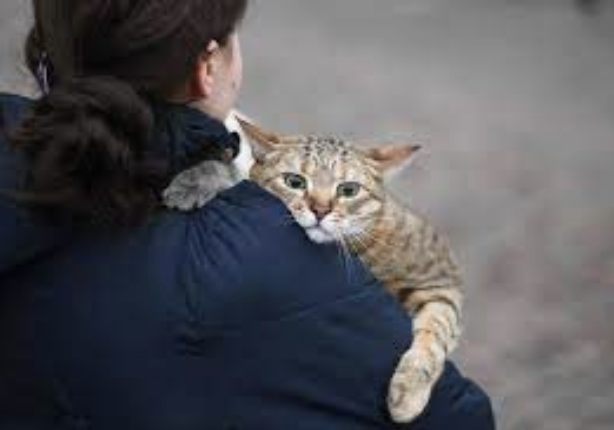
The situation in Ukraine is devastating. Soi Dog’s trusted partner organization TOZ – Towarzystwo Opieki Nad Zwierzetami (Society for the Prevention of Cruelty to Animals) is providing emergency response, food and shelter to the beloved pets brought by Ukrainian refugees fleeing to Poland alongside refugees. While they wait and hope for a ceasefire, Soi Dog Foundation will continue to help TOZ however they can. Your donation will go directly towards helping the animals of Ukraine.
Your donation will go directly towards helping the animals of Ukraine. It will enable TOZ to provide immediate help for the many animals who arrive in desperate need of medical care and shelter, and it will also mean they are able to complete building an emergency clinic right on the border with Ukraine. Even though our work is very much focused in Asia, it is clear that the issues caused by this conflict are immense. If there’s ever an animal in need, we will help them.
We are committed to providing ongoing support as the situation rapidly changes and we expect the number of animals who need urgent care will continue to rise over the coming weeks and months. Your support will be needed for some time to come. Please, please make your urgent donation today.
“One day the absurdity of the almost universal human belief in the slavery of other animals will be palpable. We shall then have discovered our souls and become worthy of sharing the planet with them.”
Often attributed, incorrectly, MLK, Jr., who promoted animal rights as well human rights. Author unknown.
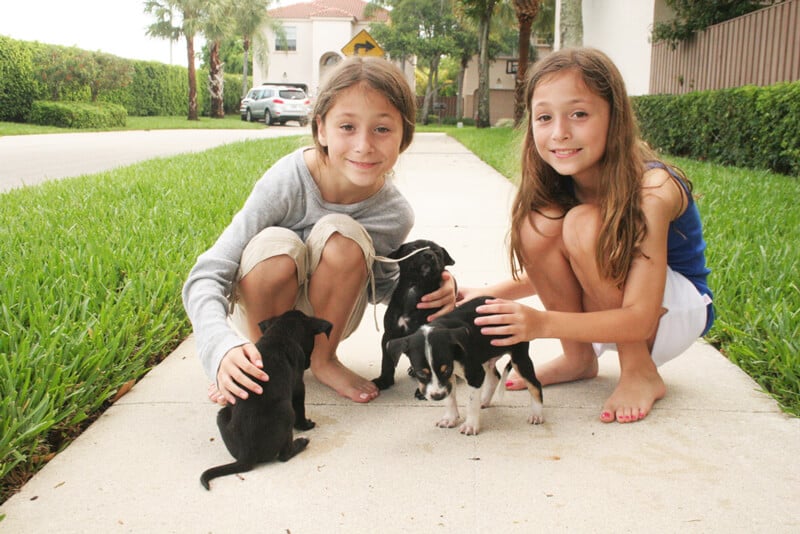
Did you know that you can help animals no matter how old you are? Take Sydney and Alexandria, for example. They’re only 12, and they’ve been donating their time to helping animals for years! There are millions of dogs, cats, bunnies, and other animals in need of homes all over the U.S., and there are so many ways for you to help them.
Alexandria and Sydney love helping animals in need, like these puppies they helped foster!
Here are Sydney and Alexandria’s top 10 ways for kids like you to help animals in shelters:
1. Educate your friends and family.
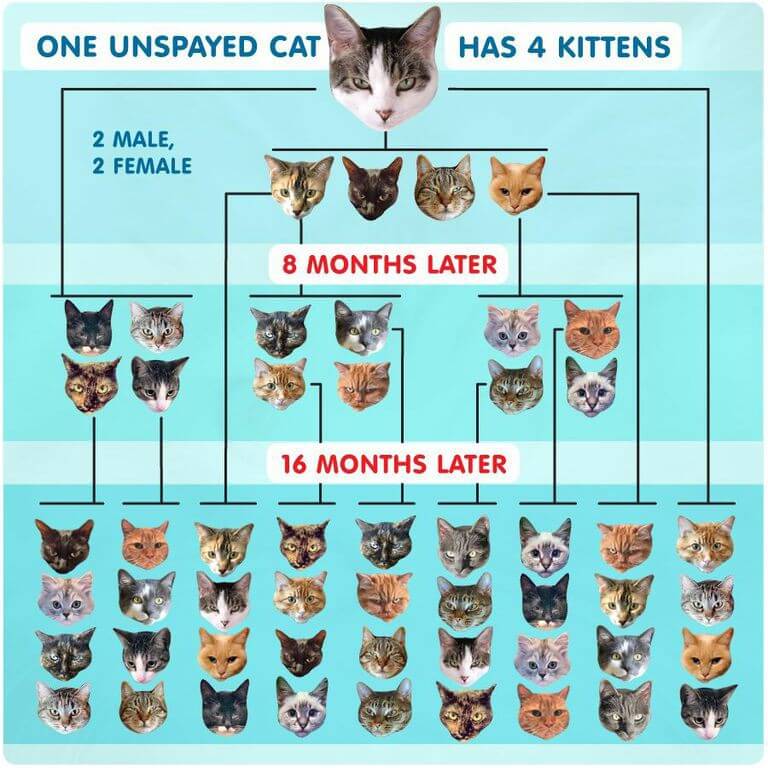
Teach people how important it is to spay and neuter their dogs and cats. Around 70,000 puppies and kittens are born in the U.S. every day, and there are nowhere near enough good homes for all of them. Spaying and neutering can help end the homeless-animal crisis!
2. Ask for birthday donations.
For Sydney and Alexandria’s 10th birthday, they decided that there was nothing they wanted more than to make animals in need happy. They asked their friends and family to give them donations for their local animal shelter instead of birthday presents, and they raised enough money to buy warm beds for dogs so that they wouldn’t have to sleep on the cold concrete floor.
3. Raise money for animals.
Head over to a local business, like a grocery or hardware store, with your parents and ask if you can hold a bake sale in front of the building. Once you get the OK, hang signs up in your neighborhood a couple of weeks in advance letting people know when, where, and why you’ll be holding the bake sale. Be sure to make lots of yummy vegan treats and create signs showing the prices of the goodies.
Ask your parents to post about your bake sale on Facebook to make sure that lots of people will know about it! During the sale, make sure you have some cash with you to give people change and plenty of napkins and bags so customers can take their treats to go. And of course, be sure to put out a donation collection can. (Sydney and Alexandria have held many bake sales for animals, and they say that people often give a donation without even taking a treat!)
4. Volunteer at your local animal shelter.
You may need your parents’ help with this one, since some shelters require that volunteers be a certain age unless they‘re with a parent. If you find a shelter that will let you volunteer, you can walk dogs, clean up after the animals, refill water bowls, and give out toys and treats. Even just being there to pet cats and scratch dogs behind the ears will help them feel less lonely.
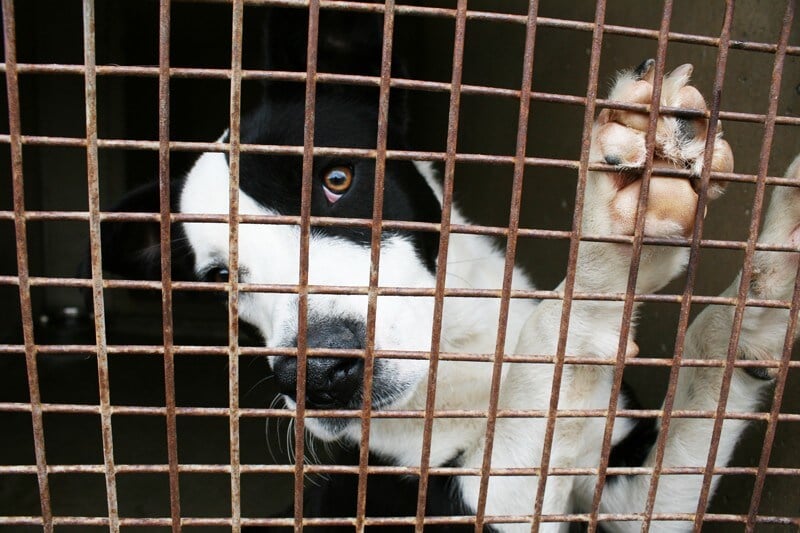
Instead of buying them from pet stores or breeders, be sure to always adopt animals from local shelters. Every year, more than 6 million animals are taken to shelters, and about half are euthanized because there aren’t enough good homes for them. If you have friends who are ready to take good care of a dog or cat (or any animal), urge them to adopt from a shelter instead of buying from a breeder or a pet store.
6. Set up a donation drive.
Ask your teacher or school principal if you can lead a donation drive at your school for an animal shelter. You and your parents can write a letter telling your school officials how you plan on doing it and why it’s important to collect items that animals in shelters need, like food, toys, leashes, beds, and blankets. You can ask your classmates and their friends and family to donate. And get a group of your own friends together to make colorful posters so you can spread the word about the donation drive!
7. Foster an animal.
Ask your parents to help you foster a homeless dog or cat. There are so many animals in need of a safe temporary place to hang out while they recover from an illness or injury, and some puppies and kittens need a quiet place to grow, away from the busy animal shelter. If you can commit your time and resources to fostering an animal, you’ll be helping two animals—the one you take into your home and another one who will get a place in the shelter.
It can be hard to say goodbye to an animal you’ve been fostering once they’re adopted into a permanent home and no longer need you to take care of them. But the good news is that because of you, an animal got a second chance at life in a loving home, and that’s pretty awesome! Fostering an animal is a big commitment, so you’ll need to ask your parents to help while you’re at school. With their mom’s help, Sydney and Alexandria have fostered more than 25 animals. If they can do it, so can you!
8. Speak up.
When you see animals in trouble, try to help them. If you see a dog chained to a tree every day when you walk home from school, ask your parents to call your local animal control officers and tell them why you’re worried about the situation. If you ever see kids being mean to stray cats (or anyone hurting any animals) stand up for them if you can. If it’s not safe for you to get involved, then ask a parent or trusted teacher to help.
Elderly dogs and cats may sleep most of the day and not want to play very much, but they need love and care, too. Sometimes, people are more interested in puppies and kittens because they’re more fun and playful, and older dogs and cats get ignored or neglected. Make it a point to give some extra attention to the older animals at your local shelter whenever you stop by!
10. Spread the word.
Ask your parents to post a photo or a video of a dog or cat who needs a home on their Instagram or Facebook pages. Many shelters have fliers you can download and hang in local coffee shops and other businesses. If not, just make your own! Along with pictures of the animals, include their age and gender, whether or not they get along with other animals and young kids, and any health problems they have. Also, don’t forget to put in the shelter’s contact information for anyone who is interested in adopting. All it takes is one kind person to see your flier and decide to adopt!
More than 2.8 million Ukrainians, many of them with pets, have fled to neighboring countries with only the clothes on their backs. Greater Good Charities is working with partners on the ground to provide emergency relief. Donate now to fund hot, nutritious meals and essential supplies for Ukrainians.
Published 03-04-22 Submitted by America’s Charities
A personal note from Carolyn Cott, co-director of UntoldAnimalStories.org: I had the honor of working as a freelance writer for three years for Humane Society International. They are a credible organization with an excellent track record of success helping animals worldwide. Please consider contributing to their work for the animals impacted by the war.
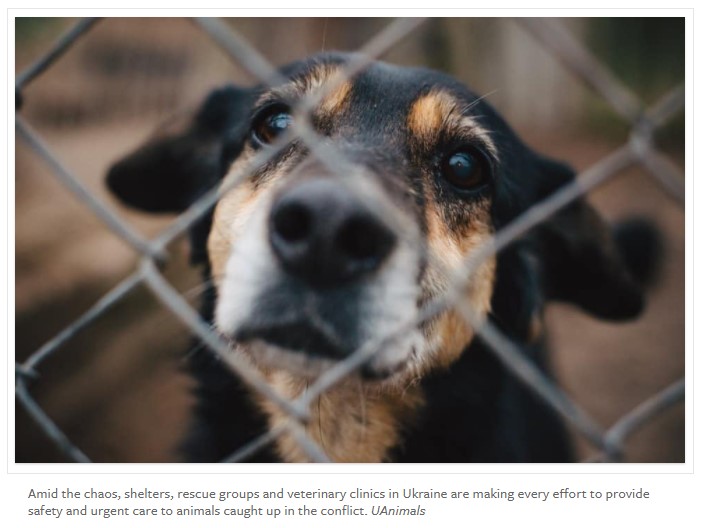
Amid the conflict in Ukraine, shelters, rescue groups and veterinary clinics in Ukraine are trying to keep their operations going, making every effort to provide safety and urgent care to animals caught up in the conflict. Relief workers and organizations are also doing all they can to clear the way for emergency entry into neighboring nations for Ukrainians with pets.
Thanks to the kindness and generosity of Humane Society International (HSI)’s partner, family-owned Mars, Inc., HSI is in a position to respond right away to the needs of Ukraine’s animals and those seeking to help them. In previous collaboration with Mars, Inc., a worldwide COVID-19 relief effort, HSI was able to help more than 280,000 animals in 36 countries on five continents, providing desperately needed food, veterinary care and other support.
With no time to waste, HSI is prioritizing support to shelters, rescue groups and veterinary clinics in Ukraine. It is vitally important to sustain these institutions in their efforts to maintain operations and services. In many cases, they are helping individuals and families who cannot flee but are trying to hold onto and care for their pets and other animals. In addition, some groups are caring for animals on the streets. The demands and needs of the moment are substantial and will continue to be significant in the future.
To assist these organizations, HSI is collaborating with a partner in Ukraine, UAnimals, to assess and prioritize the needs of shelters and clinics actively engaged in relief. HSI in Germany is working with Berliner Tiertafel to provide refugees with pet food and necessary supplies for their animals as well as veterinary care if needed.
HSI is also planning to support animal groups in neighboring countries such as Poland and Romania as they assist refugees arriving from Ukraine with their pets. The groups trying to provide relief are going to need food, carriers, medicines and critical supplies.
The same is true for zoos and wildlife rescue centers in Ukraine, and HSI will do their best to help them meet their needs, too.
If your company has a workplace giving program, please consider featuring Humane Society International as a charity to support alongside other Ukraine crisis relief funds.
All of us can make a difference for animals in our everyday lives, whether it’s by adopting a pet, choosing products not tested on animals, eating a humane diet or engaging your community in animal protection issues. With so many widespread problems facing animals, it takes all of our collective efforts to confront these cruelties and change things for the better.
Here are 50 ideas for ways you can help animals in your community and across the country. Please share this list with any of your friends and family members who are also interested in advocating for animal protection.
Support our campaigns and programs
Connect with us
Rasulov/Shutterstock
1. Sign up for email alerts to get the latest news and quick, simple actions to help animals straight to your inbox.
2. Sign up to receive text message alerts to do the same right from your cell phone.
14. Join us in applauding pet stores that have taken a stand against puppy mills—support the more than 1,000 stores that have joined our Puppy-Friendly Pet Stores initiative. Encourage local stores that do sell puppies to stop.
27. Shop our Amazon storefront for branded apparel that lets you wear your support on your sleeve.
28. Purchase pet health insurance from Petplan and receive a 5% discount—and with each completed application, Petplan will make a $20 donation to our Humane Society Veterinary Medical Association’s Rural Area Veterinary Services program. Use code HSUS20.
An excerpt from Martin Marten by Brian Doyle (an excellent book by any account):
Background: Martin is a marten living in the wilds of Mt. Hood, Oregon. Some of the book is written from the perspective of the marten, some from the perspective of the main human character, and some from the omniscient narrator’s perspective. In this excerpt, the young marten (Martin) and his sister are growing adolescents and nearing the time when they leave home:
“As July lengthened, Martin and his sister and their mother spent less time together; this was usual and natural and normal, the way of their species for millions of years, but Martin and his sister felt their mother’s attention waning, one bright grain less per day, with some deep sense of. . . what? Sadness, regret, loss, nostalgia? We don’t have good words yet for what animals feel; we hardly have more than wholly inadequate labels for our own tumultuous and complex emotions and senses. It’s wrong to say that animals do not feel what we feel; indeed they may feel far more than we do and in far different emotional shades. Given that their senses are often a hundred times more perceptive than ours, could not their emotional equipment be similarly vast?”