I have loved dogs all of my life, but because my parents wouldn’t allow one in the house, I had to wait until I was out of the house and married before getting one. Since then, many dogs have been in my life, and all but one have been shelter dogs.
The one non-shelter dog was a retired show dog—a Cavalier King Charles Spaniel. She was a beautiful 10-year-old, extremely affectionate dog who, like all the dogs in my life, quickly bonded with me. After three months, she suddenly collapsed and died.
Afterward, my daughters began sending me photos of dogs from local shelters. One that caught my eye was a mixed-breed rescue named Sheba, thought to be under six years of age. She reminded me of my first dog, Prince, a Springer Spaniel mix who bonded with me instantly and seemed always to know want I wanted him to do without being asked. He also knew when I was coming home, although my arrival times varied. When we walked, he was at my side, never needing a leash.
Sheba’s adoption records showed that she had been seized by authorities in West Virginia “from a bad situation.” Like so many rescue dogs from the South, she was transported to the North for adoption. I adopted her in June 2023 through a local rescue, Hinde Animal Rescue in Media, PA.
Sheba
Sheba bonded with me quickly, but her mistreatment caused her to be terrorized by almost everything and everyone else. When I stopped to talk with neighbors on our daily walks she would whimper and pull away. Traffic frightened her, as did anything sudden or different. With me, Sheba was calm. I felt honored to be trusted by her and sought ways to expand her sense of safe. A dog psychologist evaluated her but was unable to help her beyond prescribing Fluoxetine, which had to be halved due to side effects.
The elements of time and loving patience seem to have helped the most. It’s been two years since I adopted Sheba, and she now sits or lies down patiently when I talk to neighbors, and her fear of traffic has passed. She is a low-energy, calm dog who loves to walk slowly, doesn’t pull, and walks with a slack leash. She refuses to play fetch, and when I throw a ball for her, it is I who has to retrieve it. Sheba smiles when she looks at me and has become the love of my life. She has become the companion that she is because she lives in a consistently loving environment. I suspect I have derived as much comfort from living with her as she has from living with me.
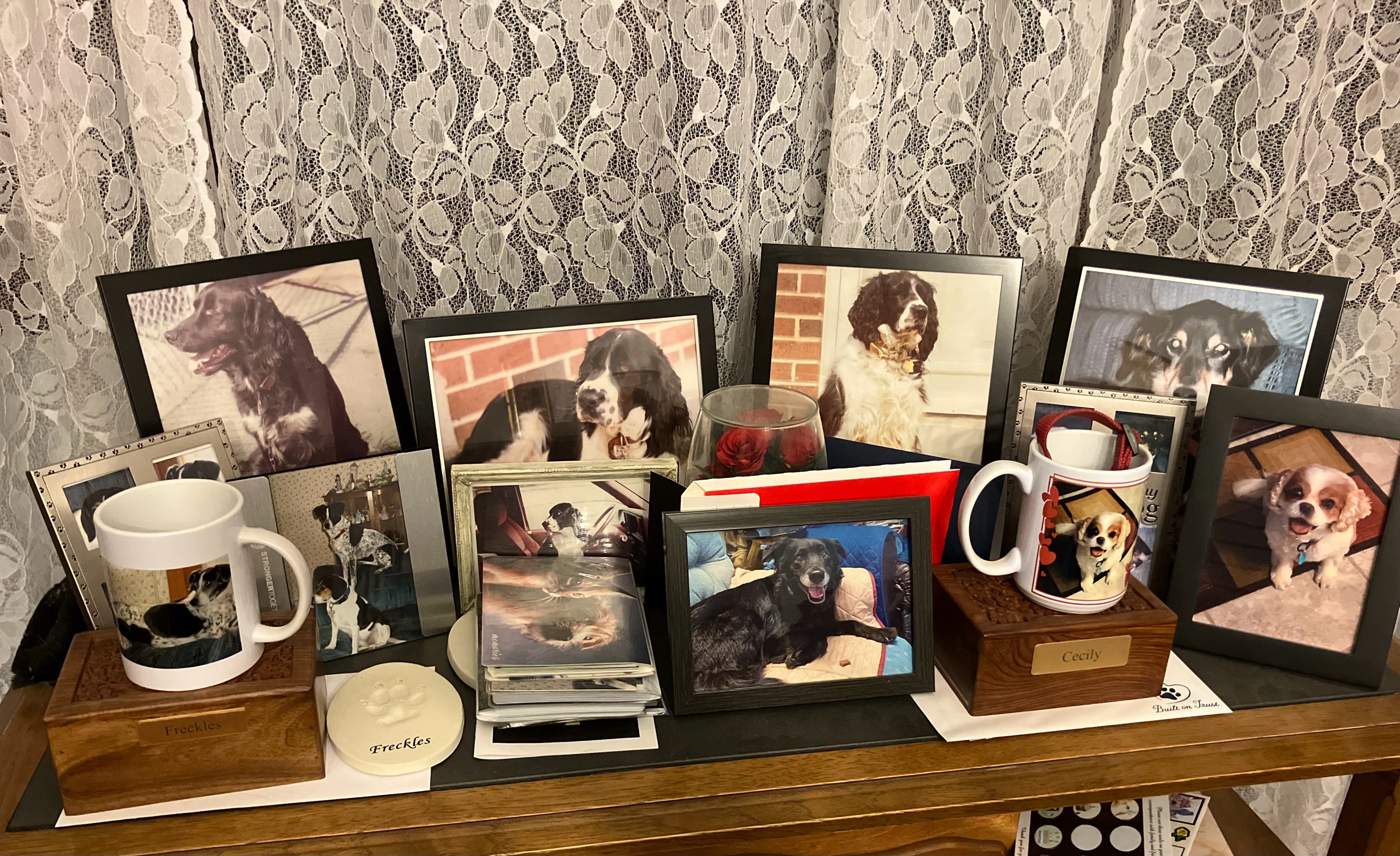
A tribute to all the dogs that have been in my life.
Gracie the cat found our way to us when my daughters were young. She had been thrown from a moving car and landed, limping, in the front yard of a kind couple who cared for her. They couldn’t take her in because they’re inside cat was quite territorial and wouldn’t allow it. And so they sought a home for the ginger-colored cat, and through a friend of a friend, she came to us.
When she entered our house, Gracie was respectful. She moved gently and silently, her body and pace relaxed. She observed people and animals before doing anything. Our resident cat was unthreatened and curious about her. Our rescue pit bull befriended her immediately, and he frequently showed his affection by slurping her face. Gracie tolerated it, squinted against it, shook off the spit, and then gazed fondly at the dog.
Gracie connected deeply with my younger daughter and allowed all the things that young girls do with cats: dressing her up in doll’s clothing, pushing her around in a pram, draping her over her shoulder and wandering through the house.
Gracie had an understanding of things. One example is this—she always slept with my younger daughter, but the one and only night she changed her routine was when our beloved pit died. That night, Gracie divided her time between all of us, lending her gentle presence and snuggling against us in our beds before moving to the next person.
I love this picture of her. The backdrop is a twilight snowfall. Gracie sat for a long time, gazing outward at the evening. When she turned around, she looked me in the eye, blinked slowly, jumped down, and sauntered through the house.
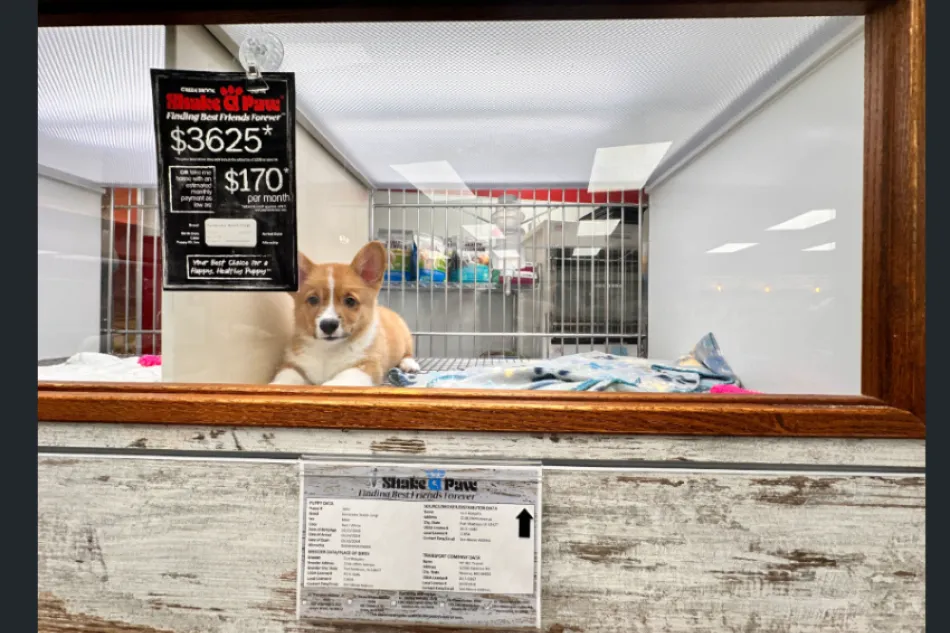
Every year, an estimated 2.1 million puppies are sold from roughly 10,000 puppy mills across the United States. In these massive breeding facilities, nearly 500,000 dogs are kept solely for the purpose of breeding. Many of them will be killed or discarded when they become too old to breed, never knowing what a loving home feels like. We are changing this: Earlier this year, our fight to end puppy mill cruelty reached a milestone worth celebrating: 500 localities across the U.S. have banned the sale of puppy mill puppies in pet shops. Kathleen Summers, outreach and research director for our Stop Puppy Mills campaign, was the very first full-time staff member at Humane World for Animals focused solely on stopping puppy mills. Summers has spent 19 years working to expose and shut down puppy mills. Here, she discusses five signs that a dog is from a puppy mill. Share these tips with your family and friends to spare them the heartache of ending up with a dog whose puppy mill past casts a long shadow over their lives.
“We noticed she had a runny nose, but the pet store said it was just a cold.”
“The puppy slept the whole way home, but we thought that meant she was just a laid-back dog.”
“We weren’t able to meet the puppy’s mother because the breeder said their house was hard to find and met us at the gas station instead.”
These are the kinds of messages we receive from families who become heartbroken and stressed when the seemingly perfect puppy they bought from a pet store, online or a questionable breeder turns out to have serious health problems. When we receive these types of complaints, buyers often add that when they look back, they realize there were red flags. A love of animals and an enthusiasm about the idea of bringing a puppy home can lead people to overlook signs that puppies or their mothers are not healthy, that conditions are not ideal, or that a seller is not being transparent. This is the exploitative business model of puppy mills and the pet stores that sell puppy mill dogs—obscuring the truth of how dismal puppy mills are while capitalizing on people’s natural love for animals.
Our puppy mills team has been collecting complaints from the public for 20 years. The warning signs we hear about most often are the following:
The puppy seems unwell or overly tired. If a puppy has a runny nose or seems lethargic, the pet store or breeder may describe them as “having a cold.” But puppies should be clean, alert and lively. While puppies do nap a lot, they should not seem drowsy or lethargic all the time, should not be coughing or sneezing, and should have clear eyes, ears and nose. Puppies should also be a minimum of 8 weeks old before offered for sale.
Something doesn’t smell right. Literally. A puppy (and their mother) should look and smell clean. If they have been living in poor conditions, they may smell or look dirty or even show signs of fleas. That being said, anyone can give a puppy a bath, so you should also see for yourself exactly where the puppies and parents have been living. It should be in a clean and spacious location, not in stacked cages.
The puppy doesn’t have veterinary documents. A list of vaccinations provided by the seller is not enough. A puppy should come with paperwork on veterinary letterhead, and that paperwork should include the dates and lot numbers of all vaccinations given, as well as information on the puppy’s wellness examination and deworming schedule. Otherwise, you have no way of knowing if the dog received the right vaccinations at the right time, or at the correct dosage and intervals.
You aren’t sure where the puppy has been. If a breeder offers to meet you in a parking lot or other third-party location, that’s a red flag. Responsible breeders will be proud to let you see where the puppies and their parent(s) spend their time. This is also why we caution against purchasing a puppy from a pet store or online. Puppy mills hide behind these third-party sellers or fancy websites.
The puppy’s mother seems to be afraid of you. Responsible breeders should allow you to meet the parents of a puppy—at a minimum, the mother. The mother dog should be friendly, clean, alert and happy to see you. A mother dog who seems afraid, lethargic or aggressive may be maladapted because she’s been living in poor conditions.
Our investigations into pet stores that sell puppies from puppy mills show time and again that these dogs suffer because they do not receive appropriate attention, socialization or veterinary care.
The best way to avoid supporting the puppy mill industry is to adopt a dog from an animal shelter or reputable rescue group instead. If you’re seeking to add a puppy to your family, there’s no shortage: Of the 2.9 million dogs who entered shelters and rescue organizations in the U.S. last year, 29% were puppies. You’ll not only be giving a home to a pup who needs one, but you’ll be keeping your hard-earned money out of the pockets of puppy mills. Learn more.
Kathleen Summers is outreach and research director for the Stop Puppy Mills campaign at Humane World for Animals.



 Untold Animal Stories