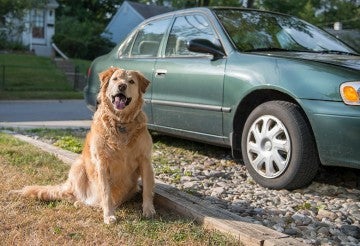
Members of the U.S. military and the 12 dogs they rescued urgently need your help. These brave soldiers have cared for these pups for months. But, as their deployments end, their beloved companions face an uncertain future. Stray dogs in the Middle East rarely make it to adulthood. Other animals or, even more heartbreakingly, people often starve or kill them.We can bring these dogs into our care. Then, we can reunite them with their soldiers in the U.S., but we cannot do it without your support.*A generous corporate donor has agreed to match all donations up to $40,000! This means every dollar you give will go twice as far. There is no better time to donate. Please give now. We don’t have a lot of time to bring them to safety.
Help War-Displaced/Abandoned Pets in Ukraine
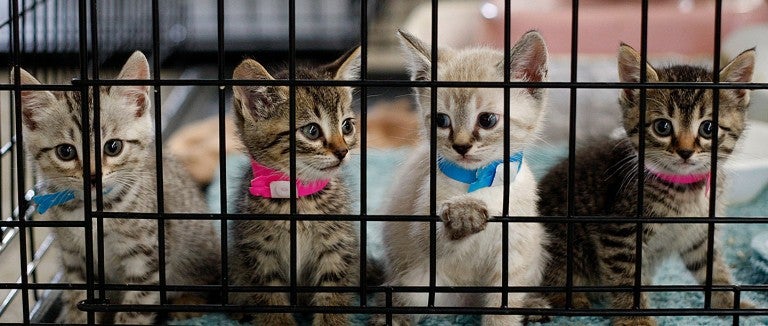
How To Help Community Cats
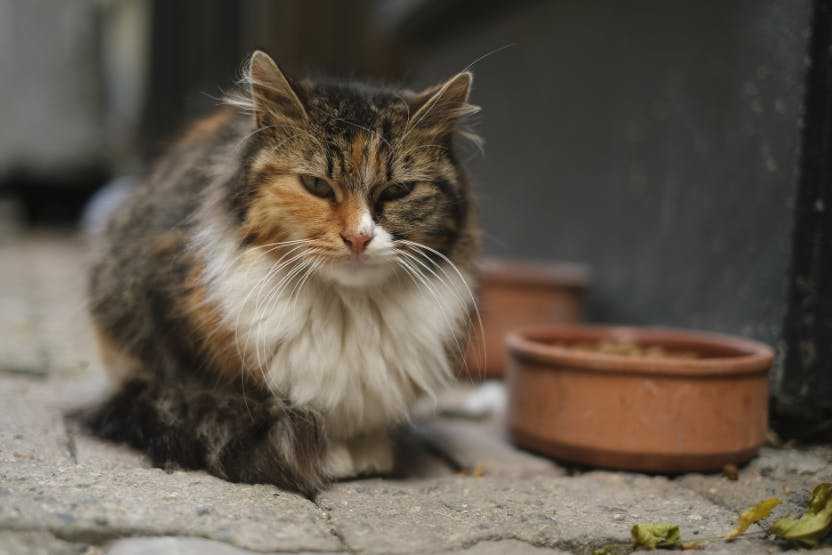
First and foremost, make sure the cat is feral rather than one that has been lost or been dumped by some uncaring former owner. Only 3% of lost cats ever find their way home again, and what you may have found is a lost cat who will not do well left on its own. Squat down, call gently to the cat, and see if it comes to you. Put down some water and food. Give it some time to trust you. If you can pet it and/or pick it up, deliver it to your local SPCA, or call the vet to see it a microchip can be read. If its owner is findable or if it is adoptable, the humane society or SPCA will help.
If the cat is feral (the following is from Humane Society of the United States):
Through trap-neuter-return and basic caretaking, you can improve the lives of community cats and prevent the births of kittens. Wherever you live or work, chances are that there are community cats living nearby.
You may see them hanging outside a neighbor’s home, lurking around the dumpsters behind a local restaurant or grocery store, or loitering around a commercial lot.
An estimated 10-12% of the American public feed community cats, but many lack the information or help they need to take the crucial next step: sterilizing and vaccinating the cats. As a result, community cats produce about 80% of the kittens born in the U.S. each year.
Through trap-neuter-return, you can significantly improve individual cats’ lives, reduce cat overpopulation in your region, and perform a valuable community service that benefits people, cats and wildlife.
Get started
Identify local resources. There may be an organization or agency in your area that can help you TNR the cats, find homes for any young kittens, provide pet food or offer other forms of assistance. Check out our tips for what to do if you find a cat and how to identify animal welfare organizations, spay/neuter programs and other resources in your region.
Learn the basics. Check out the facts about TNR, then watch our Trap-Neuter-Return video and this short instructional video by kittenlady.org. With a few minutes’ study, you’ll be able to explain to others how trap-neuter-return works.
Identify the caretakers. Find out who cares for the cats. Keep in mind that many kindhearted people feed community cats but don’t know about available resources to stop them from breeding; they may feel overwhelmed with the endless litters of kittens and be grateful for your help. With diplomacy and a spirit of helpfulness, you can identify the barriers that are preventing them from getting the cats fixed and help fill those gaps.
Create a plan of action. Depending on the caretakers’ capabilities, your help may take different forms, from connecting them with a local TNR program, scheduling surgeries, borrowing traps, trapping the cats, transporting them to a clinic or raising funds to cover costs. Ask friends and other animal lovers in your community to join the effort.
How to do TNR
- Sign up for an online TNR Training workshop hosted by the Community Cats Podcast and Neighborhood Cats.
- Check out the seven steps to TNR.
- Get tips for trapping hard-to-catch cats.
- Learn about caretaking best practices.
Resolve conflicts with neighbors
Outdoor cats can sometimes be the cause of complaints. Check out these tips for keeping cats away from areas where they’re not welcome and resolving other nuisance issues:
- How to keep cats away
- Responding to complaints about community cats
- Resolving conflicts between cats, wildlife and humans
- Caretaking practices that promote harmony between cats and the people around them
- Protecting bird feeders from cats
- Feeding guidelines for community cats
Community cats, community effort
You don’t have to wait for community cats to show up in your backyard to start helping them. Many hands make TNR work lighter—here’s how to contribute.
- Trapping. TNR programs are always in need of people with the patience and dedication to do the essential: catch the cats.
- Transport. You can make a valuable contribution as a transport volunteer, delivering cats to the clinic and returning them to a holding place after surgery.
- Safe keeping. Cats need to be held the night before and typically one night after surgery. Do you have a garage or spare room that can be kept warm in the winter and comfortable in the summer? You can make a difference simply by holding cats overnight and feeding and monitoring them.
- Outreach. By knocking on doors, handing out flyers and engaging people in conversations about cats, you can raise awareness, identify cats who need services and learn about neighbors who are already feeding community cats.
- Behind the scenes. TNR programs need volunteers to keep the effort afloat, whether that’s through fundraising, grant writing, record-keeping, website maintenance or answering calls and emails.
Other ways you can help
You can also make a big difference by doing the following:
- Spay or neuter your own cats before they’re 5 months old.
- Volunteer to socialize feral kittens.
- Download this flyer to spread the word about community cats and TNR.
- Volunteer to help at a spay/neuter event for community cats.
- Educate your local officials and build local support for TNR.
https://www.humanesociety.org/resources/how-individuals-can-help-community-cats
Interspecies Animal Friendships
25 Ways Animals Communicate
by Alex Daniel, BestLifeOnline
Everyone knows that cats meow, dogs bark, and cows moo. But you don’t need Old MacDonald to tell you that animal communication is infinitely more complex than that. In fact, if you do a dive deep on how, exactly, some creatures talk to each other, you’ll find secret languages that make the disparate languages of humanity—of which there are 6,900, according to the Linguistic Society of America—seem rudimentary by comparison.
1 White Rhinos Speak via Dung
White rhinos, who have terrible eyesight, use communal dung heaps (called “middens”) as a something of a community bulletin board where they can leave messages—that one rhino is sick or another is ready to mate, if a dominant male has recently wandered through—to the rest of the group.
2 Mantis Shrimp Flash Lights
This creature has some of the most impressively complex eyesight in the animal kingdom, with 16 color receptors (compared to our measly three), which come in very handy when trying to communicate with one another. They use their own bodies to communicate using polarized light that other animals cannot spot. Researchers have found that they bounce light off bleu spots on their appendages called maxillipeds, scattering and arranging light across the surface in ways that can covey information to other mantis shrimp—rather than merely reflecting it.
3 Sperm Whales Click
This species of whale uses clicking sounds known as “codas” to convey information to one another. Those in different areas of the ocean use different clicking patterns, sort of like regional dialects—so Caribbean sperm whales sound slightly different than those in another part of the ocean. Researchers have been particularly interested in a group near the Caribbean island of Dominica, which they’ve found may even have variations between different clans or individual whales.
4 Caterpillars Send Out Decoy Distress Calls to Ants
The caterpillar of the alcon blue butterfly scrapes its abdomen to create a kind of song. But unlike many other such critters, who use their communication techniques to contact others of their species, this is a message meant for a very different creature: red ants. The song imitates that of the red ant queen, so those soldier ants that hear it will guard the caterpillar, even killing their own kind in order to protect it.
5 African Elephants Vibrate to Each Other
Technically, elephants make very low sounds to one another. Thing is, they’re so low that it does not strike the human ear as a sound—or anything more than a rumbling vibration. Known as “infrasound” (sounds below 20 hertz, too low for humans to detect), this way of communicating may seem quiet to humans, but researchers estimate that one African elephant making an infrasound can be heard by another more than 175 miles away!
6 Tarsiers Screech
These tiny, big-eyed primates living in Southeast Asia communicate at the opposite range of elephants—ultrasound frequencies over 20,000 Hertz that are far too high-pitched for the human ear to detect. Scientists recorded them using similar devices as those used to record bats, capturing their vocalizations at 70,000 Hertz, which is believed to help them communicate over the jungle noise (and out of range of predators), making it ideal for avoiding or alerting one another of danger. By the way, tarsiers are one of the smallest animals in the world.
7 Ravens Have Sign Language

Just as humans use their hands to emphasize a point, ravens do their own kind of gesticulating, using their beaks and wings to show or offer items such as moss, stones or twigs (usually aimed at members of the opposite sex). They also interact by clasping their bills together or moving an item together, as a show of potential bonding.
8 Egyptian Fruit Bats Argue
You’re probably aware that bats use high-pitched squeals to connect and communicate with each other. But you probably didn’t know how specific such communications could get. Researchers at Tel Aviv University used a machine-learning algorithm to recognize bats’ intonations and the messages they may be trying to convey, “translating” 15,000 calls into several specific messages—more than 60 percent were arguments about four specific things: food, sleep positions, invasion of personal space, or unwanted advances.
9 Chimpanzees Scratch Each Other
Chimps love to groom and to be groomed. But just like your spouse or partner loves a backrub…but even more if you focus on that one spot right there, chimps can be particular about where they want to get scratched, using “referential gesturing” to draw the attention of another chimp to the specific area they’d like to have groomed.
10 Geckos “Seamless” Their Food
Day geckos, native to Madagascar, pioneered the idea of instant-order takeout long before Seamless (or even humans) came along. But rather than an app on their phones, they simply nod their heads at treehoppers—insects that digest sap an excrete it in a sugary liquid known as honeydew. When the gecko communicates to the treehoppers that it would like some of that honeydew, the insects oblige, excreting it right into the amphibian’s mouth.
11 Electric Fish Discharge Electricity
You’re probably familiar with electrically charged sea creatures such as the electric eel, but there is a particular species of electric fish that is able to use its voltage as a means of communicating. Known as “weakly electric fish,” these creatures, which, as their name implies, produce a mild electric discharge, use it to “chirp” out information, such as a male stating it’s attracted a female. When two of these fish meet, they are known to tweak their wavelengths in order to allow each other to produce similar levels of voltage.
12 African Demon Mole Rats Head-Bang
“African Demon Mole Rat” sounds like a pretty good name for a metal band. As it turns out, these critters communicate through a kind of head-banging. Spending their lives underground, they can communicate with one another by thumping their heads against the tops of their tunnels, in that way sending vibrations through the earth that travel much farther attempting to make a loud noise would be able to. The pace and intensity of the thumps indicate different meanings. Rock on.
13 Black-Footed Titis Squeak
When black-footed titis (a brown, rainforest-dwelling monkey), use high-pitched squeaks to let each other known not only what types of predator may be near but their general location. Researchers have found that the monkeys vary their calls in a number of ways, creating their own syntax and complex communication system.
14 Gorillas Hum
Sometimes, singing to oneself is a way to tell the world you are away in your own world and don’t really want to be bothered by all the craziness happening elsewhere (hence, singing in the shower). That’s true of silverback gorillas too, which researchers have found will hum or sing while chomping down on their favorite vegetation. It’s not just a way to indicate that they are enjoying their meal, but a way to convey that they would prefer not to be bothered while eating. When they go quiet, that’s a sign that they are willing to chat.
15 Dholes Whistle
Dholes, otherwise known as Asiatic wild dogs, are also sometimes called “whistling dogs“—and with good reason. These fox-like animals alert each other about the location of prey through whistle sounds. This allows them to make coordinated attacks on other animals much larger than them, communicating in packs to take down prey that’s more than 10 times their own body weight.
16 Prairie Dogs Call to Each Other
These creatures are known for their complex underground tunnel systems, but they also have complex ways of calling to one another, using slightly different intonations (reportedly of a “chee”-like sound) depending on the type of predator—coyote, hawk, human—nearby. In one study, they were found to seemingly identify the difference between a person wearing a blue shirt and one wearing a yellow shirt.
17 Tap-Dancing Blue-Capped Cordon Bleu
As if its name isn’t cool enough, the blue-capped cordon bleu also has some killer dance moves, using a kind of winged tap dance to attract a mate. Both male and female birds of this species court by holding a piece of nesting material in their beak, and then bob up and down while they sing, and make super-fast dance steps with their feet. Researchers believe the dance is meant to not only catch the attention of a mate, but to demonstrate health and fitness.
18 Bison Choose Leaders With Their Feet
European bison are large creatures, but they speak softly, letting their feet do the talking. When the herds of these impressive creatures seek to move on, they decide which way to go not through the guidance of a single leader, but a complex process in which one of the members of the herd (it can be anyone, male or female, young or old) would walk 20 or more steps in a particular direction without stopping to graze. If the others trust the decision, they take the cue and follow along—and that leading animal becomes the herd’s de facto leader (until the process restarts). Perhaps we could take a cue from the bison…
19 Apes Stomp, Clap, and Shake Heads
There are many, many other cool ways that great apes communicate with each other; researchers have isolated some 80 gestures at least. But what may be most interesting is that these significantly overlap with human toddlers; as Smithsonian puts it, “researchers found the human toddlers used 52 discrete gestures to communicate, including clapping, hugging, stomping, raising their arms and shaking their heads, often stringing the moves together to convey complex ideas. It turns out that the chimps also used 46 of the same gestures, meaning there’s a 90 percent overlap.”
20 Caribbean Reef Squid Changes Color
Using specialized cells containing pigments and light-reflecting molecules known as chromataphores, the Caribbean reef squid can change the color of their skin to convey a variety of messages: to court a potential mate, to warn others of a predator or a number of other messages—even conveying one message to a squid on their left side and a different one to a squid on their right.
21 Dancing Bees, Well, Dance
Research going back centuries has noted that bees use dance moves to alert fellow hive-dwellers of a honey source. A famous study found that, when a bee discovered a honey source, it would head to the hive, performing a dance while other bees touched its abdomen, allowing the others to then find the honey source without needing to be shown. The direction and speed of the dance indicated specific geolocation details that the others could follow.
22 Jackdaws Glare
Just as humans can stare people down with their eyes in order to express their anger or frustration, so too can jackdaws, a bird that’s part of the same family as crows, ravens, and jays. Researchers have found that one of these birds will use his conspicuous eyes to glare at a would-be competitor, deterring it from trying to take over his nest.
23 Coral Groupers Team Up For Hunts
When these predatory fish are outsmarted by prey that dives deep into the cracks of the coral reefs, it get some help from other predatory species: usually either the napoleon wrasse or moray eel. The grouper will point with its nose to the location of the fish, shaking its body, and the wrasse will smash against the coral to open it up or the eel will creep into the cracks itself. Thanks to this team work, at least one of the predators, if not both, usually end up with dinner.
24 Chimpanzee Footsie
You could spend a lifetime analyzing chimps’ gestures. There are so many, in fact, that you can review an entire Great Ape Dictionary. Chimps have striking similarities with humans, and one of the other ways that researchers have found they signal to one another is through extending their feet to alert another (usually young) chimp to climb on them to travel.
25 Warbling Antbirds Sing Off-Time
Female Peruvian warbling antbirds will not tolerate other females making moves on their male mate and convey that message clearly to any would-be competitor who invades their territory. The mates generally sing together in a kind of charming harmony, but at the sight of an interloper, the female will shift to an arrhythmic singing that messes up the sound and creates an unpleasant cacophony, ensuring the other woman is not allured by the usual pleasant singing that might otherwise attract her. And for more on all things animal, check out these 50 Amazing Animal Facts
Orangutan Observed Treating Wound Using Medicinal Plant
By Jack Guy, CNN

The male Sumatran orangutan treated a facial wound by chewing leaves from a climbing plant and repeatedly applying the juice to it.Armas CNN —
Scientists working in Indonesia have observed an orangutan intentionally treating a wound on their face with a medicinal plant, the first time this behavior has been documented.
Rakus, a male Sumatran orangutan, treated a wound on his face by chewing leaves from a climbing plant named Akar Kuning and repeatedly applying the juice to it, according to a paper published in the journal Scientific Reports on Thursday.
Rakus then covered the wound with the chewed up leaves, which are used in traditional medicine to treat illnesses like dysentery, diabetes and malaria, said scientists.
ADVERTISING
Study lead author Isabelle Laumer, a post-doctoral researcher at the Max Planck Institute of Animal Behavior, told CNN that the team were “very excited” by their observations, which took place in June 2022 in the Suaq Balimbing research area in Gunung Leuser National Park, Indonesia.
Although other wild primate species are known to swallow, chew or rub themselves with plants that have medicinal properties, scientists have never seen them used to treat recent wounds.
Rakus treated his wound in a process that took several minutes, researchers said.Armas
The team believe that Rakus intentionally used the plant to treat his wound as he applied it repeatedly in a process that researchers say took several minutes.
“This possibly innovative behavior presents the first report of active wound management with a biological active plant in a great ape species,” she said.

Related article Chimpanzees apply ‘medicine’ to each others’ wounds in a possible show of empathy
Researchers believe that Rakus most likely sustained the wound in a fight with another male orangutan, which are rare in the area thanks to “high food availability, high social tolerance between orangutans and relatively stable social hierarchies,” Laumer explained.
This means that orangutans rarely suffer wounds, giving researchers few opportunities to observe this behavior.
As for how Rakus would have learned how to treat a wound, one possibility is “accidental individual innovation,” said Laumer.
The orangutan may have touched his wound accidentally while feeding on the plant and felt immediate pain relief due to its analgesic – pain relieving – effects, making him repeat the behavior, she explained.
Another possible explanation is that Rakus learned how to treat a wound from other orangutans in the area where he was born, said Laumer.

Related article Great apes tease each other just like humans do, says new study
The observation “provides new insights into the existence of self-medication in our closest relatives and in the evolutionary origins of wound medication more broadly,” added Laumer, raising the possibility that wound treatment may originate in a common ancestor shared by humans and orangutans.
Researchers plan to closely observe any other wounded orangutans in the area to see if the behavior is repeated, said Laumer, who added that the findings underline the commonalities between humans and orangutans.
“We are more similar than different,” she said. “We hope this study raises awareness on their critically endangered status in the wild.”
https://www.cnn.com/2024/05/02/asia/orangutan-medicinal-plant-study-scli-intl-scn/index.html
LOST YOUR CAT?
It’s a myth that most cats will find their way home.
The most significant findings of a recent study were that a thorough physical search is likely to increase the chances of finding cats alive and most cats are found within a 500 m (1/3 mile) radius of their point of escape. Cats that were indoor-outdoor and allowed outside unsupervised traveled longer distances compared with indoor cats that were never allowed outside.
From: https://www.cats.org.uk/help-and-advice/lost-found-and-feral-cats/lost-a-cat and from https://www.ncbi.nlm.nih.gov/pmc/articles/PMC5789300/
Five things to help find your lost cat
- Shake a box of their favorite biscuits to entice them home.
- If your cat has a favorite toy, try leaving it in your garden.
- Cats have a strong sense of smell – leave out a regular blanket or bedding to encourage your cat out of hiding.
- You might find your moggy is more active at night, especially during hotter weather. Go out with a friend or family member when it is dark to call for your cat by name.
- Leave a bowl of water out and some food. A tasty treat such as tuna might be enough to bring your cat home.
Is my cat lost?
Not all cats are house cats. Some are inclined to wander, especially if there is fuss or food to be found elsewhere. It is normal for your cat to pop in and out throughout the day – especially if they have a taste for adventure. If your cat hasn’t returned by the time dinner time comes around, however, you might be worried that your cat is missing. Try not to panic. Cats can disappear for days at a time and return with no trouble, looking perfectly healthy. While you might be worried, they’re likely to stroll in and wonder what all the fuss is about. If they haven’t yet returned, give them a few hours before you make a plan of action.
I’ve lost my cat. What can I do?
If your pet still hasn’t returned home, there are a few simple things you can do to help find your missing cat. The first thing to do is to check your own home and garden. Cats love small cosy spaces and might be hiding in the unlikeliest of places – from cupboards to garden sheds. Check every room in your house, including any outbuildings and sheds too. Behind curtains, under duvets and even in household appliances like tumble dryers and washing machines. If you’re having building work completed, check under floorboards or any holes big enough for a cat to nestle into.
If you’re sure your cat isn’t at home, the next thing to do is to speak to your neighbors as well as any delivery people nearby. They might have seen your lost cat somewhere and can let you know of their whereabouts. Ask them to check their own sheds and outbuildings, as well as under any parked cars in the neighborhood. Remember to check homes on both sides of the road, as well as homes that have gardens that back on to yours. You could even provide neighbours with an up to date photo and your cat’s name, reminding them to keep an eye out.
Advertising on social media is a great way to get the message out that your cat is missing, particularly if you’re a member of a local Facebook community group. Post a clear photo of your cat, their name and your contact details.
It is also useful to keep a list of useful phone numbers pinned to a board in your kitchen. You can download our list below, complete with handy contact details.
How do I get my cat to come home?
If putting out the word about your missing cat hasn’t worked, there are some great tips and tricks to try at home. Cats are heavily reliant on scent and leaving out items that may entice them back to you is well worth an attempt. Things to try include the following:
- Leave your cat’s favorite toy or some of their unwashed bedding in the garden
- Leave an unwashed item of your clothing, which will have your scent on it
- Place any used litter from your cat’s litter tray outside, or perhaps the contents of your hoover for a smell of home
- Call out for your cat in the garden early in the morning or late at night, when everywhere is likely to be quieter
- Shake a box of their favorite biscuits or treats
- Keep calling your cat, leaving enough time for them to hear you and be led home
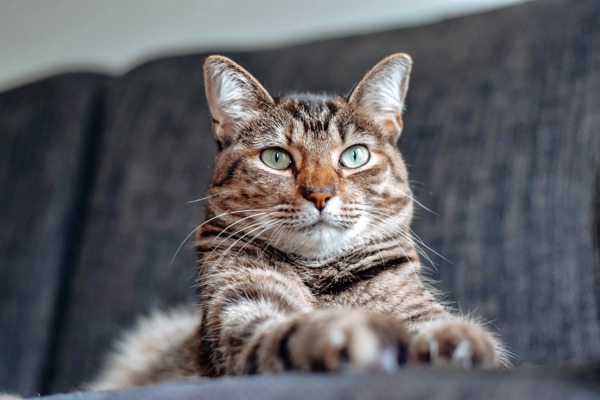
Lost your cat? Follow our checklist
If you’re beginning the search for a missing cat, download our checklist to tick off each action as you do it.
- Search first. Check small spaces in your home – everywhere from cosy cupboards to garden sheds, garages and outbuildings
- Ask your neighbors. They’ll need to check their property, sheds and garages too.
- Is your cat microchipped? Talk to Petlog on 01296 737 600 or Identibase on 01904 487 600 to register your cat as missing
- Speak to your local Cats Protection branch or centre to see if they’ve had a cat handed in to them. To find one in your area, visit our Find Us page and enter your postcode
- Get in touch with animal shelters in your area. Visit catchat.org to find those local to you
- Contact all vet practices in the area
- Make and put up flyers with your cat’s photo and description to place around the local area – or post them through your neighbour’s letterboxes
- Post a description of your cat on your Facebook page, as well as any local community Facebook groups
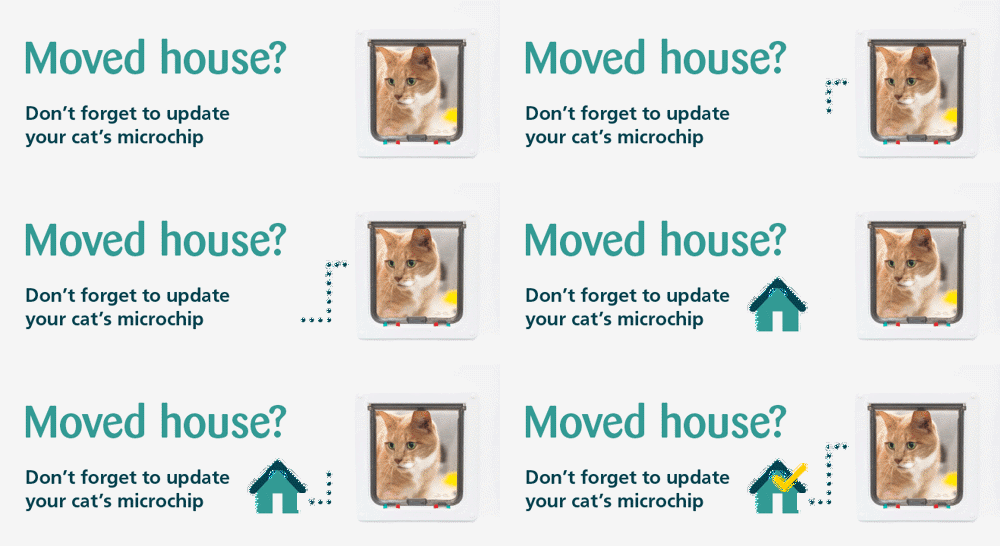
Microchipping your cat
Microchipping your cat is the most effective way to ensure that they can be identified if they go missing, and keeping your details up to date can increase the likelihood of a happy reunion. If your lost cat is found and taken to a vet or animal welfare organisation, you’ll be contacted quickly.
Moved house or changed a phone number? You’ll need to let your microchipping company know so that your details that are on file can be amended.Find out more about microchipping your catDownload: Microchipping guide
You See a Dog or Cat on the Side of the Road-Sensible ways to help without getting in over your head
(From Humane Society of the United States) You’re driving your car when you see a dog or cat on the side of the road. With a sinking feeling, you realize they are alone. What should you do?

This is a wrenching scenario for all who care about animals. After all, what if your own pet were standing there? Use our guidelines for providing safe and effective help.
Don’t cause an accident
You can’t help an animal if you become injured in the process. Look in your rear-view mirror before braking, turn on your signal, pull your car completely off the road, turn off the ignition, set the parking brake, and put on the hazard lights. If you have emergency flares, prepare to use them.
Catch them safely
Safety first
A strange, frightened, and possibly sick or injured animal can behave unpredictably. A sudden move on your part, even opening your car door, can spook them and cause them to bolt—possibly right onto the highway. If the animal looks or acts threatening, or if you feel uneasy about the situation, stay in your car.
If possible, restrain the animal. Create a barrier or use a carrier, leash, piece of cloth, or length of rope to keep the animal in the area. Signal approaching vehicles to slow down if you cannot confine the animal, or divert traffic around them if they appear to be injured and is still on the roadway.
Use caution
Use caution when approaching the animal. Should you succeed in getting close enough to capture them, you stand a good chance of being scratched or bitten.
When moving toward the animal, speak calmly to reassure them. Make sure they can see you at all times as you approach, and perhaps entice them to come to you by offering a strong-smelling food such as canned tuna or dried liver.
Lure them into your car
If you are certain you can get help from animal control very soon, try to lure the animal into your car with food, close the door and wait for help. In most cases it isn’t a good idea to attempt to drive somewhere with a strange dog unrestrained in your car; they may become frantic or aggressive. Cats may do the same, as well as lodge themselves under the car seat, and it can be dangerous trying to extract them.
Call for backup
If you’re not able to safely restrain the animal, call the local animal control agency (in rural areas, call the police). Do so whether or not the animal is injured, and whether or not they are wearing an identification tag. Leave your phone number with the dispatcher, and try to get an estimate of how long it may take someone to respond. If possible, stay on the scene to keep an eye on the dog or cat until help arrives. Make sure you report to authorities precisely where the animal is by using road names, mile markers or landmarks.
World Spay Day
Initiated by Doris Day and her Animal League as Spay Day USA in 1995, when the estimated euthanasia rate in overcrowded shelters was between 14 and 17 million dogs and cats each year, this annual event has grown to global proportions in 74 countries, resulting in the spay/neuter of millions of animals since its inception. The Doris Day Animal Foundation provides annual grants for World Spay Day, now organized under the auspices of the Humane Society of the United States, to promote spays and neuters across the country to help eliminate homeless pet overpopulation. While there is still much work to be done, we’re happy to report that currently the estimated number of dogs and cats euthanized in U.S. shelters has dropped to about one million annually.
Learn more about the many benefits and why you should spay and neuter pets and help support organizations that do: https://www.humanesociety.org/resources/why-you-should-spayneuter-your-pet
Ollie & Spuds – Chapter 7
An Expanse of Dusky Sky
Over the many days since Ollie and Spuds arrived in the country, they have found there’s much they like. The air is warm. The stream provides easy access to water. Their nest under the rocks is dry and protected. There’s plentiful wildlife that they hunt together. Spuds is the more talented hunter of the two, but she’s generous. There was one occasion, however, when she ate all but the claws, the beak, and some entrails of a bird, which she placed in a tidy pile in front of Ollie. He looked down at the pile and up at Spuds, twice.
On a pre-dawn ramble, when the horizon has a thin streak of light, Ollie and Spuds wander through the nearby town. Only the bakery, with steamy front windows, is busy at this hour. They turn onto a street lined with houses with tidy front gardens. One of the houses is overhung by an enormous flowering tree.
Spuds starts to climb the tree, as cats seem compelled to do. Ollie tilts his head at her, but he dutifully stands guard while she climbs into the high branches. From there Spuds can see most of the town and open countryside. She peers into the window of the house and sees a child sleeping. His mouth is open, his face serene, and he clutches a small bear to his chest. Spuds watches the blankets rise and fall with his breath.
Ollie quietly whines, and Spuds descends the tree and sends Ollie a mind-picture of the sleeping child. Ollie thinks of his children, of watching his family through the sliding glass door, of the sound of their voices. Only once had he been allowed inside the house, and that ended with the man yelling at the children and pushing Ollie into the back yard.
The children came out to play sometimes. They circled their arms around Ollie’s neck and pet him gently with their small fingers. They threw sticks for him to chase, a game he found silly but played because the children seemed to enjoy it. The woman gave him food and water daily, each time stroking his head gently and speaking to him. When the weather turned cold the woman stuffed straw into the doghouse and covered the house with a tarp. On cold nights Ollie borrowed into it, but being a pit bull and therefore having little fur, he shivered through the nights.
Spuds gracefully leaps down from tree. Ollie looks into her green eyes and feels something like peace. They retrace their steps through the town. The baker is now standing outside his shop, his apron speckled with flour, his arms folded across his broad belly. He makes a half-hearted attempt to call to them as they walk away.
•
As the weather warms, the farm fields are striped with orderly rows of lime-green plants and the woods grow dense with undergrowth.
With the canopy of the trees providing cover for an afternoon doze, Ollie and Spuds stretch out side by side. Only the occasional buzzing fly disturbs their lazy afternoon. Their ears flick and noses twitch, but they nap, safe and comfortable.
Ollie awakens first, hungry, and noses Spuds. Spud opens her eyes, rises slowly, stretches, and yawns.
They walk out of the woods and onto a dirt road with weeds poking up between wheel-worn paths. The sun edges lower toward the horizon, casting warm light on the fields. Spuds scans the fields for the movement of mice while Ollie galumphs along behind her.
Spuds sees a child ahead and stops so suddenly that Ollie bumps into her. Though clueless about why they’re stopping, Ollie raises his hackles as a cautionary measure.
A girl is sitting on the side of the lane twirling a long-tasseled wand of grass. She has curly brown hair and wears an oversize sweater that dwarfs her. She notices the animals and looks at them unblinkingly. Her eyes are turquoise-blue.
Ollie glances at Spuds to take his cue. Spuds continues to look at the girl. The girl wordlessly extends her hand. Ollie takes a few tentative steps toward her, pauses, walks closer, pauses, and sits down just out of reach. The girl keeps her gaze on Ollie’s eyes. He rises, moves toward her again, and stretches out his head toward her. She raises her hand slowly and strokes the top of his head. Ollie holds very still and lets her.
Spuds observes them for a few minutes and then walks toward them. She sits down a few feet away. The girl regards her. The three of them sit in stillness. The setting sun burnishes the animals’ fur. As the sunset colors start of the fade, the girl rises. Ollie looks up at her expectantly. The girl picks at the loose threads on the elbow of her sweater and then looks at them.
“Okay. I’m Tori. I can take care of you, but I can’t let anybody know. Let’s go.” She walks away. Both animals stay put.
“Come on.” Tori moves her arm in a wide, welcoming sweep.
Ollie walks toward the girl. As he closes the distance, he turns to Spuds. She licks a spot on her forearm and joins them. They walk along the dirt road together through the sloping fields, an expanse of dusky sky above them.
Into view comes a white farmhouse with black shutters, a red barn, and several outbuildings. Tori says, “You can hide in the barn, okay?” She nods at them, as though they’ve answered. In a way they have. “There’s a special spot in the barn that’s all mine. A separate door, a little window. It’s just the best place in the world.” She claps her hands together lightly a few times. “I’ve got my favorite books there and paper to draw on, and candy.”
Tori stops at the edge of a line of pine trees, stoops down to their level, and extends the palm of her hand toward them. Spuds allows Tori to pet her. “Okay, follow behind me, and don’t say a word.” She leads them along a path out of sight of the farmhouse and cuts over to the back of the barn. She opens a door and motions them inside. Spuds and Ollie enter and blink in the semi-darkness. The room has stacks of hay bales, a ladder to a loft, a small table by a dusty window, and a chair with stuffing coming out of the arms.
“I’ll be back with some water and food. Aunt Joan and Uncle Jon can’t know about you. They already have a dog and a cat. Once when I asked about adopting more, they said no way.” She sighs in a disapproving way. “I’ll be back. Don’t make any noise, okay? Not a peep.”
She closes the door behind her. Ollie looks at Spuds and wags his tail.
Spuds ascends the ladder to the loft. More hay bales, and the scent of mice. She jumps down onto the table and looks out the dusty window. Ollie, meanwhile, is rearranging loose hay with his snout and paws to make a comfortable bed.
Tori comes in with a bowl of water slopping down the front of her sweater, two bowls tucked under one arm, and paper bags clutched by the neck. She pours the bags’ contents into the bowls. The lovely clattery sound makes both Ollie and Spuds sit up, alert, remembering the sound from their pasts.
“I’m going to put a rock in the door to make sure it stays open so you can go out and do your business. Go into the woods for that—not on Uncle Jon’s lawn. That would be big trouble. I have to go in for dinner. So,” she pauses, twirling a strand of hair around her finger, “I’ll see you tomorrow and I’ll have more food for you.”
She scratches under Spuds’ neck and rubs Ollie’s ears, who leans into her hand. Then she’s gone.
Ollie and Spuds eat quickly. Afterwards, Spuds grooms herself. Ollie watches her from his hay nest, his eyelids growing heavy. They flicker open when Spuds nestles beside him, purring. They sleep as the stars move across the sky.
to be continued
(c) 2024 Carolyn Cott