Elephant Mourning

Elephants have vigils and rituals for their dead. A glimpse into animal emotions.
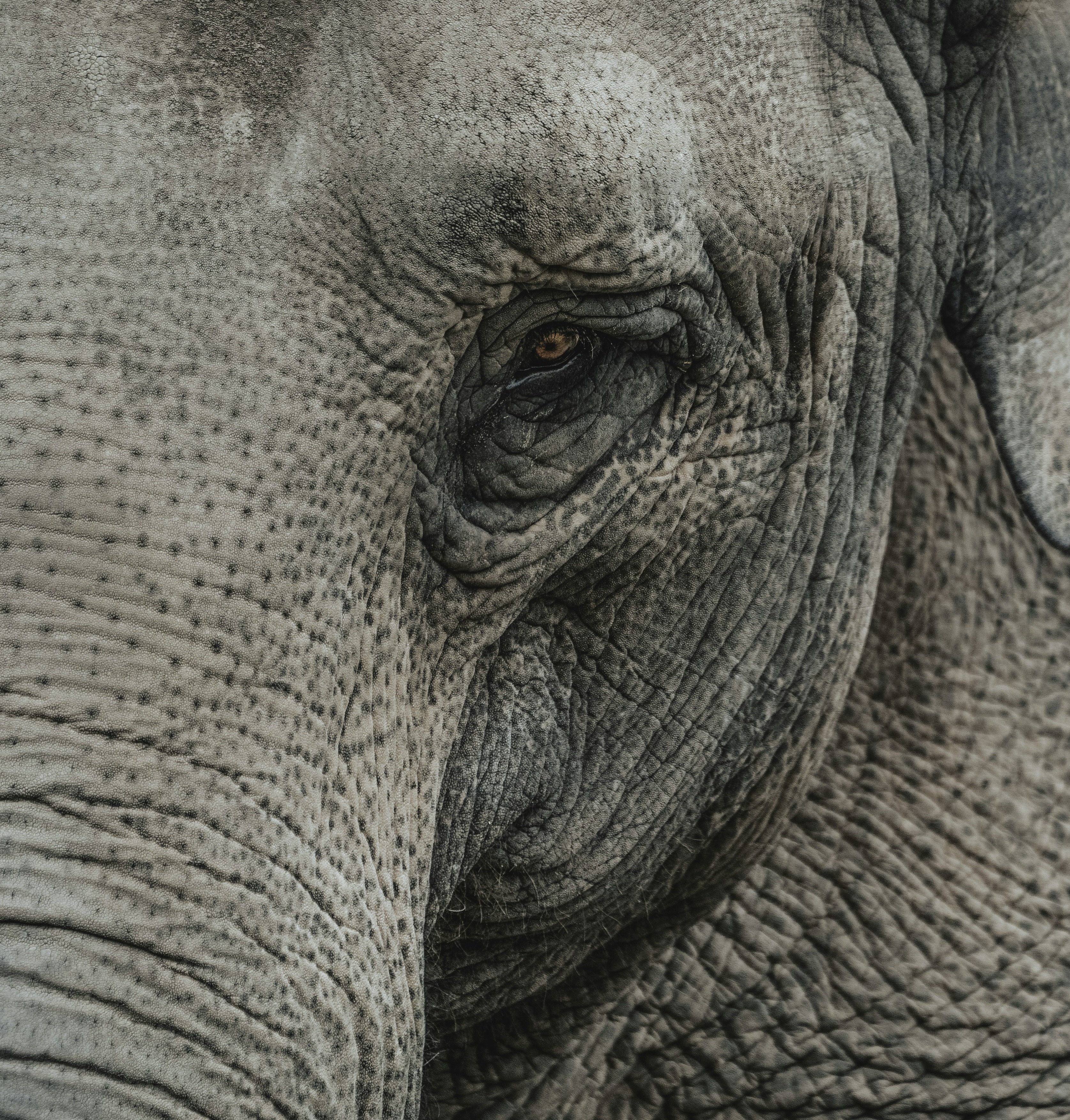
Field guides, trackers, and researchers have seen it again and again: Elephants do something extraordinary when they pass the body or remains of another elephant—they stop, become still, and then gently and slowly caress the elephant with the tips of their trunks. They emit low rumbling sounds and distress calls. They drag over branches or tear up grasses and cover the carcass gently. They do this ritual even if the elephant was not part of their herd. Elephants show no interest in the carcasses of other species.

When they come upon a dying elephant, their behavior is more active, protective, and interventional. They try to lift and prop up the elephant, clustering around it and bracing it front and back to keep it upright. They trumpet and roar and guard the dying elephant—some facing outward and some tending the elephant.

Mother elephants are at the heart of some of the most haunting accounts of elephant grief. Researchers and rangers describe elephant cows staying with a stillborn or dead calf for days, trying desperately to lift and nudge the body. An Asian elephant near Tumkur, India, was recorded jostling her lifeless calf for more than 24 hours, her ears fluttering in distress. A group of 12 adults gathered around her, apparently trying to console her. In multiple documented cases, mothers have lifted dead calves with their trunks and carried them for days.

Scholars of animal sentience, such as Marc Bekoff, Frans de Waal, and Jonathan Bird, argue that the question is no longer whether animals feel, but why sentience evolved—and why we keep doubting it. Their point is disarmingly simple: if an animal screams when injured, plays when safe, and shows every outward sign of distress when its young dies, insisting we “need more data” before acknowledging its experience becomes less about scientific caution and more about moral convenience. Elephants—with their vigils, their bone caresses, and their attempts to care for a dying tribe member—push that discomfort to the surface.

When an elephant stands over the bones of a long-dead companion, falling into stillness and tracing the skull with her trunk, she invites us to widen our circle of empathy—and to admit that grief may not be ours alone. We can choose to label that behavior as mere instinct, or we can acknowledge that we are watching another intelligent, deeply social species grapple with loss in its own way.

Loved this glimpse into nature’s wonders? Subscribe for weekly insights on animals, empathy, and living thoughtfully. https://bit.ly/4cIP06h

Share

Worth a look

https://www.facebook.com/share/v/1AJjmiz5kY/?mibextid=wwXIfr

Hugs are Universal Medicine

Pennsylvania Folks – You Can Have an Impact on the Ivory Trade

The Pennsylvania legislature has a bill before them–HB1537–which, if voted in, will have an impact on elephants.  How could ivory be an issue in PA – we don’t exactly have savannas and scrublands?  True, but the United States is the second largest ivory market in the world (according to National Geographic) and the largest ivory bust in history was in Philadelphia.  Philadelphia plays a key role in the ivory trade.

If you feel inclined to help, you can:

For more information, visit www.elephantsdc.org

Dear Editor,

According to National Geographic and African Wildlife Foundation:  One elephant is killed for ivory on average every 15 minutes.  At this rate, wild elephants face extinction within one decade – yes, within our lifetime.   As someone who has been fortunate enough to actually see and interact with elephants in their habitats in Africa and Thailand, I have contacted my state and local representatives to ask them to support HB1537, a bipartisan PA bill, to ban ivory and rhino horn sales.  Without my help, the bill may not pass.

How could ivory be an issue in Pennsylvania – we don’t exactly have savannas and scrublands?  True, but the issues are these:

  • The United States is the second largest ivory market in the world (according to National Geographic) and the largest ivory bust in history was in Philadelphia.  Philadelphia plays a key role in the ivory trade.
  • “When the buying stops – the killing will stop too!” – quoted from WildAid.org
  • The ivory trade funds terrorism and directly funds Al-Qaeda affiliate Al-Shabaab, the Lord’s Resistance Army, Janjaweed, Boko haram, among other terrorist organizations (Bryan Christy – National Geographic).
  • New ivory is being “antiqued” to look like old ivory and is being sold on the open market.  (National Geographic)
  • While the US government restricts export, import, and interstate commerce of ivory and rhino horn, intrastate traffic is not regulated and only passage of HB1537 can achieve that.  Other states have already adopted similar legislation such as New Jersey, New York, etc. (public information)

Contacting my State Representatives was easy:  I searched them online, called and said I’m a constituent, and urged them to support HB1537 to end the ivory and rhino trade in Pennsylvania.

Speaking for those who cannot speak for themselves, I thank you.

Sincerely,
[your name here]

[your town, PA here]


photo from http://www.elephantsdc.org photo gallery

The Elephant Herd That Comes to Dinner, Yearly

Mfuwe Lodge was built in Zambia in 1998 in the middle of a path that elephants take mango trees yearly.  The structure has not deterred them.  Every year when the mango trees’ fruit is ripe, the elephant herd arrives, peacefully tromp through the hotel’s reception area, descends the stairs into the courtyard, and feast on the fruits.  The matriarch, Wonky Tusk, brings her two-week-old baby, Lord Wellington, along, in an unprecedented show of trust between wild elephants and humans.  Short piece by wildlife photographer Nathan Pilcher.