
by Marc Bekoff *
Science and common sense clearly show that diverse animals are feeling beings
The Kind Life Reprinted from Psychology Today with permission by Marc Bekoff
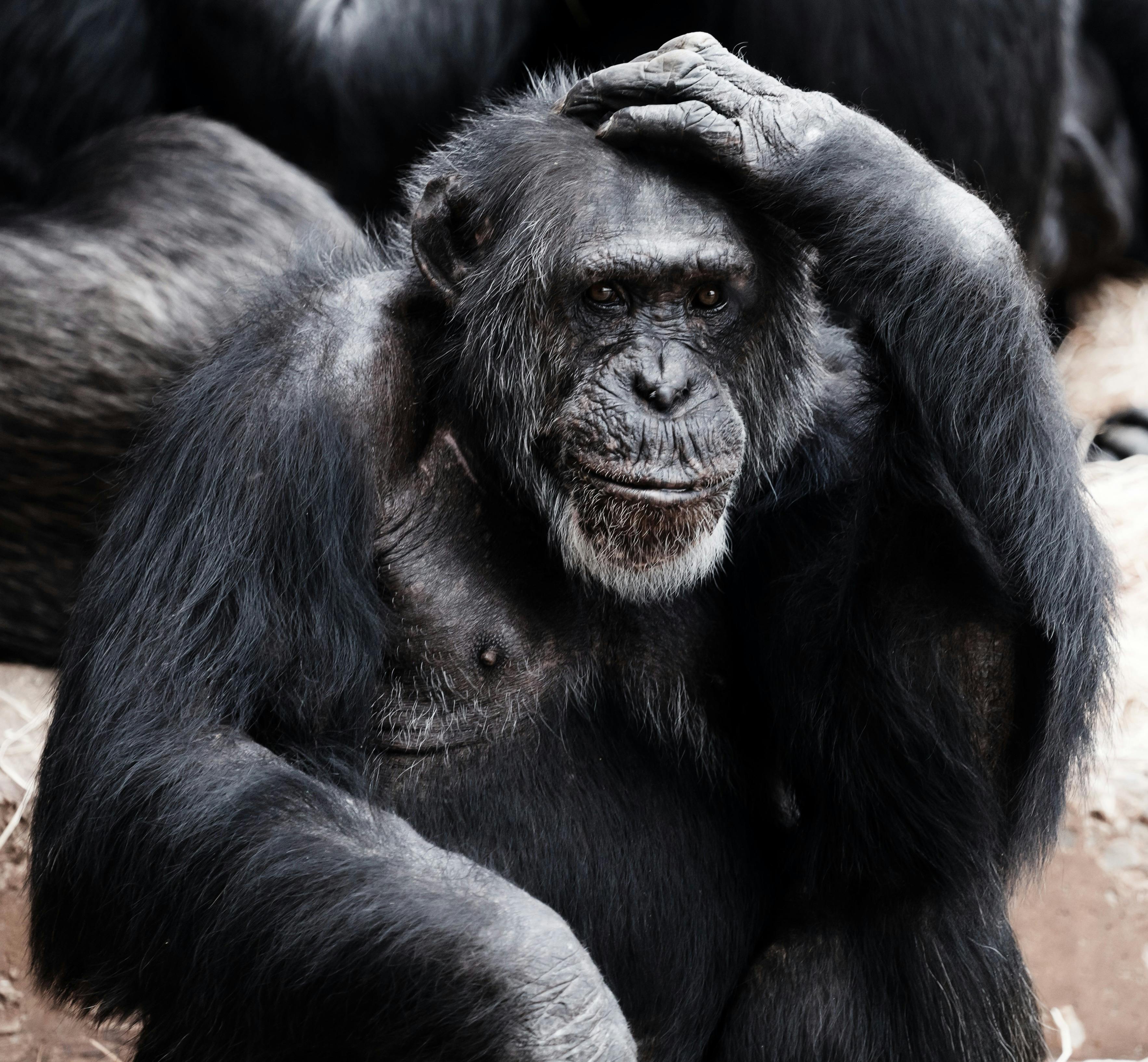
Source: public domain pictures on Pexel
Key points
- Animal sentience isn’t science fiction.
- The real question is not if sentience has evolved but why.
- Several countries have declared that animals, including household companions and wild species, are sentient.
- There aren’t degrees of sentience among different species; an individual’s joy or pain are their joy or pain.
Being sentient means having the ability to feel. A large body of scientific evidence stemming from studies of diverse species clearly shows that many nonhuman animals (animals) are sentient beings.1 These studies also show that the biodiversity of sentience is large and growing, and insects are finding themselves living well within the sentience arena as full members of the sentience club. Research shows that the emotional lives of insects are richer than many of us have ever imagined—not just in the ever-popular bees, but also in flies, mosquitoes, cockroaches, and termites too. (Darwin himself thought this! In 1872, he wrote that insects “express anger, terror, jealousy, and love.”)2
A growing number of people, including academics and non-academics, are very interested in what animals think and feel. Two recent posts—”The Eclectic Father of Cognitive Ethology“ about Donald Griffin’s seminal work and an interview with Jonathan Birch titled “The Edge of Sentience: Why Drawing Lines Is So Difficult“—have generated a good number of emails asking me to say more about the study of animal minds (the field called cognitive ethology) and animal sentience.
It’s Time to Stop Wondering If Animals Are Sentient, They Are

Source: By Marc Bekoff
These handwritten words were sent to me by Jane Goodall in 2000 after she attended a wildlife management meeting in Arusha, Tanzania. What caught my eye about her message was how she capitalized the word “feelings.” This was some years before the field of compassionate conservation emerged and began growing in leaps and bounds. In compassionate conservation, the life of every individual is valued, and sentience—their ability to feel—comes to the fore.
Studying animal sentience, consciousness, and emotion isn’t easy. Future data from comparative analyses of animal cognition, along with existing information, should help us along in developing what some people think the field of cognitive ethology needs: namely, an integrative model or theory. Perhaps it was the lack of an integrative theory of cognitive ethology and the presence of one in evolutionary biology that led many people to dismiss tenuous cognitive ethological explanations while accepting often equally tenuous evolutionary stories.
I became very interested in learning more about some of the progress made in cognitive ethology during the past two decades, so I analyzed the references in the 2007 edition of my book on animal emotions and in the highly revised and updated 2024 edition of The Emotional Lives of Animals: A Leading Scientist Explores Animal Joy, Sorrow, and Empathy―and Why They Matter, for which I used around 300 additional references. I noted a strong increasing trend that more researchers are accepting data that clearly showed that many different animals have rich and deep emotional lives and are sentient. Furthermore, not a single reference among those I added to the new edition led to the conclusion that we are doing all we can for the animals. We can always do more.
The Real Question Is Not If Sentience Has Evolved, but Why
I know some people will respond with something like, “We really don’t know whether pigs don’t like their tails being cut off or being castrated,” or “We need more data to know that animals get bored or enjoy play.” However, it’s high time to recognize that this sort of skepticism is unwarranted and responsible for widespread and continued abuse, given the evidential database we now have. Furthermore, there are no degrees of sentience among different species; an individual’s joy and pain are their joy and pain.
Let’s Stop Bickering
We must stop pretending that we don’t know this or that about animal sentience. We need more action. While we persist in pondering the obvious, ignoring what we already know and have long known, countless nonhuman victims continue to be abused by humankind, every minute of every day, planet-wide.
There are no substitutes for rigorous research and detailed analyses of subtle behavior patterns that often go unnoticed. What we think about the nature of all sorts of animal minds truly matters for their welfare, and so it should matter to us.
People interested in cognitive ethology shouldn’t have axes to grind. Interdisciplinary input is necessary for us to gain a broad view of animal cognition. Regarding animal minds, when philosophers share what they think, they need to be clear. Those who study animal behavior need to share with philosophers and others about what they have learned and the progress being made.
The general public is closely following what science says about animal minds, and we must give them the latest and most reliable information available. We also need to listen to their stories because citizen science can guide research and inform how we interpret and explain the inner lives of other animals.
It’s anti-science to claim that nonhumans aren’t sentient. It’s not anti-science to say we must use what we know on behalf of other animals and must stop pretending we need more data. The list of the continuing mistreatment of animals in places where they have been formally recognized as sentient beings and elsewhere in the world goes on and on.
Declaring nonhumans to be sentient beings is surely most welcome, but for now, it’s often more of a “feel-good” move, another instance of humane-washing. Future human generations will surely look back and wonder how we could have continued failing to use the science, history, and politics of sentience to protect sentient nonhumans.
An essay titled “Animal sentience: history, science, and politics“ by Andrew Rowan and his colleagues is an excellent state-of-the-art summary of what we know and don’t know about animal sentience.
Rowan and his co-authors noted:
So far, however, there has been little evidence that the various declarations that animals are sentient in other countries and regions have had much direct impact on animal protection legislation or how animals are actually being treated.
Nevertheless, it is very unlikely that incorporating animal sentience language in legislation would be harmful to the interests of animals in any way.
We can, and we must do better. Solid science, evolutionary biology, comparative psychology, and a dose of common sense can lead the way. Surely, it’s time to stop wondering if other animals are sentient—they clearly are.
* Marc Bekoff is professor emeritus of Ecology and Evolutionary Biology at the University of Colorado, Boulder. He has published more than 30 books including The Emotional Lives of Animals and has won many awards for his research and writing. His homepage is marcbekoff.com
References
1) Why Animal Sentience Must Be Used to Reform Constitutions; It’s Time To Stop Wondering if Animals Are Sentient—They Are; The Emotional Lives of Dogs and Wolves and Why They Matter; The Lives of Sea Turtles and Why They Matter; The Emotional Lives of Animals and Why They Matter; The Fascinating Complex Minds of Bees and Why They Matter; Animal Emotions, Animal Sentience, and Why They Matter; Mindful Anthropomorphism Works, So Let’s Stop the Bickering; The State of Animal Consciousness, Sentience, and Emotions; Liv Baker et al. Rethinking Animal Consciousness Research to Prioritize Well-Being, Cambridge Corp, October 28, 2024. Also see: Granting Rights to Animals Doesn’t Undermine Human Rights.
2) A recent and detailed review of the evidence by Matilda Gibbons and her colleagues titled “Can insects feel pain? A review of the neural and behavioural evidence“ makes it plausible that various insects are indeed sentient and feel pain.
Balcombe, Jonathan 2007. Pleasurable Kingdom: Animals and the Nature of Feeling Good. St. Martin’s Griffin.
Batavia, Chelsea et al. 2021. Emotion as a source of moral understanding in conservation. Conservation Biology.
Bekoff, Marc. The Emotional Lives of Animals: A Leading Scientist Explores Animal Joy, Sorrow, and Empathy―and Why They Matter. New World Library, 2024.
_____. 2010, The Animal Manifesto. New World Library.
_____. Spain Joins Other Nations in Declaring Animals Are Sentient.
_____. Animal Emotions, Animal Sentience, and Why They Matter.
_____. Sentient: How Animals Illuminate the Wonder of Our Senses.
Jessica Pierce and Marc Bekoff. The Animals’ Agenda: Freedom, Compassion, and Coexistence in the Human Age. Beacon Books, 2017.
Wallach, A. D., Bekoff, M., Batavia, C., Nelson, M. P., & Ramp, D. 2018. Summoning compassion to address the challenges of conservation. Conservation Biology.


 Untold Animal Stories