
View on Substack: The Kind Life
Thanks for reading! For weekly stories and simple actions that improve animal welfare: The Kind Life
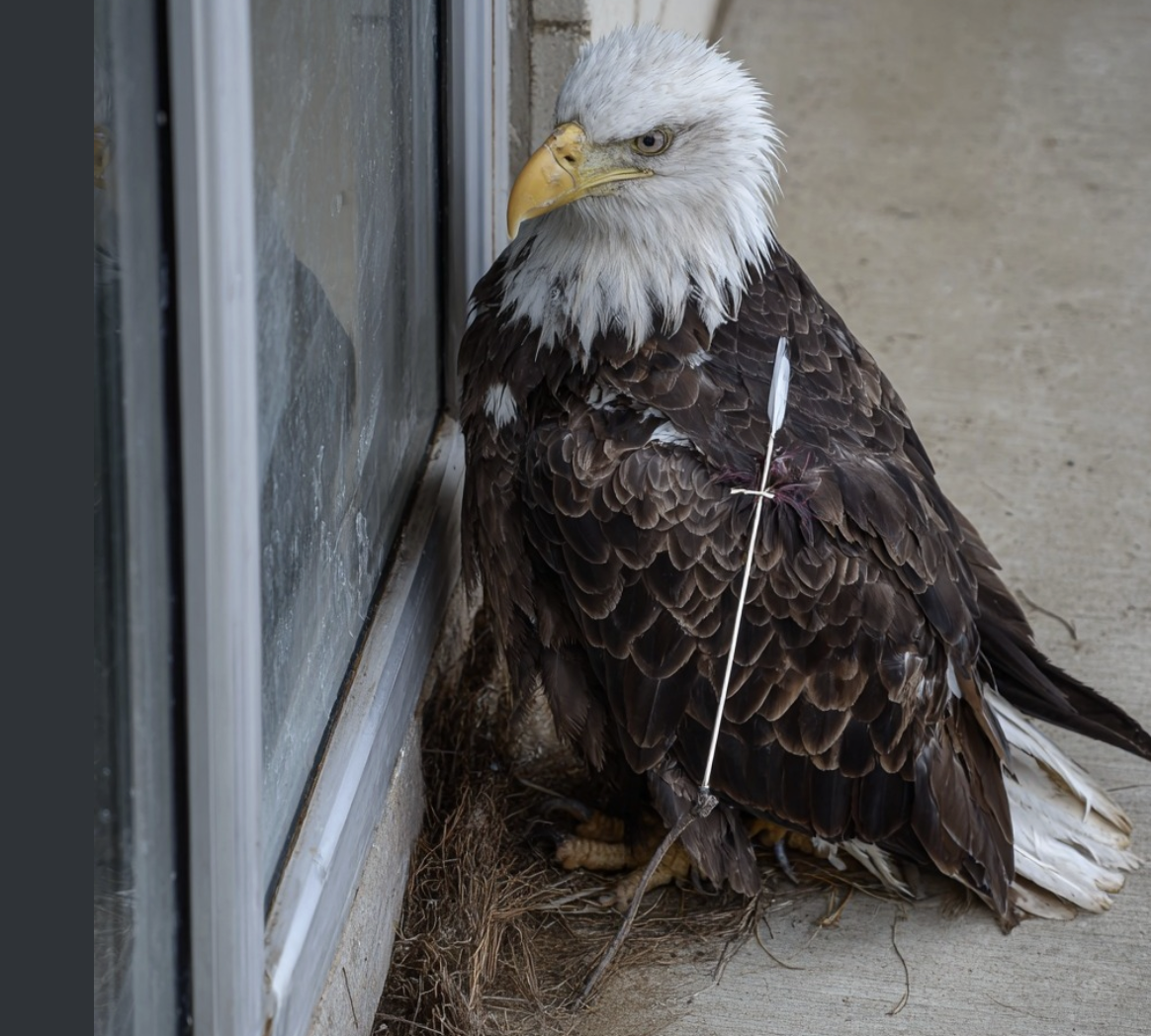
An injured, fully grown bald eagle was found at the door of wildlife rehab center in British Columbia. It remained unmoving and quiet, and peered into the glass door. A broadhead hunting arrow was embedded in its back and blood loss was evident.
When staff carefully approached, the eagle did not attempt to flee and allowed them to bring it into the facility. According to the veterinarians who treated it, the eagle showed no aggression or panic. Surgery was performed the same day and the wound was reported as severe but treatable. Without intervention the eagle would not have survived. The eagle was given antibiotics, pain management, and rehab to regain flight strength.
The eagle’s point of origin, route, and distance traveled are unknown, but one might surmise that the injury occurred in one of the hunting areas, none of which are close by.
Injured animals tend to seek cover instinctively, and there were several structures, unoccupied buildings, and forest edges where the bird might have sought cover. While biologists urge caution in interpreting events like these, the eagle’s behavior struck the staff as unusual. One stated, “It felt like it knew exactly where to go.” Even experienced wildlife professionals admitted the case was extraordinary.
Compassion in Action
What can you do when you see injured wildlife? Observe from a distance without approaching to avoid stressing the animal further, which could worsen injuries or lead to defensive behavior. Note key details like location, species, behavior, and visible injuries (e.g., limping or bleeding) for rescuers. Contact your local rehab facility by searching here: Local Wildlife Rehabs
Please share with others who might be interested!
Subscribe for weekly stories like this: The Kind Life
 Untold Animal Stories