The Cat & Erna’s Garden

View on Substack: https://thekindlife.substack.com/p/the-cat-and-ernas-garden

Erna’s home carried the scent of roses and crisp cotton sheets. Her kitchen was sunny, with worn oak floorboards and flowery curtains billowing in on the breeze.

These days Erna’s garden is overgrown with tassel-topped grasses and dotted with sparse flowers. The shutters and gutters are slightly askew, and moss grows on the white clapboard. Sometimes I come to watch the weeping willow’s arms sweep across the pebble driveway, and to remember.

I knew Erna long before she knew me. From the woods where I lived I watched as she carried a basket on her hip to the clothesline. . . as she tilted her face toward the sun and closed her eyes. . . as she weeded the garden and gathered an armful of flowers for her table.

One afternoon I sauntered over to her as she was pegging out the laundry. “Oh!” she said, “Oh! Wait here.”
black and white cat ID-10029960

She came back with remnants of a pork chop and a small bowl of water. Each afternoon after that I visited her. She sat next to me on the patio as I ate, talking about anything that occurred to her. I think she was lonely.

Cold weather came early that year, and the wind bit through my fur. One day, as I waited for her on the patio, Erna held the door wide open. “Well, come in,” she said. I walked in and made myself at home.

By day I kept her company in the kitchen as she worked, her hands moving in and out of shafts of light, her shoulders soft and rounded. She hummed tunelessly to the soft, repeating clang of the wooden spoon against the mixing bowl.

By evening we sat by the fire in winter, and by the open window in summer. Erna worked with her hands, making afghans, quilts, and linen napkins, always in shades of green.

By night I slept on the window seat under the dormer, the stars glimmering overhead.

In time, Erna became ill. People came and went from the house. I slept curled by her feet, caring for her as I could. She passed away anyway. I watched them carry her from the house, but it wasn’t her.

A neighbor woman took me home with her. I’ve made my life there with her family, and it’s a good life. But sometimes I come here to Erna’s garden, to sense her, to feel our life together.

Compassion in Action:

If you see a stray cat, consider helping it by taking it in or taking it to a rescue.
Self-Rescuing Bald Eagle?

View on Substack: The Kind Life

Thanks for reading! For weekly stories and simple actions that improve animal welfare: The Kind Life

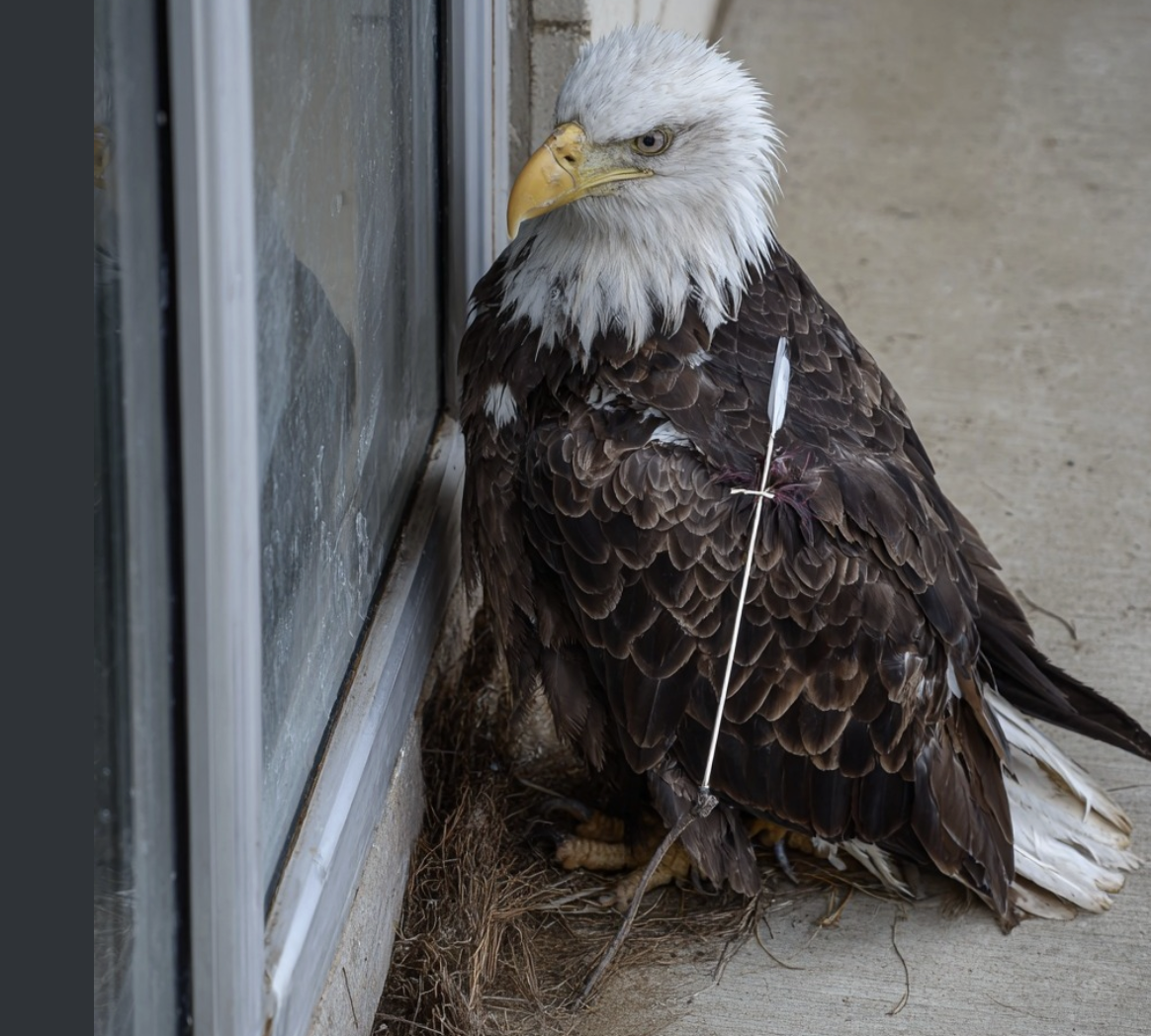
An injured, fully grown bald eagle was found at the door of wildlife rehab center in British Columbia. It remained unmoving and quiet, and peered into the glass door. A broadhead hunting arrow was embedded in its back and blood loss was evident.

When staff carefully approached, the eagle did not attempt to flee and allowed them to bring it into the facility. According to the veterinarians who treated it, the eagle showed no aggression or panic. Surgery was performed the same day and the wound was reported as severe but treatable. Without intervention the eagle would not have survived. The eagle was given antibiotics, pain management, and rehab to regain flight strength.

The eagle’s point of origin, route, and distance traveled are unknown, but one might surmise that the injury occurred in one of the hunting areas, none of which are close by.

Injured animals tend to seek cover instinctively, and there were several structures, unoccupied buildings, and forest edges where the bird might have sought cover. While biologists urge caution in interpreting events like these, the eagle’s behavior struck the staff as unusual. One stated, “It felt like it knew exactly where to go.” Even experienced wildlife professionals admitted the case was extraordinary.

Compassion in Action

What can you do when you see injured wildlife? Observe from a distance without approaching to avoid stressing the animal further, which could worsen injuries or lead to defensive behavior. Note key details like location, species, behavior, and visible injuries (e.g., limping or bleeding) for rescuers. Contact your local rehab facility by searching here: Local Wildlife Rehabs

Please share with others who might be interested!

Share

Subscribe for weekly stories like this: The Kind Life

Leave a comment

A Conversation Across Species

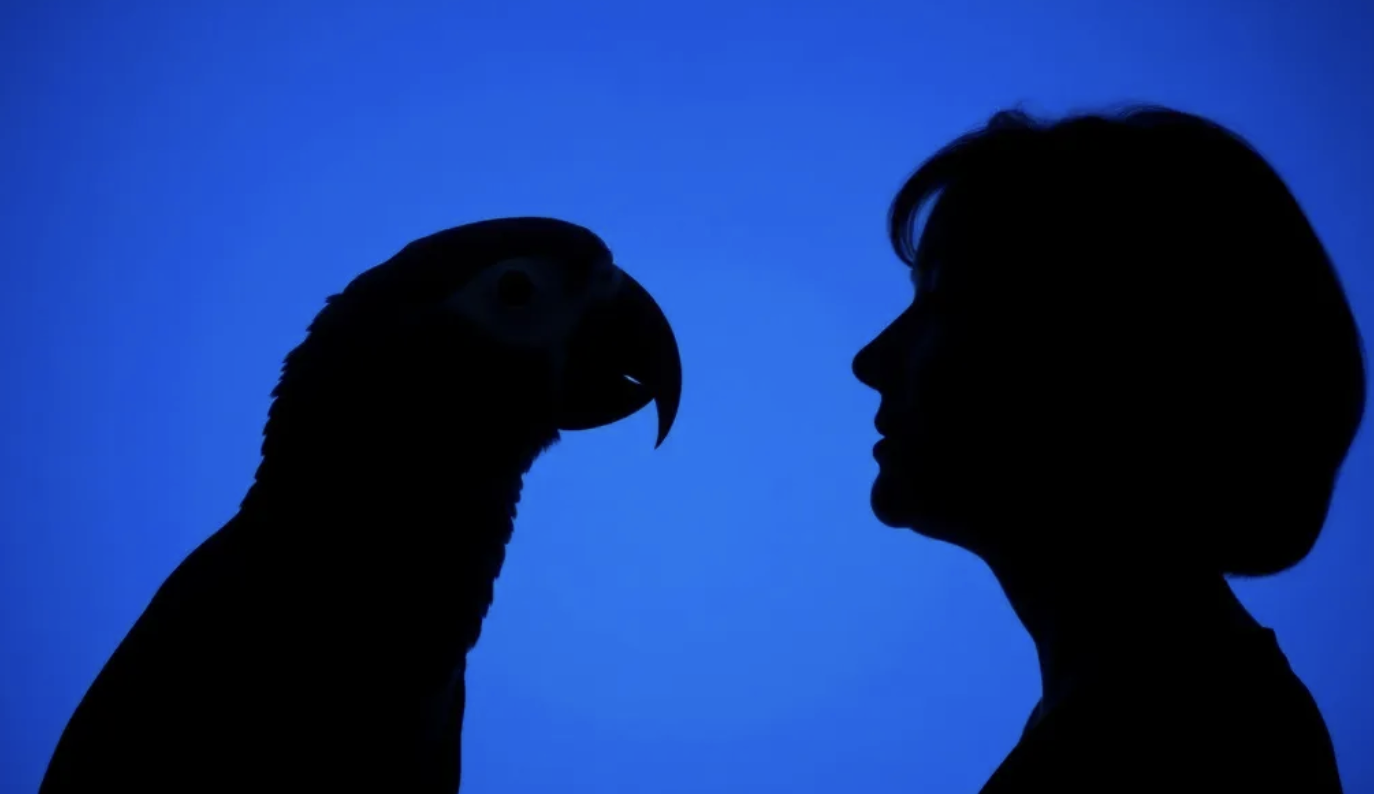
What happens when a bird masters human logic, proving intelligence knows no species? Alex the parrot’s story will change your perspective. For the complete tale, exclusive reader Q&A, and weekly actionable insights —join me for free on Substack

In the 1970s, a commonly held belief, especially among non–pet owners, was that animals were essentially automatons, reacting to stimuli but lacking the abilities to think or feel. Animal psychologist Irene Pepperberg sought to test the theory. In 1977, she brought Alex, an African gray parrot—a species famed for its mimicry—into her Brandeis University lab. She began an experiment that would eventually blur the boundary between human animal and nonhuman animal minds.

One of the ways Pepperberg taught Alex was through the Model/Rival technique, where two humans interacted in front of him so he could observe words used purposefully rather than merely repeated. Within a few years, Alex had a working vocabulary of more than a hundred words. Alex could identify objects by color, shape, or material—and even combine those concepts when asked questions like, “What color three-corner wood?” correctly answering “green.” He could infer absence, identifying a missing color through the process of elimination, demonstrating logic-based reasoning. When shown two items and asked, “Which is bigger?” or “Which is greener?” he chose accurately. He understood abstract ideas like “same,” “different,” and even “none,” correctly answering “none” when asked how many green keys were among a group of colored keys. He could also group objects conceptually (e.g., all keys as “metal,” all fruits as “food”).

Alex grasped the concept of individual identity; when researchers asked him which bird they were pointing to, he would appropriately answer “Alex” for himself or name another bird—like “Griffin” or “Arthur.” He identified letters by sound, not just shape. When Pepperberg showed him a written letter and asked, “What sound?” Alex could produce the correct phoneme, indicating phonological awareness—an ability linked to early literacy in humans.

He created words for unfamiliar objects by joining elements of known objects; he came up with “banerry” the first time he saw an apple, apparently blending “banana” and “cherry”—a creative leap suggesting flexible thought. He used refusals like “No” or “Don’t want that” with unambiguous purpose. Alex showed rudimentary counting skills, counting up to eight, and in controlled tests, adding together two small groups of items when asked, “How many total?”

Alex’s intelligence came with a distinct personality. He teased researchers by deliberately mislabeling objects, then laughing when they looked surprised. When a student once misidentified a color, Alex corrected her—“No, blue!”—and repeated himself until she agreed. When a trainer ate lunch without sharing it with him, Alex muttered “Naughty!” while turning his back in offense. When Alex lost his temper and bit a researcher, he later said, “I’m sorry,” without being prompted—a sign of contextual awareness and social repair behavior rather than mimicry. He showed empathy-like responses. If a researcher seemed upset or frustrated, Alex sometimes said, “Don’t be sad,” or “It’s OK,” echoing appropriate emotional cues.

Alex died unexpectedly in 2007. His final recorded words to Pepperberg were “You be good. See you tomorrow. I love you.” Alex left behind more than data; he left a challenge to our assumptions about animal consciousness. His life invites science to reconsider the borders of intelligence—not as an exclusive human territory, but as an area still largely unexplored across the living world.

Loved this animal tale? Subscribe for free here and join a community of people who love animals: thekindlife.substack.com

Compassion in Action:

Consider making compassionate consumer choices. Cruelty-free products are cosmetics, skincare, or household items not tested on animals at any stage, from ingredients to final formulation. Look for certifications like Leaping Bunny, which requires strict no-testing policies throughout the supply chain as well as independent, third-party verification.

If you know of others who might enjoy this, please:

Share

Leave a comment

This is just the start—join my Substack for deeper dives into untold animal adventures, weekly updates, and a community of animal lovers: thekindlife.substack.com

Bridget Bardot Gave a Voice to the Voiceless

To read on substack: https://substack.com/home/post/p-182806305

Bridget Bardot was defined in the 1950s and 1960s by her on-screen and off-screen uninhibited sexuality, voluptuous figure, and tousled blond hair. In 1973 she abruptly left acting, saying “I gave my beauty and my youth to men, and now I am giving my wisdom and experience, the best of me, to animals. . . I don’t care about my past glory. That means nothing in the face of an animal that suffers, since it has no power, no words to defend itself.”

While indifferent to her past, Bardot leveraged her fame to advance awareness of and reforms in animal welfare. Her contributions in the field include establishing the Fondation Brigitte Bardot for the Welfare and Protection of Animals; filing thousands of investigations and lawsuits against animal cruelty; lobbying for legislation against factory farming, slaughterhouse practices, the pet trade, religious ritualized slaughter, fur trapping and hunting, foie gras practices, and animal experimentation; opposing bullfighting, horse racing, and horse slaughter; advocating for dog meat bans in South Korea; funding shelters, spay/neuter programs, and wildlife rehabilitation centers; traveling to the Arctic to bring attention to the clubbing of baby harp seals; and promoting vegetarianism (originally) and then veganism.

In an essay in Ingrid E. Newkirk’s book One Can Make a Difference, Bardot wrote, “Young people are always a hope. More of them must realize that the animal is not an object for profit, not a toy for our amusement, hunted for sport, not something to be cut up for his fur. They may see that the animal has the right to live, just as we have the right to live. We, the animals, the plants are the whole, and the whole makes a chain, and if we break that chain, all of humanity will pay.”

Compassion in Action:

SPCA International (←please click to learn more about what this worthy organization is doing) – The winter is harsh, and countless dogs and cats are shivering, weak, and alone. Their goal is to save as many lives as possible. Your gift can make it happen.