
A Surprising Lesson in Empathy from Small Creatures
Written by coalitionforanimalrights.substack.com; excerpts reprinted with permission
View in substack: https://thekindlife.substack.com/p/what-ants-teach-us-about-compassion
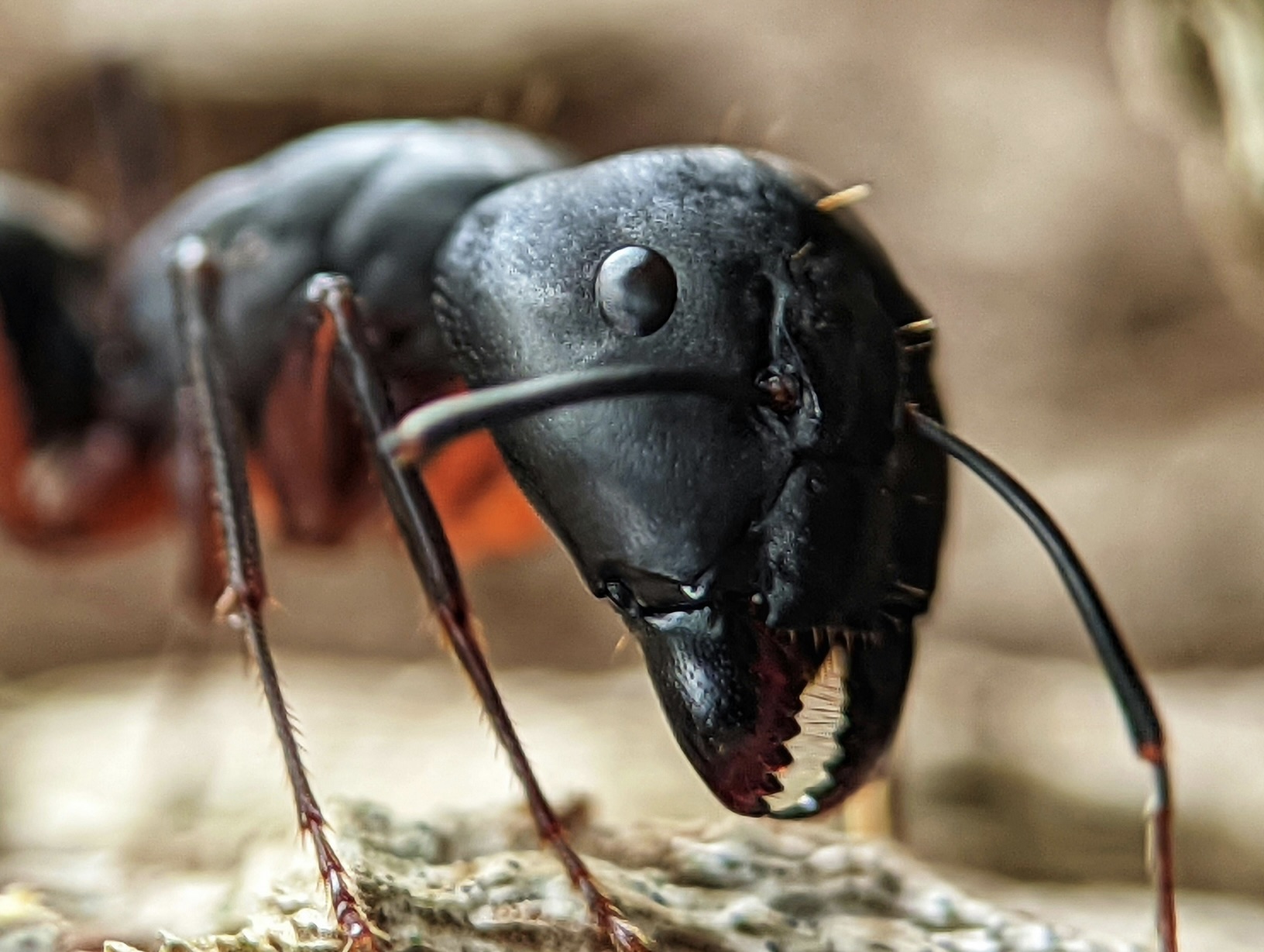
Last month, I watched tiny black ants gather on my patio. At first, they seemed like nothing more than a background hum in the soundtrack of life, moving from plant to plant with that mysterious, purposeful rhythm ants always have. But then I saw something that changed me, something that should trouble every human being who calls themselves compassionate. Scattered among the crawling ranks were the bodies of their fallen. And what these ants did next stunned me: they carefully lifted their dead, one by one, carrying them to a makeshift memorial, a lined row set aside where no one would trample them. It was a display not of instinct alone, but of respect and community, a mourning ritual in miniature that revealed profound dignity in the lives we too often overlook.
It deepened my respect for these often-ignored creatures. Ants, like all living beings, carry out their lives with purpose and grace, even in a world that largely disregards them. Seeing them care for their dead struck me. It forced me to confront something uncomfortable: these tiny beings, so small we barely register their existence, showed a degree of consideration that many humans lack entirely, especially when it comes to the vast suffering inflicted by human hands.
Because the truth is harsh: we live in a world where animals suffer at an unimaginable scale. Where countless creatures are hunted for “fun,” lives extinguished under the guise of sport, where bullets crack through beautiful bodies just for the rush of a kill. Psychological research suggests that killing animals for pure recreation reflects a profound absence of empathy, stripping life from sentient beings for pleasure betrays a chilling disregard for suffering and pain.
And it’s not just the obvious violence of hunting. Day after day, animals are tortured, exploited, commodified, and dismissed as lesser simply because they do not speak our language or resemble us. This isn’t accident, it’s a systemic cruelty rooted in a worldview that separates humans from nature instead of recognizing our shared existence. Even scholars have noted that mistreatment of animals can be a reflection of a broader moral corruption, where cruelty becomes normalized and empathy erodes.
So pause here for a moment and let the weight of that sink in. Think of the deer hunted on a whim, the birds shot down as targets, the foxes trapped in agonizing steel jaws. Think of the animals who are bred and confined, their entire lives devoid of the simplest joys—no freedom, no play, no safety, no respect. Feel the sadness, because it is real. These are not abstractions; these are living, feeling beings whose suffering echoes in a way we should never, ever dismiss as “just nature” or “just tradition.” Our empathy, like something fragile and sacred, is what binds us not just to each other, but to the world we share.
Watching ants honor their dead pushed me to see something deeper: life is finite, fragile, and sacred. Whether it’s an ant, a bird, or a magnificent stag, each creature deserves dignity in life and peace in death. We are all only here for a time, sharing this planet with countless other beings. To truly understand them, to cohabit rather than dominate, [we must] challenge the conditioning that teaches us to fear or exploit nature.
I’m not suggesting you invite every animal into your home. But the next time an ant or a spider or a bird crosses your path, pause. Remember the larger home we all share. There is almost always a peaceful, nonviolent way to coexist. There must be. Because when even ants show respect for their departed, what excuse do we have for the atrocities we commit in the name of entertainment, tradition, or convenience?
Our compassion defines us. Our willingness to stand up for those who cannot speak for themselves is how we honor life, not just the adorable and familiar, but the vulnerable, the forgotten, the thousands whose lives are cut short by our indifference. If we can learn from the ants, then surely we can learn to protect rather than destroy.
Share this story. Talk about it with others. Let it stir something in you that compels action, whether that’s kindness in everyday interactions, advocacy for animal rights, or support for a movement that refuses to let suffering continue unquestioned. Let it remind you that every life matters, no matter how small, and that true humanity is measured not by how we treat our own, but by how we treat all beings with whom we share this Earth.
Thoughtful humane stories about animals, nature, and what it means to be human. Weekly posts, no spam. To subscribe: https://thekindlife.substack.com/


 Untold Animal Stories