What Ants Teach Us About Compassion and What We Refuse to Learn

A Surprising Lesson in Empathy from Small Creatures

Written by coalitionforanimalrights.substack.com; excerpts reprinted with permission

View in substack: https://thekindlife.substack.com/p/what-ants-teach-us-about-compassion
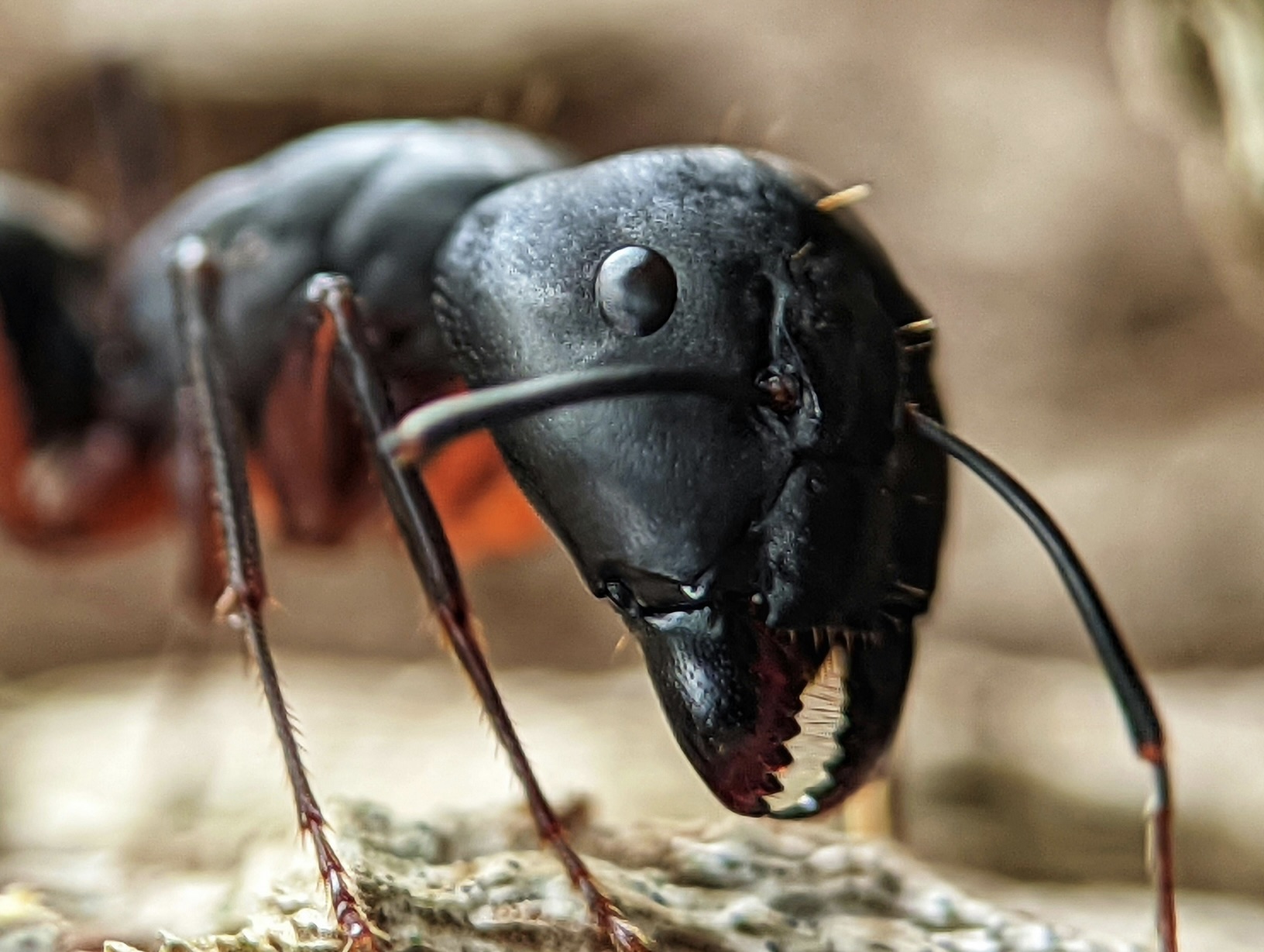
Last month, I watched tiny black ants gather on my patio. At first, they seemed like nothing more than a background hum in the soundtrack of life, moving from plant to plant with that mysterious, purposeful rhythm ants always have. But then I saw something that changed me, something that should trouble every human being who calls themselves compassionate. Scattered among the crawling ranks were the bodies of their fallen. And what these ants did next stunned me: they carefully lifted their dead, one by one, carrying them to a makeshift memorial, a lined row set aside where no one would trample them. It was a display not of instinct alone, but of respect and community, a mourning ritual in miniature that revealed profound dignity in the lives we too often overlook.

It deepened my respect for these often-ignored creatures. Ants, like all living beings, carry out their lives with purpose and grace, even in a world that largely disregards them. Seeing them care for their dead struck me. It forced me to confront something uncomfortable: these tiny beings, so small we barely register their existence, showed a degree of consideration that many humans lack entirely, especially when it comes to the vast suffering inflicted by human hands.

Because the truth is harsh: we live in a world where animals suffer at an unimaginable scale. Where countless creatures are hunted for “fun,” lives extinguished under the guise of sport, where bullets crack through beautiful bodies just for the rush of a kill. Psychological research suggests that killing animals for pure recreation reflects a profound absence of empathy, stripping life from sentient beings for pleasure betrays a chilling disregard for suffering and pain.

And it’s not just the obvious violence of hunting. Day after day, animals are tortured, exploited, commodified, and dismissed as lesser simply because they do not speak our language or resemble us. This isn’t accident, it’s a systemic cruelty rooted in a worldview that separates humans from nature instead of recognizing our shared existence. Even scholars have noted that mistreatment of animals can be a reflection of a broader moral corruption, where cruelty becomes normalized and empathy erodes.

So pause here for a moment and let the weight of that sink in. Think of the deer hunted on a whim, the birds shot down as targets, the foxes trapped in agonizing steel jaws. Think of the animals who are bred and confined, their entire lives devoid of the simplest joys—no freedom, no play, no safety, no respect. Feel the sadness, because it is real. These are not abstractions; these are living, feeling beings whose suffering echoes in a way we should never, ever dismiss as “just nature” or “just tradition.” Our empathy, like something fragile and sacred, is what binds us not just to each other, but to the world we share.

Watching ants honor their dead pushed me to see something deeper: life is finite, fragile, and sacred. Whether it’s an ant, a bird, or a magnificent stag, each creature deserves dignity in life and peace in death. We are all only here for a time, sharing this planet with countless other beings. To truly understand them, to cohabit rather than dominate, [we must] challenge the conditioning that teaches us to fear or exploit nature.

I’m not suggesting you invite every animal into your home. But the next time an ant or a spider or a bird crosses your path, pause. Remember the larger home we all share. There is almost always a peaceful, nonviolent way to coexist. There must be. Because when even ants show respect for their departed, what excuse do we have for the atrocities we commit in the name of entertainment, tradition, or convenience?

Our compassion defines us. Our willingness to stand up for those who cannot speak for themselves is how we honor life, not just the adorable and familiar, but the vulnerable, the forgotten, the thousands whose lives are cut short by our indifference. If we can learn from the ants, then surely we can learn to protect rather than destroy.

Share this story. Talk about it with others. Let it stir something in you that compels action, whether that’s kindness in everyday interactions, advocacy for animal rights, or support for a movement that refuses to let suffering continue unquestioned. Let it remind you that every life matters, no matter how small, and that true humanity is measured not by how we treat our own, but by how we treat all beings with whom we share this Earth.

Thoughtful humane stories about animals, nature, and what it means to be human. Weekly posts, no spam. To subscribe: https://thekindlife.substack.com/

Share

Leave a comment

Apparently the Chipmunk Thinks He Should Return What He Stole

Shelter – part 2

UntoldAnimalStories.org is pleased to present part two of a four-part tale by pioneering educator and author Karla McLaren.
© Karla McLaren 2014

continued from March 7 post…
We work to keep the dogs calm and quiet in their kennels, but it’s hard because so many new dogs come in regularly, and the cement-and metal kennels amplify their noise powerfully. Today, all the kennels are full – some with two or more dogs who came in together, so we’ve got more than eighty dogs here.  If even ten percent start barking, the noise can be deafening and very stressful for everyone (there’s a huge jar of free earplugs in the lobby; it’s that noisy). My greet-and-treat visits are a way to calm the dogs, and they’re a central part of kennel training and socialization, with a rhythm that’s so predictable that the kennel vets know it by heart.  On my first pass through the kennel, everyone gets a hello and a meaty treat no matter what they’re doing or not doing.  I want each dog to see people as fun, and to look forward to my next visit.  Some of the more savvy dogs predict the desired behavior – they sit calmly and meet my eyes – and I praise them clearly so that the other dogs can hear.

On the second round, the dogs have to perform in some way for their treat.  Any of these three behaviors – sitting, being calm, or being quiet – merits a treat.  And the dogs really can’t fail – even a terrier who leaps all over her kennel like a tiny tornado can at least calm down a little bit.  I help the hyper dogs by making a great show of hunkering down next to their kennel and using hand gestures while I ask “Can you get down?”  Most of the dogs will follow my lead, and the trick is to reward them as soon as they manage a desired behavior.  For some dogs, I have to wait until they stumble onto something – anything – desirable, but if I have patience, I can catch even the most chaotic dog in some form of a correct behavior.

The key is to ignore – completely – any bad behaviors, and reward good behaviors as soon as you see them.  Rewards don’t have to be food as they are at the shelter; petting, hugs, and praise are just as effective.  We use delicious desiccated liver treats at the shelter as a way to ease the general depression that plagues shelter dogs.  Food is not the best kind of love, but it gives the dogs something to look forward to and some bright spots in their stressful days.

On today’s second round, nearly everyone is figuring out which behaviors are required before the treat is given.  Some hyper dogs can’t stop barking, and some dogs clearly don’t know the “sit” command, but I catch everyone doing something right, and praise them all with a hearty “good dog.”  Today, something unusual pulls my eye to a small dog in one of the kennels near the entrance, which is where the cutest, smallest, and most adoptable dogs generally are.  This one is a sleek, sable-brown little girl named Peaches who squirms around joyfully in her kennel like a tiny harbor seal. She pushes herself nearer to me as I pass, so I kneel down and peer in as I pet her beautiful brown forehead, which she pushes up to the chain links of her kennel door.  She rolls over to show me her belly, and I see a lumpy umbilical hernia pushing up through her skin, and the strangest leg conformation in her hind quarters, but she won’t stop squirming long enough for me to figure out what’s going on.  Her kennel card doesn’t mention anything. I stoop down and kiss her on her nose, which is small enough for her to poke almost completely through a chain link, and I promise to come back.

I head down a T-leg of the kennel rows toward the home of the silly Nana.  She’s a gigantic Saint Bernard with a kidney condition that requires daily medication, and she’s been here a while.  Her owner couldn’t afford to take care of her, so she’s here waiting for someone with a big house, a big yard, and a big wallet for her meds.  Though some dogs become despondent after a long time in the kennel, Nana, who has been here for three months, is endlessly cheerful.  Nana thinks the greet-and-treat game is very funny, and she’s put her own spin on it.  Because she’s so huge, she can rise up and see over the cement walls of her kennel (they’re 6 feet tall).  When Nana sees me approaching, she likes to rile up the other dogs and get them barking.  When I arrive at her kennel, though, she makes a great show of sitting very prettily and being ever so quiet while the other dogs display their very bad manners.  I thank her loudly for being quiet, and I make “shush” gestures at the other dogs.  I usually treat Nana twice in each round – once on the way into her kennel row, and once on the way out.  She’s so big that my little cracker-sized treats are probably just a drop in a bucket!  On round three, I’m going to see if I can get her to stop riling everyone up, even though I do appreciate her excellent sense of humor.

As I near Milton and Jake and the chain again, I wonder how Milton will view me this time – what his approach will be.  This second treat is supposed to act as a kind of exchange between me and the dogs; it’s a prelude to entering into a working relationship.  Some of the dogs already have this figured out – they’re in graduate school.  Some, like the wildly leaping terriers, haven’t even entered preschool, and they’re going to need a lot of work.  But with Milton, I wonder if there’s even a hope of getting him anywhere near the idea of a relationship.

When I reach Milton’s kennel, I approach him in the proper way: I kneel down to his level and present the side of my body to him – I don’t face him.  Many dogs see face-to-face approaches and largeness as a threat (if one dog faces another and tries to make himself appear larger, that’s often an invitation to a fight in dog language).  I also don’t bare my teeth, extend my hand, or poke my fingers into Milton’s kennel.  Those are also threats – they’re aggressive moves, and Milton requires politeness, space, and respect.

to be continued next week…

for part 1: https://untoldanimalstories.org/2014/03/07/shelter/
for part 3: https://untoldanimalstories.org/2014/03/21/shelter-part-3/

Karla McLaren is a pioneering educator and award-winning author whose empathic approach to emotions revalues even the most “negative” emotions, and opens startling new pathways into the depths of the soul. She is the author of The Art of Empathy: A Complete Guide to Life’s Most Essential Skill, the trailblazing book The Language of Emotion: What Your Feelings Are Trying to Tell You, and the interactive online course Emotional Flow. Karla has taught at such venues as the University of San Francisco, Naropa University, Kripalu, and the Association for Humanistic Psychology. She is currently developing new forms of empathy and social interaction curricula for neurologically diverse people.

The Art of Empathy

What if there were a single skill that could radically improve your relationships and your life? Empathy, teaches empathic pioneer Karla McLaren, is that skill. In The Art of Empathy: A Complete Guide to Life’s Most Essential Skill, McLaren presents her groundbreaking model of The Six Essential Aspects of Empathy to help you understand and nurture healthy empathy in every part of your life.  Informed by four decades of empathic experience, plus current insights from neuroscience, social science, the arts, and healing traditions, The Art of Empathy teaches you how to become a healthy and happy empathic presence in a world that needs you.