
What happens when a bird masters human logic, proving intelligence knows no species? Alex the parrot’s story will change your perspective. For the complete tale, exclusive reader Q&A, and weekly actionable insights —join me for free on Substack
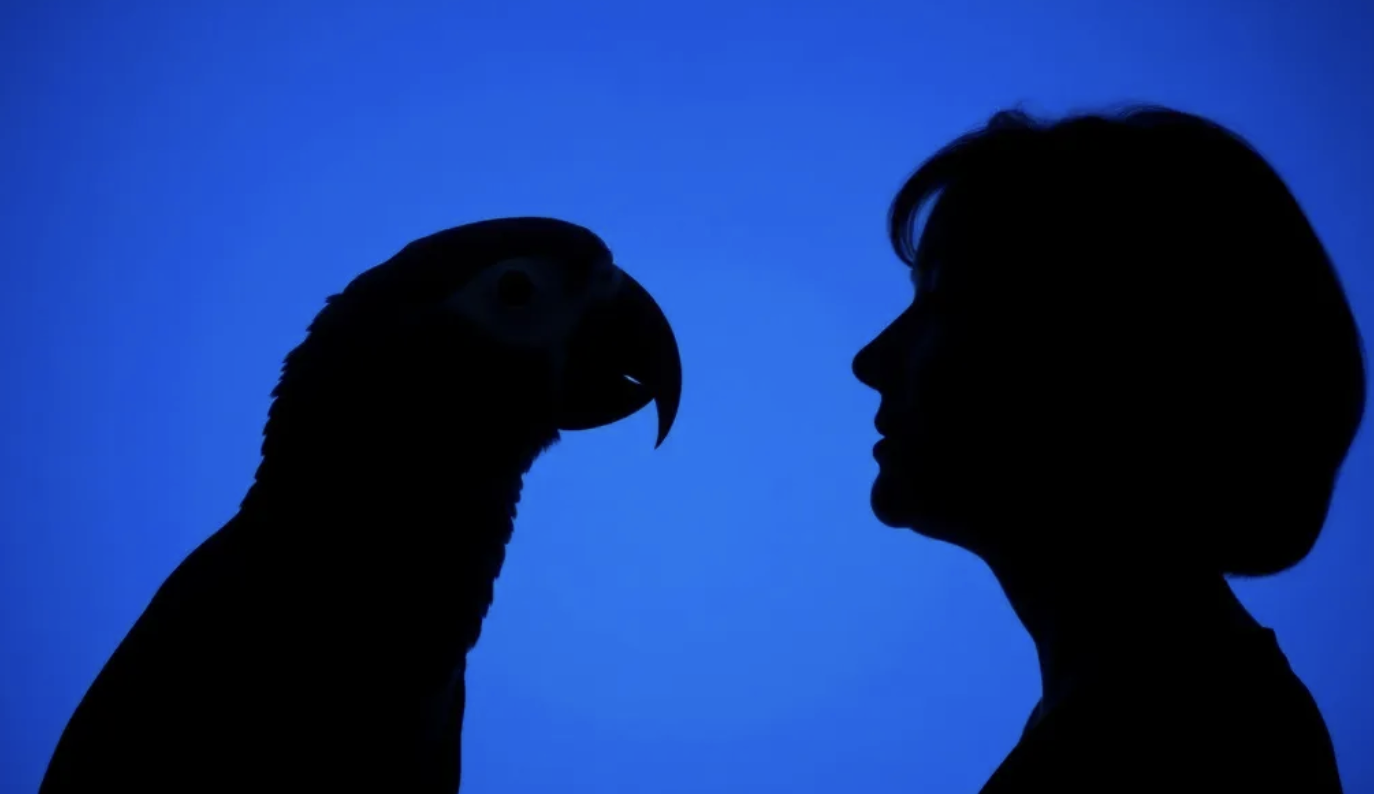
In the 1970s, a commonly held belief, especially among non–pet owners, was that animals were essentially automatons, reacting to stimuli but lacking the abilities to think or feel. Animal psychologist Irene Pepperberg sought to test the theory. In 1977, she brought Alex, an African gray parrot—a species famed for its mimicry—into her Brandeis University lab. She began an experiment that would eventually blur the boundary between human animal and nonhuman animal minds.
One of the ways Pepperberg taught Alex was through the Model/Rival technique, where two humans interacted in front of him so he could observe words used purposefully rather than merely repeated. Within a few years, Alex had a working vocabulary of more than a hundred words. Alex could identify objects by color, shape, or material—and even combine those concepts when asked questions like, “What color three-corner wood?” correctly answering “green.” He could infer absence, identifying a missing color through the process of elimination, demonstrating logic-based reasoning. When shown two items and asked, “Which is bigger?” or “Which is greener?” he chose accurately. He understood abstract ideas like “same,” “different,” and even “none,” correctly answering “none” when asked how many green keys were among a group of colored keys. He could also group objects conceptually (e.g., all keys as “metal,” all fruits as “food”).
Alex grasped the concept of individual identity; when researchers asked him which bird they were pointing to, he would appropriately answer “Alex” for himself or name another bird—like “Griffin” or “Arthur.” He identified letters by sound, not just shape. When Pepperberg showed him a written letter and asked, “What sound?” Alex could produce the correct phoneme, indicating phonological awareness—an ability linked to early literacy in humans.
He created words for unfamiliar objects by joining elements of known objects; he came up with “banerry” the first time he saw an apple, apparently blending “banana” and “cherry”—a creative leap suggesting flexible thought. He used refusals like “No” or “Don’t want that” with unambiguous purpose. Alex showed rudimentary counting skills, counting up to eight, and in controlled tests, adding together two small groups of items when asked, “How many total?”
Alex’s intelligence came with a distinct personality. He teased researchers by deliberately mislabeling objects, then laughing when they looked surprised. When a student once misidentified a color, Alex corrected her—“No, blue!”—and repeated himself until she agreed. When a trainer ate lunch without sharing it with him, Alex muttered “Naughty!” while turning his back in offense. When Alex lost his temper and bit a researcher, he later said, “I’m sorry,” without being prompted—a sign of contextual awareness and social repair behavior rather than mimicry. He showed empathy-like responses. If a researcher seemed upset or frustrated, Alex sometimes said, “Don’t be sad,” or “It’s OK,” echoing appropriate emotional cues.
Alex died unexpectedly in 2007. His final recorded words to Pepperberg were “You be good. See you tomorrow. I love you.” Alex left behind more than data; he left a challenge to our assumptions about animal consciousness. His life invites science to reconsider the borders of intelligence—not as an exclusive human territory, but as an area still largely unexplored across the living world.
Loved this animal tale? Subscribe for free here and join a community of people who love animals: thekindlife.substack.com
Compassion in Action:
Consider making compassionate consumer choices. Cruelty-free products are cosmetics, skincare, or household items not tested on animals at any stage, from ingredients to final formulation. Look for certifications like Leaping Bunny, which requires strict no-testing policies throughout the supply chain as well as independent, third-party verification.
If you know of others who might enjoy this, please:
This is just the start—join my Substack for deeper dives into untold animal adventures, weekly updates, and a community of animal lovers: thekindlife.substack.com
 Untold Animal Stories